Amperea, Genus, spp., Multiple species,
- Genus
- Multiple species
Overview
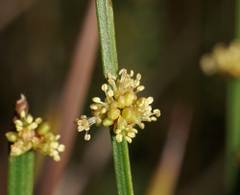
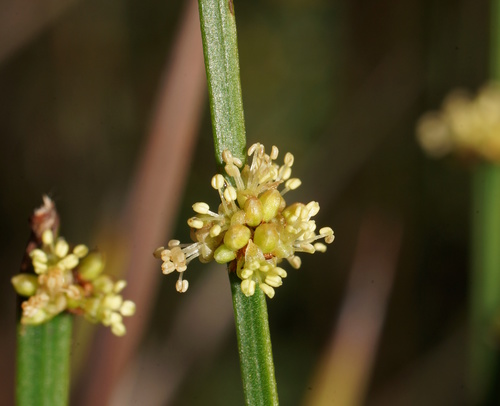
Amperea is a small genus of about eight wiry shrubs and subshrubs in the family Euphorbiaceae, endemic to Australia and concentrated in the south. The plants form low, broom-like tufts mostly 0.2-1 m (8-39 in) tall, with many slender, ribbed green stems that carry out much of the photosynthesis. Leaves are small, narrow, and often soon shed, leaving the rush-like stems bare. Tiny flowers without showy petals cluster at the nodes; the plants are monoecious, bearing separate male and female flowers, and they lack the milky latex of many spurges. The fruit is a small capsule that splits to fling out its seeds. Amperea grows in heathland, dry sclerophyll woodland, and on sandy or rocky soils, often on nutrient-poor ground, and several species resprout from a woody base after fire. The genus is adapted to seasonal drought and full sun and grows poorly in rich, wet, or shaded ground. Most species are frost-sensitive away from their mild native climate. Growth is wiry and sparse, and the plants stay open rather than leafy.
Native Range
Endemic to Australia, mainly in the south, growing in heathland, dry woodland, and on sandy or rocky soils.Suggested Uses
Grown in native, heath, and dry rockery gardens and in low-water plantings on sandy ground. The slender, rush-like stems add a wiry texture among shrubs and grasses.How to Identify
Appearance
Size & Dimensions
Height8" - 3'3"
Width/Spread1' - 3'3"
Bloom Information
Detailed Descriptions
Foliage Description
greenGrowing Conditions
Sun Requirements
Requires 6-12 hours of direct sunlight daily
• Full Sun: 6+ hours of direct sunlight
• Partial Shade: 3-6 hours of direct sunlight
• Full Shade: Less than 3 hours of direct sunlight