Amorpha, Genus, canescens, Species,
- Genus & species
leadplant
Central North America (Great Plains)
Overview
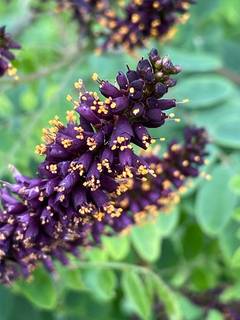
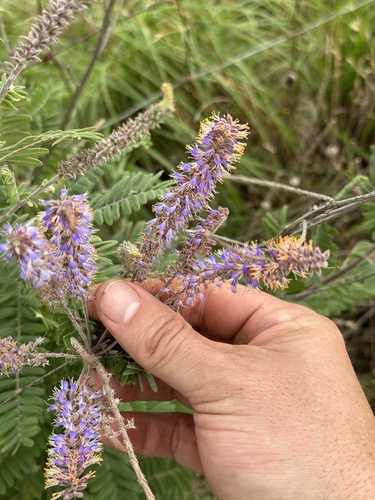
Amorpha canescens is a low, woody subshrub in the pea family, growing 1-3 feet (30-90 cm) tall from a deep, extensive root system. The stems and the small, pinnately compound leaves are covered in dense gray hairs that give the whole plant a leaden, gray-green cast. Each leaf is divided into 15-45 small leaflets, 0.2-0.6 inch (5-15 mm) long. Dense, spike-like clusters 2-6 inches (5-15 cm) long appear at the stem tips in early to midsummer, packed with tiny purple flowers, each with a single petal and protruding orange-tipped stamens. The flowers attract bees, butterflies, and other pollinators. Small hairy pods follow, holding one or two seeds. It grows in dry to mesic prairie, open woodland, and rocky slopes across the central plains of North America, where its deep roots reach moisture far below the surface. As a nitrogen-fixing legume, it improves prairie soils and recovers from fire and grazing by resprouting. Top growth often dies back partway in winter. It establishes slowly because so much early growth goes into the root, and it resents wet, poorly drained soils.
Native Range
Native to central North America, from the prairie provinces of Canada south through the Great Plains to Texas and New Mexico, in dry prairie and open ground.Suggested Uses
Used in prairie restorations, native and pollinator gardens, and dry, sunny borders. Planted on slopes and lean soils for its deep, soil-holding roots. Suited to naturalized meadow plantings with other prairie species.How to Identify
Appearance
Size & Dimensions
Height1' - 3'
Width/Spread1' - 3'
Bloom Information
Flowers from June to August, peaking in early to midsummer. Dense purple spikes open from the base upward over two to four weeks. Small hairy seed pods follow and ripen by late summer.
Detailed Descriptions
Flower Description
purple with orange-tipped stamensFoliage Description
gray-green, hairyGrowing Conditions
Sun Requirements
Requires 6-10 hours of direct sunlight daily
• Full Sun: 6+ hours of direct sunlight
• Partial Shade: 3-6 hours of direct sunlight
• Full Shade: Less than 3 hours of direct sunlight
Care & Maintenance
Care Guide
Grows in full sun and dry, well-drained soil, including poor, rocky, and sandy ground. Once established, the deep roots make it strongly drought tolerant, and it needs no supplemental water in most prairie climates. As a legume it fixes nitrogen and needs no fertilizer. It establishes slowly, putting early energy into root growth before top growth speeds up. It tolerates fire and grazing by resprouting from the base. It declines in wet, heavy, or poorly drained soils.Pruning
Stems can be cut back in late winter to remove dead or winter-killed growth before spring. Flowers form on new growth, so late-winter cutting does not reduce bloom. Removing spent spikes is optional and does not harm the plant.Pruning Schedule
Prune: February–March
winterearly spring