Amorpha, Genus, spp., Multiple species,
- Genus
- Multiple species
North America, from Canada to Mexico
Overview
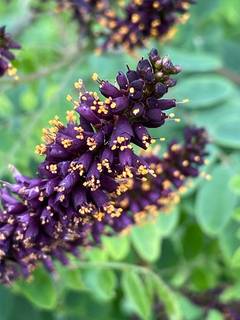
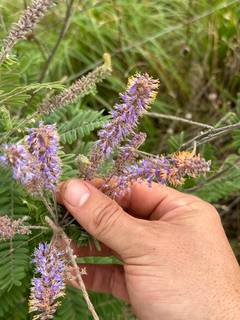
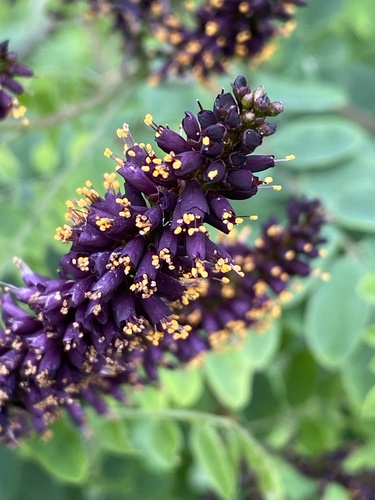
Amorpha is a genus of about 15 deciduous shrubs and subshrubs in the family Fabaceae, native to North America from Canada to Mexico. Most form upright, open clumps 0.3-4 m (1-13 ft) tall, depending on species, with odd-pinnate leaves carrying numerous small, gland-dotted leaflets that release a faint scent when crushed. From late spring into summer the stems are tipped with dense, erect spikes of tiny flowers. Unlike most peas, each flower has only one petal, a folded purple to violet-blue standard, around projecting stamens with orange-yellow anthers, so the massed spikes appear purple flecked with gold. Short, curved, gland-dotted pods follow, each holding one or two seeds. Amorpha grows in prairie, open woodland, riverbanks, and dry sandy ground, fixing nitrogen through its roots and tolerating poor, dry soils. The plants die back partly in cold winters and resprout from the base. A. fruticosa suckers and self-seeds freely and has become an invasive shrub along waterways in parts of Europe and Asia. Growth is fast and somewhat lax, and untrimmed plants can become open and twiggy.
Native Range
Native to North America, from southern Canada through the United States to Mexico, growing in prairie, open woodland, and on riverbanks and sandy ground.Suggested Uses
Grown in prairie and wildlife plantings, dry and gravel gardens, and on banks for erosion control and nitrogen fixation. The flowers are worked by bees and butterflies, and A. canescens is used in native grassland restoration.How to Identify
Appearance
Size & Dimensions
Height1' - 13'1"
Width/Spread1'6" - 9'10"
Bloom Information
Dense spikes of small purple to violet-blue flowers open from late spring into midsummer at the branch tips. Each spike packs hundreds of tiny single-petalled flowers that draw bees and butterflies. Curved seed pods ripen through late summer and often persist into winter.
Detailed Descriptions
Foliage Description
greenGrowing Conditions
Sun Requirements
Requires 6-12 hours of direct sunlight daily
• Full Sun: 6+ hours of direct sunlight
• Partial Shade: 3-6 hours of direct sunlight
• Full Shade: Less than 3 hours of direct sunlight