Alyogyne, Genus, huegelii, Species,
- Genus & species
Native hibiscus
Overview
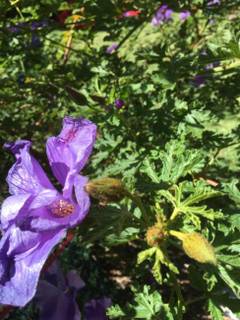
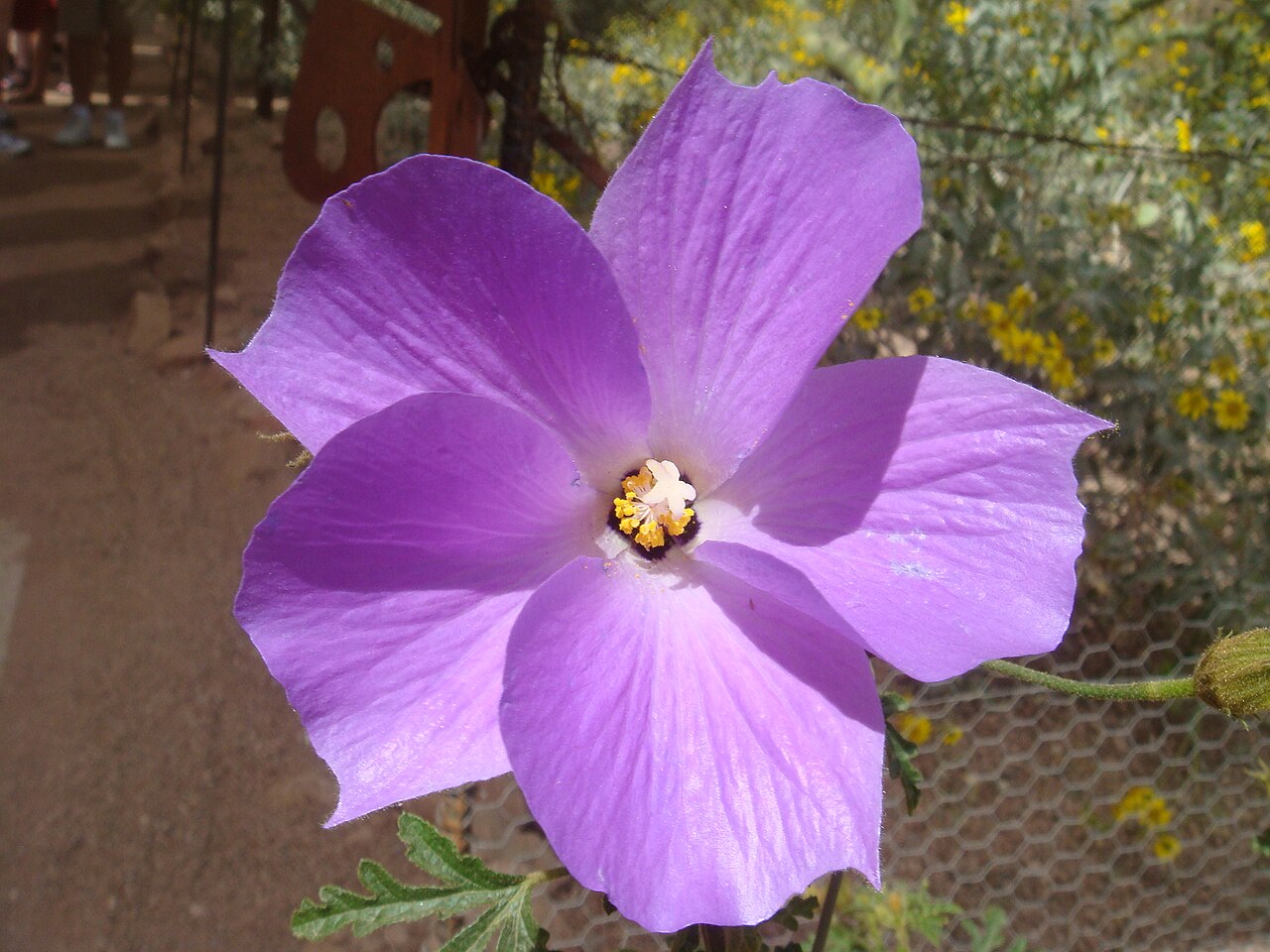
Alyogyne huegelii is an evergreen shrub 5-8 feet (1.5-2.4 m) tall and 5-8 feet (1.5-2.4 m) wide, growing fast on slender, upright, sparsely branched stems that open out with age. Leaves are alternate, 1.5-3 inches (4-8 cm) long, cut into three to five deep lobes, dark green, and rough with short stiff hairs on both surfaces. Flowers are hibiscus-like, 4-5 inches (10-13 cm) across, with five overlapping petals in lilac to mauve-purple around a central column of fused stamens; white and pale forms occur in cultivation. Each flower opens for one or two days, and a plant carries a succession of them across four months in spring and early summer, with scattered flowers at other times in frost-free gardens. The style is undivided at the tip, in contrast to the five-branched style of Hibiscus. Stems are brittle and snap in strong wind, and plants left uncut go bare at the base within three years. Life span is 5-10 years. Roots rot in soil that stays damp. Hardy in USDA zones 9-11.
Native Range
Alyogyne huegelii is native to southern Australia, across coastal and semi-arid districts of Western Australia and into South Australia, including the Eyre Peninsula and the coastal Nullarbor. It grows on sandy and limestone-derived soils in coastal heath, mallee scrub, and open woodland, in a climate of dry summers and mild wet winters. Plantings in summer-rainfall regions are short-lived because of root disease.Suggested Uses
Grown in dry-climate and coastal gardens, in mixed shrub borders, as a fast informal screen, and in Mediterranean and gravel plantings, spaced 5-6 feet (1.5-1.8 m) apart. It is planted in new gardens to fill space while slower shrubs establish, then taken out as those close in. Container culture works in pots of 10 gallons (38 L) or larger in a free-draining mix, with tip cutting after each flush.How to Identify
Appearance
Size & Dimensions
Height5' - 8'
Width/Spread5' - 8'
Bloom Information
The main run of flowers covers about four months, between September and December in the southern hemisphere and between March and June in northern hemisphere plantings, with scattered flowers through the rest of the year where frost is absent. Buds form on current season shoots, so tip cutting during the growing season raises the number of flowering points. Individual flowers open in the morning and close permanently after one or two days, and a mature shrub carries 5-20 open at once at peak. Native bees and honeybees work the staminal column for pollen.
Detailed Descriptions
Flower Description
Lilac to mauve-purple, with white forms in cultivationFoliage Description
Dark green, deeply three- to five-lobed, rough with short stiff hairsGrowing Conditions
Sun Requirements
Requires 6-12 hours of direct sunlight daily
• Full Sun: 6+ hours of direct sunlight
• Partial Shade: 3-6 hours of direct sunlight
• Full Shade: Less than 3 hours of direct sunlight
Care & Maintenance
Care Guide
Six or more hours of direct sun is what the species takes; in shade the stems stretch, flower count drops, and the shrub falls open. Sandy or gravelly soil at pH 6.0-8.0 that drains within an hour of rain matches its coastal habitat, and the species also handles limestone and mild salinity. Established plants run four to six weeks without water, and summer watering on heavy ground is the usual cause of sudden collapse from root rot. Feeding is unnecessary on average soil, while a light spring application of low-phosphorus native fertiliser suits plants growing in pure sand. Sites with shelter from strong wind show less breakage of the brittle stems. In zone 8 and colder the shrub is grown in a container of 10 gallons (38 L) or larger and moved under cover below 30 F (-1 C).Pruning
Tip cutting of 4-6 inches (10-15 cm) from every shoot two or three times through the growing season holds the plant compact and keeps flowering wood low on the frame. A harder reduction of one-third of the plant height is done in late summer after the main flush, cutting into wood that still carries leaves. The species reshoots poorly from bare stems, so a shrub left uncut for two or three years cannot be brought back into shape. Broken and dead stems are cut back to a live lateral at any time of year.Pruning Schedule
Prune: August–September
summerfall
Container Growing
Suitable for container growing
Minimum container size: 10 gallons