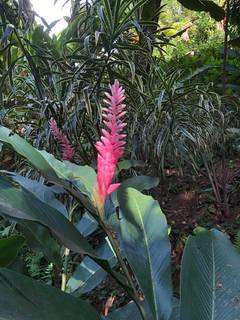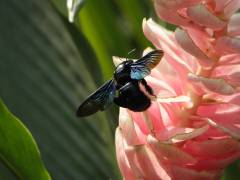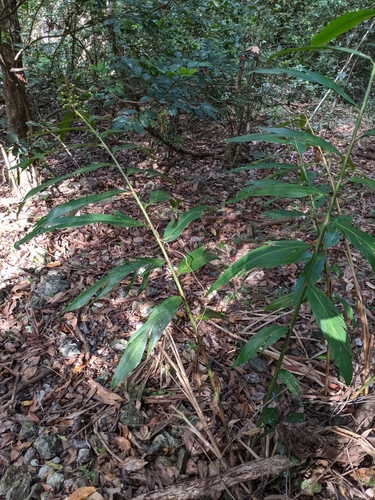
Alpinia, Genus, caerulea, Species,
- Genus & species
native ginger
Overview
Alpinia caerulea is a clumping evergreen perennial that grows from spreading rhizomes, sending up leafy cane-like stems 3-10 feet (0.9-3 m) tall. The leaves are lance-shaped, 8-16 inches (20-40 cm) long, glossy green, and arranged in two ranks along the upper stems, and a green-and-bronze leaved form also occurs. Small white flowers about 0.4 inches (10 mm) long open in branched sprays at the stem tips, mainly in the warmer months. These are followed by rounded blue fruits 0.4-0.8 inches (10-20 mm) across with a soft white pulp and several hard seeds. The clump widens steadily by rhizome to 3-6 feet (0.9-1.8 m) and can spread further in moist, shaded ground. Top growth is damaged by frost, with regrowth from the rhizome in spring. Both the rhizome and the fruit pulp are edible, with a mild ginger-like flavour.
Native Range
Native to eastern Australia, in the rainforests and moist eucalypt forests of New South Wales and Queensland. Grows in shaded gullies, creek banks, and forest understorey on moist, humus-rich soils.Suggested Uses
Planted in shaded and rainforest gardens, along damp borders, and under tree canopies, spaced 3-5 feet (0.9-1.5 m) apart. It grows in large containers of at least 10 gallons (38 L) in a moist, free-draining mix. The rhizome and fruit pulp are used in bush food, and the fruit draws birds.How to Identify
Appearance
Size & Dimensions
Height3' - 10'
Width/Spread3' - 6'
Bloom Information
Flowers mainly in spring and summer, from October to February, with small white flowers in branched sprays at the stem tips. Flowering lasts several weeks. The blue fruits ripen from late summer into autumn and can persist on the stems for some time.
Detailed Descriptions
Foliage Description
glossy greenGrowing Conditions
Sun Requirements
Requires 2-6 hours of direct sunlight daily
• Full Sun: 6+ hours of direct sunlight
• Partial Shade: 3-6 hours of direct sunlight
• Full Shade: Less than 3 hours of direct sunlight
Care & Maintenance
Care Guide
Grows in part shade to full shade in moist, humus-rich, well-drained soil, with full sun tolerated only where roots stay moist. Water regularly through warm weather, as the leaves brown at the edges in dry soil. It spreads by rhizome and can be divided in spring to control the clump or propagate new plants. Frost cuts back the foliage, and growth restarts from the rhizome when warmth returns. Few pests trouble it, though leaf edges scorch in wind and strong sun. Old or damaged canes can be cut to the ground to renew the clump.Pruning
Cut spent or frost-damaged canes to ground level in spring to make way for new growth. Removal of old fruiting stems tidies the clump and channels energy into fresh canes. Dividing the rhizome every few years keeps the clump within bounds.Pruning Schedule
Prune: September–October
early spring
Container Growing
Suitable for container growing
Minimum container size: 10 gallons