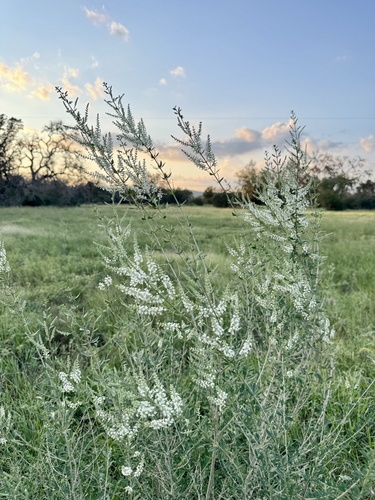
Aloysia, Genus, gratissima, Species,
- Genus & species
whitebrush
Southwestern United States to South America
Overview
Aloysia gratissima is a slender, multi-stemmed deciduous shrub reaching 3-9 feet (0.9-2.7 m) tall and 3-6 feet (0.9-1.8 m) wide, with thin, brittle, gray-green branches that arch and tangle. The small leaves are opposite or whorled, narrow, 0.3-1 inch (8-25 mm) long, rough-textured, and aromatic when crushed. Spikes of tiny white to pale lavender flowers, each about 0.1 inch (2-3 mm) across, appear in flushes after rain from spring through fall and carry a strong vanilla-like fragrance. The flowers give way to small dry fruit. Growth is fast and twiggy, with plants reaching full size in 2-3 years, and the brittle stems break readily in wind or under weight. It loses its leaves in drought and cold and resprouts from the base. In mild-winter regions the framework persists year-round; in colder areas it dies back and returns from the roots.
Native Range
Native from the southwestern United States, including Texas, New Mexico, and Arizona, south through Mexico to Argentina and Chile. Grows on limestone slopes, brushland, canyon edges, and disturbed ground in dry, well-drained soils below 6,000 feet (1,800 m).Suggested Uses
Planted in xeric, native, and pollinator gardens and as informal screening in warm, dry regions, spaced 4-6 feet (1.2-1.8 m) apart. The fragrant flowers draw large numbers of bees, butterflies, and other insects, giving the plant its bee bush name. Its brittle stems and open habit make it less suited to tightly clipped hedges.How to Identify
Appearance
Size & Dimensions
Height3' - 9'
Width/Spread3' - 6'
Colors
Bloom Information
Flowers in flushes from March through November, each flush triggered within days of rain and lasting 1-2 weeks. In moist years bloom is nearly continuous; in dry spells it pauses until the next rain. Flowering is heaviest in spring and fall.
Detailed Descriptions
Flower Description
white to lavenderFoliage Description
gray-greenGrowing Conditions
Sun Requirements
Requires 6-12 hours of direct sunlight daily
• Full Sun: 6+ hours of direct sunlight
• Partial Shade: 3-6 hours of direct sunlight
• Full Shade: Less than 3 hours of direct sunlight
Care & Maintenance
Care Guide
Grows in full sun on dry, sharp-draining, often limestone soils and tolerates heat, drought, and low fertility. Established plants need little or no irrigation, and excess water in heavy soil causes root and stem dieback. The brittle branches break in strong wind, so a sheltered spot reduces damage. It resprouts readily from the base after frost or hard pruning. Few pests trouble it. Plants are moderately long-lived and can become open and woody with age, when a hard cutback renews dense growth.Pruning
Cut back hard in late winter to renew dense growth and remove brittle, tangled stems. The shrub resprouts from the base. Light shearing after a bloom flush keeps the form compact and can prompt the next flush.Pruning Schedule
Prune: February
winter
Container Growing
Suitable for container growing
Minimum container size: 7 gallons