Alliaria, Genus, spp., Multiple species,
- Genus
- Multiple species
Europe, western and central Asia, and North Africa
Overview
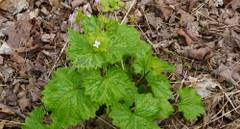
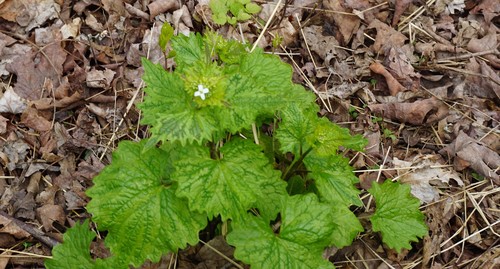
Alliaria is a small genus of biennial and short-lived perennial herbs in the family Brassicaceae, native to Europe, western and central Asia, and North Africa. The most familiar species, A. petiolata, grows as a biennial: a low rosette of kidney-shaped, scalloped leaves in the first year, then an erect flowering stem 30-120 cm (12-47 in) tall in the second. Crushed leaves and stems give off a garlic odour, the source of the common name garlic mustard. From mid-spring the stems carry clusters of small white flowers, each with four petals in a cross, followed by slender upright seed pods 2-7 cm (0.8-2.8 in) long that split to release small black seeds. Alliaria grows in woodland, on hedge banks, and in shaded waste ground on moist, fertile soils, tolerating deep shade better than most mustards. In North America A. petiolata has become a widespread invasive of the forest understorey, where its roots release compounds that suppress native plants and forest fungi. A single plant can shed hundreds of seeds that stay viable in the soil for several years.
Native Range
Native to Europe, western and central Asia, and North Africa, where the plants grow in woodland and hedgerows. A. petiolata is widely naturalized and invasive in North America.Suggested Uses
The young leaves of A. petiolata have a garlic-mustard flavour and are used in salads, sauces, and pesto. Outside its native range the species is managed as an invasive weed rather than cultivated.How to Identify
Appearance
Size & Dimensions
Height1' - 3'11"
Width/Spread6" - 1'
Bloom Information
Small white flowers open from mid-spring to early summer in flat-topped clusters at the stem tips. Each has four petals arranged in a cross, typical of the mustard family. Seed pods form quickly after flowering and ripen by midsummer, when the plant dies.
Detailed Descriptions
Foliage Description
greenGrowing Conditions
Sun Requirements
Tolerates up to 6 hours of direct sunlight daily
• Full Sun: 6+ hours of direct sunlight
• Partial Shade: 3-6 hours of direct sunlight
• Full Shade: Less than 3 hours of direct sunlight