Ajuga, Genus, reptans, Species, 'Chocolate Chip', Cultivar,
- Genus & species
- Cultivar
chocolate chip bugleweed
Europe, southwestern Asia, northern Africa (species); cultivar of garden origin
Overview
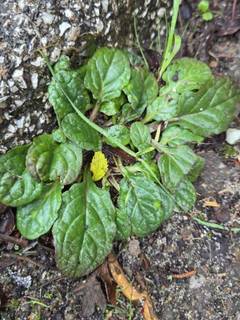
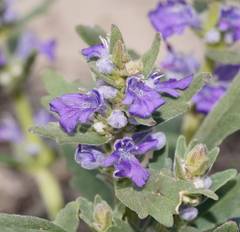
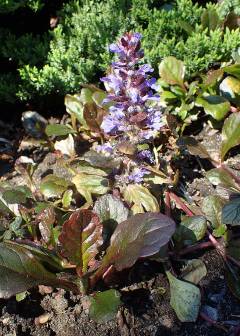
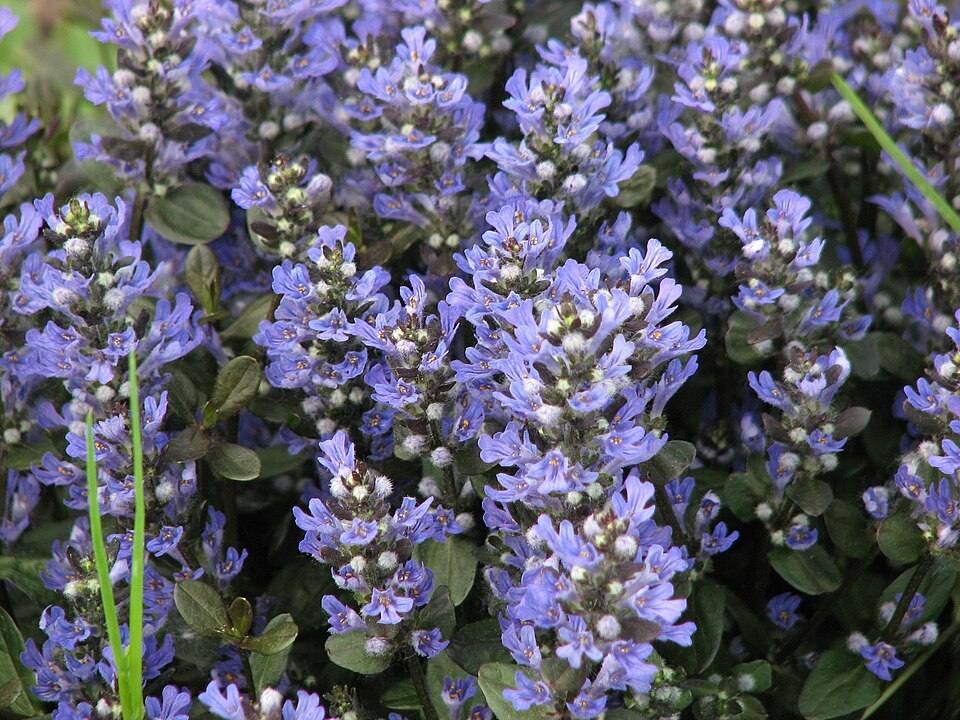
Ajuga reptans 'Chocolate Chip' is a compact, mat-forming perennial groundcover reaching only 2–4 inches (5–10 cm) tall and spreading 8–12 inches (20–30 cm) per plant through short stolons. This cultivar of A. reptans is a miniature selection with leaves 1–1.5 inches (2.5–4 cm) long and 0.5 inch (1.3 cm) wide — approximately one-third the size of the species type. Foliage is dark chocolate-brown to bronze-green, narrow and spatulate, arranged in tight rosettes. Foliage is semi-evergreen, holding through mild winters and browning at the tips below 0°F (−18°C). Flower spikes are proportionally shorter than the species, reaching 3–5 inches (8–13 cm) tall with whorls of blue-violet, two-lipped flowers. Bloom occurs April through June, lasting about 3 weeks. Stolon spread rate is slower than the species type at 4–6 inches (10–15 cm) per year, forming a dense, tight mat within 2 seasons. The compact habit and reduced spread make this cultivar less aggressive than standard A. reptans. Crown rot (Sclerotium rolfsii) remains a concern in humid, poorly ventilated sites, causing patches of dieback. Slugs feed on foliage in moist shade.
Native Range
The species A. reptans is native to Europe, southwestern Asia, and northern Africa, found in moist meadows and woodland edges. 'Chocolate Chip' is a miniature cultivar selected for reduced leaf size and compact habit.Suggested Uses
Commonly used as a groundcover between stepping stones, in rock garden crevices, and along shaded pathway edges at 8–12 inch (20–30 cm) spacing. Compact size suits small-scale plantings and containers where standard A. reptans would be too vigorous. Not suited to hot, humid sites with poor air circulation or to dry, exposed locations.How to Identify
Appearance
Size & Dimensions
Height2" - 4"
Width/Spread8" - 1'
Bloom Information
Flowers April through June in zones 3–9. Individual spikes last 2–3 weeks; total bloom period extends about 3 weeks. In zones 8–9, bloom begins in March. Flower spikes are shorter than the species but produced in similar density.
Detailed Descriptions
Foliage Description
Dark chocolate-brown to bronze-green, small, narrowGrowing Conditions
Sun Requirements
Requires 2-8 hours of direct sunlight daily
• Full Sun: 6+ hours of direct sunlight
• Partial Shade: 3-6 hours of direct sunlight
• Full Shade: Less than 3 hours of direct sunlight
Care & Maintenance
Care Guide
Water regularly during the first growing season. Established plants require consistent moisture; leaf edges brown during extended drought. Crown rot (Sclerotium rolfsii) causes patches of decline in humid conditions with poor air circulation; thin adjacent plantings to improve airflow. Slower spread rate than standard A. reptans reduces encroachment issues but also means longer time to full coverage. Slugs feed on foliage in moist shade. No regular fertilization is needed.Pruning
Shear or mow plantings to 2–3 inches (5–8 cm) after bloom in June–July to remove spent flower spikes and refresh foliage. Edge plantings once or twice per growing season to manage stolon spread. No other pruning is required.Pruning Schedule
Prune: June–July
summer
Container Growing
Suitable for container growing
Minimum container size: 1 gallons