Agonis, Genus, flexuosa, Species,
- Genus & species
western Australian peppermint
Overview
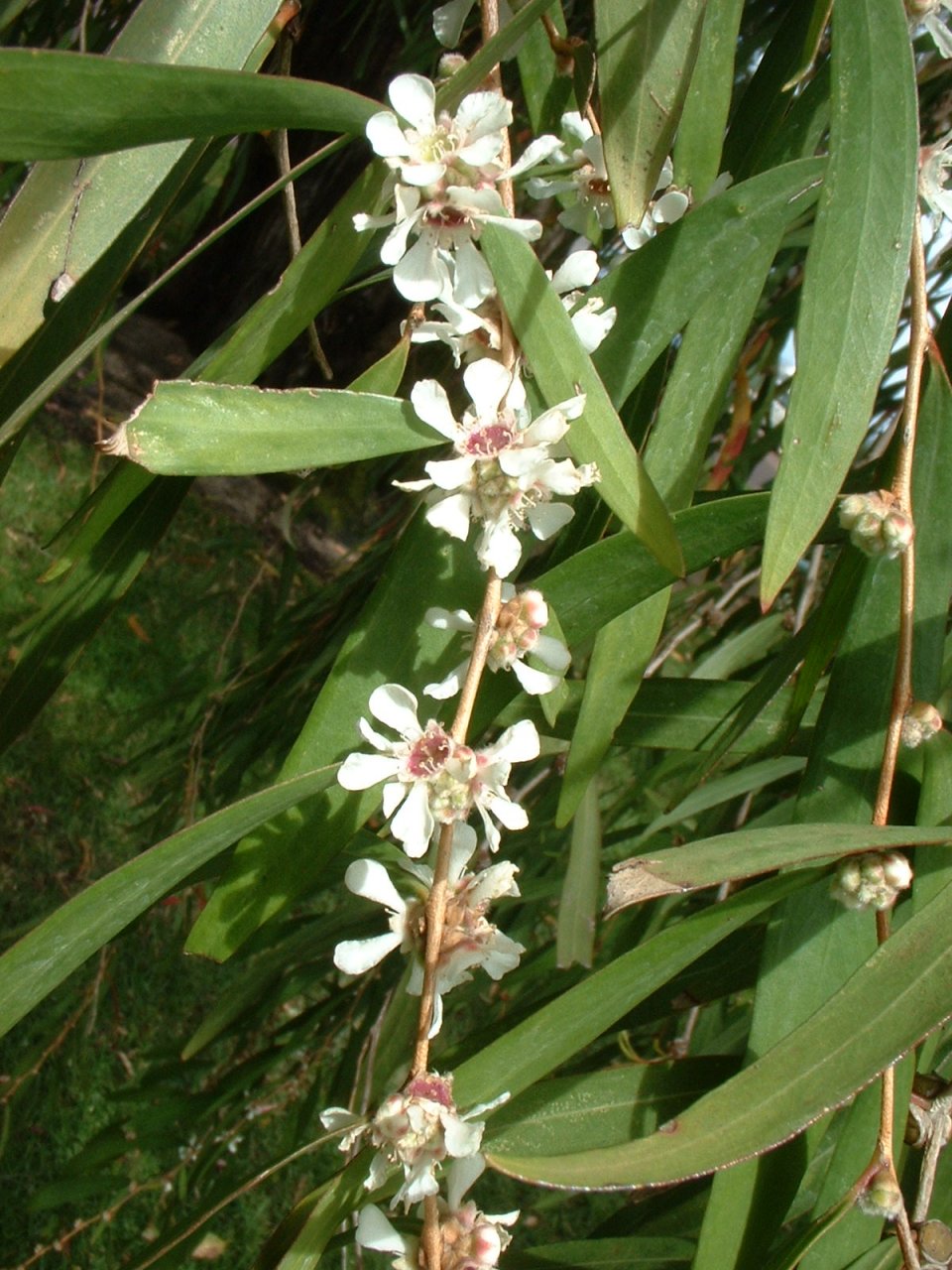
Agonis flexuosa is an evergreen tree in the family Myrtaceae, commonly 15-33 feet (4.5-10 m) tall and occasionally to 50 feet (15 m), with a short trunk, fibrous brown bark, and a dense, weeping crown of arching branches. The leaves are narrow and lance-shaped, 2.5-6 inches (6-15 cm) long, dull green, and release a peppermint scent when crushed. Small white flowers about 0.4 inch (10 mm) across cluster tightly along the branches in spring and early summer, each with five rounded petals around a central boss of stamens. The flowers are followed by small woody capsules that persist on the stems. Growth is moderate to rapid in mild coastal climates, with young plants establishing quickly. The species tolerates salt-laden wind and sandy soils but is damaged by hard frost. Surface roots and dense litter can develop beneath established trees, and limbs may split in heavy wind or after topping.
Native Range
Native to the south-western coast of Western Australia, from near Perth south and east toward Albany. Grows in coastal dunes, near-coastal woodland, and along watercourses on deep sandy soils in a winter-rainfall climate.Suggested Uses
Planted as a shade, street, and coastal shelter tree in mild-climate gardens and parks, spaced 15-25 feet (4.5-7.5 m) apart. Used in coastal revegetation for its salt and wind tolerance. Surface roots and litter limit its use close to paving, lawns, and drains.How to Identify
Appearance
Size & Dimensions
Height15' - 33'
Width/Spread13' - 26'
Bloom Information
Flowers in spring and early summer (September to December in its native range), with white flowers clustered densely along the branches. Bloom is heaviest in open, sunny positions. Scattered flowers may appear at other times in mild coastal areas.
Detailed Descriptions
Foliage Description
Dull greenGrowing Conditions
Sun Requirements
Requires 6-12 hours of direct sunlight daily
• Full Sun: 6+ hours of direct sunlight
• Partial Shade: 3-6 hours of direct sunlight
• Full Shade: Less than 3 hours of direct sunlight
Care & Maintenance
Care Guide
Water through the first two summers to establish, after which trees tolerate dry periods and coastal exposure. Plants grow in full sun to part shade on sandy, well-drained soils and withstand salt-laden wind. Growth slows on heavy, wet, or cold sites, and hard frost damages young foliage. The species is sensitive to phosphorus, so low-phosphorus native fertilisers are used where feeding is needed. Few pests cause serious harm, though scale and sooty mould occur in still, humid conditions. Surface roots develop with age and can lift paving near the trunk.Pruning
Young trees can be pruned to a single leader where a tree form is wanted, as multi-stemmed plants split more readily in wind. Dead or crossing branches are removed on mature trees. Hard topping produces weak regrowth and spoils the weeping form, so cuts are kept to the outer canopy.Pruning Schedule
Prune: December–January
summer