Ageratina, Genus, spp., Multiple species,
- Genus
- Multiple species
snakeroots
The Americas, from the eastern United States and Canada through Mexico and Central America into the South American Andes
Overview
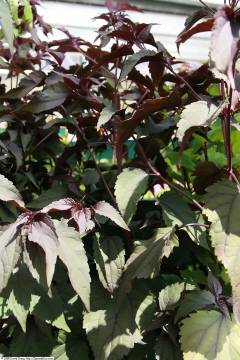
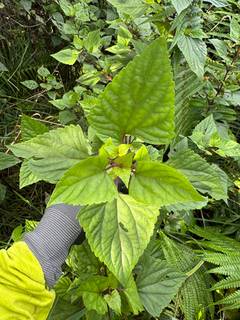
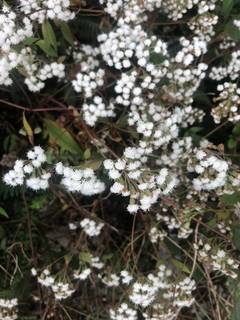
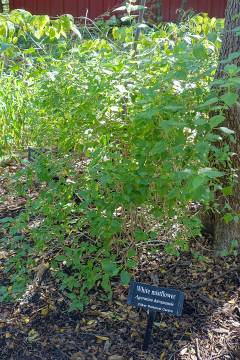
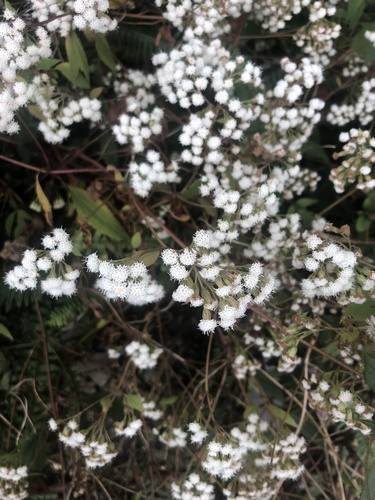
Ageratina is a genus of roughly 250 species in the aster family (Asteraceae), separated from Eupatorium and known collectively as snakeroots. Members are herbaceous perennials and soft-wooded subshrubs ranging from 1 to 5 ft (30-150 cm) tall and 1 to 3 ft (30-90 cm) wide, with erect, branching stems. Leaves are opposite, triangular to lance-shaped with toothed margins, and 2-5 in (5-13 cm) long. The flower heads are small and lack ray florets, so the bloom is made entirely of fuzzy white disc florets gathered into flat-topped clusters 2-6 in (5-15 cm) across. Flowering runs from mid-summer into autumn and supplies late nectar to bees, wasps, flies, and butterflies. The North American A. altissima, white snakeroot, grows in woodland shade and contains tremetol, a toxin that passes into the milk of cattle grazing it and caused the historic illness known as milk sickness. Several tropical species, including A. adenophora and A. riparia, have naturalized as serious weeds in Africa, Asia, Australia, and Pacific islands. The genus dies back to the rootstock in cold climates and persists as an evergreen subshrub in frost-free regions, spreading by seed and creeping roots.
Native Range
Ageratina is native to the Americas, ranging from the eastern United States and southeastern Canada through Mexico and Central America into the South American Andes. The genus reaches its greatest diversity in Mexico, while A. altissima ranges widely across temperate eastern North America.Suggested Uses
Ageratina grows in woodland gardens, shaded borders, and native plantings, where A. altissima supplies late-season white bloom in low light. The genus is combined with autumn perennials and grasses for pollinator value at 18-24 in (45-60 cm) spacing. Because tremetol makes the foliage toxic to grazing animals, the North American species is kept away from pasture and livestock areas.How to Identify
Appearance
Size & Dimensions
Height1' - 5'
Width/Spread1' - 3'
Bloom Information
Flowering runs from mid-summer into autumn, roughly July to October depending on species and climate. Each head is a tuft of small white disc florets, massed into flat clusters that hold for several weeks. The late bloom feeds bees, wasps, flies, and butterflies when fewer other flowers are open.
Detailed Descriptions
Foliage Description
greenGrowing Conditions
Sun Requirements
Requires 2-8 hours of direct sunlight daily
• Full Sun: 6+ hours of direct sunlight
• Partial Shade: 3-6 hours of direct sunlight
• Full Shade: Less than 3 hours of direct sunlight
Water & Climate
Water Needs
Care & Maintenance
Care Guide
Ageratina grows in average to moist, well-structured soil at a pH of about 5.5 to 7.0. The North American A. altissima grows in part to full shade at woodland edges and needs steady moisture, while several tropical species take full sun and drier ground. Plants spread by seed and short creeping roots and can self-sow widely once established. Cutting the flower heads before seed ripens limits their spread. In cold zones the tops die back and resprout in spring, with the temperate species hardy to about USDA zone 3. All parts of A. altissima are poisonous to people and livestock through the toxin tremetol, with ingestion causing the harm rather than skin contact.Pruning
Ageratina needs little pruning. Cut stems to the ground in late autumn or early spring once growth dies down. Removing the flower clusters as they fade limits the heavy self-seeding, and shearing the plant by half in early summer produces a denser, lower habit.Pruning Schedule
Prune: June & November
summerfall