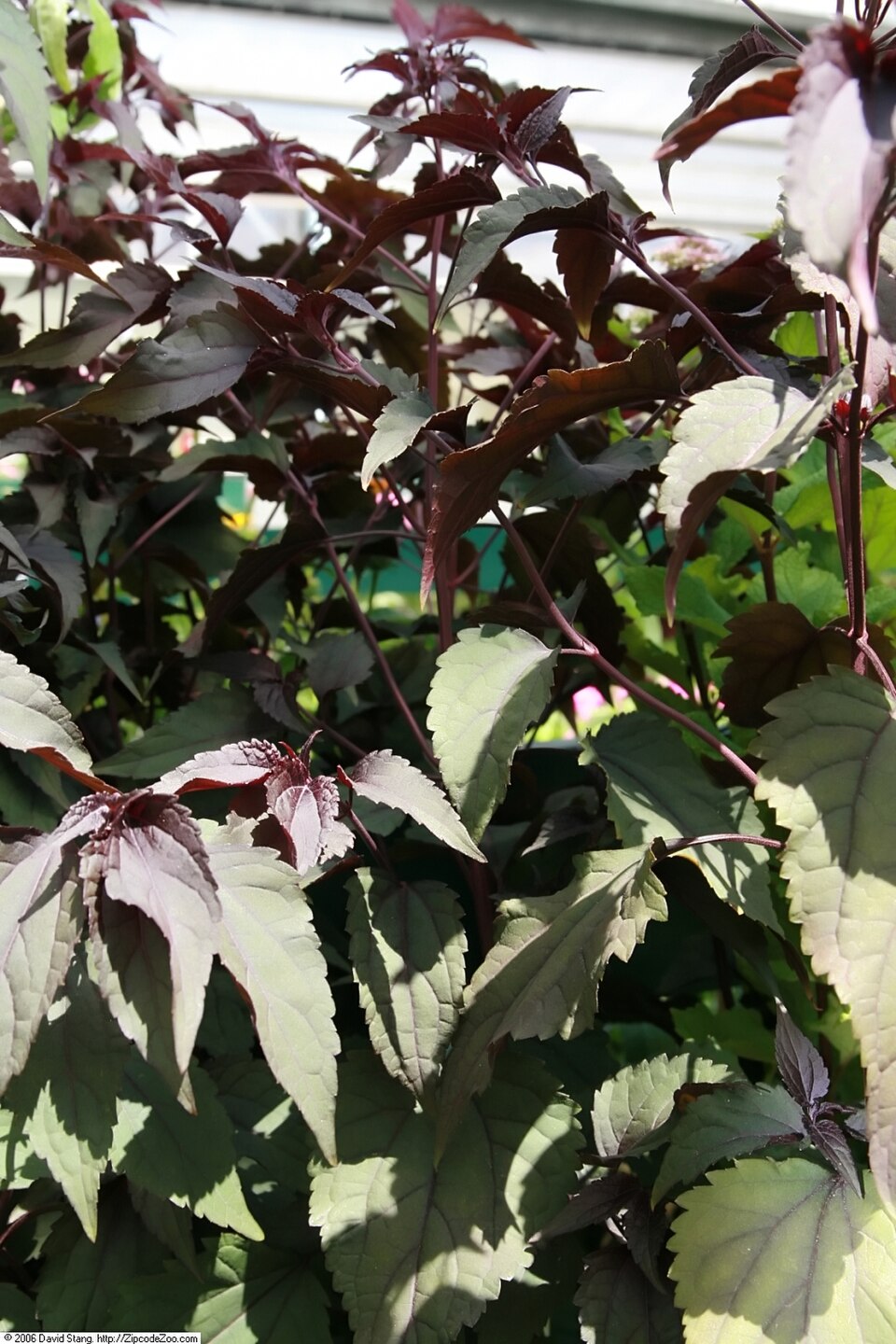
Ageratina, Genus, altissima, Species, 'Chocolate', Cultivar,
- Genus & species
- Cultivar
chocolate white snakeroot
Overview
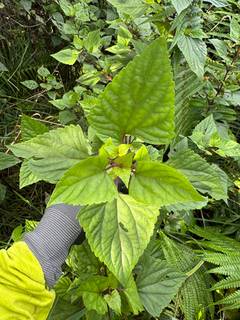
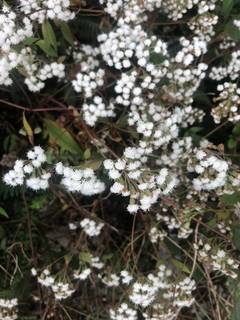
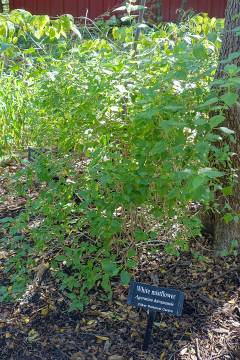
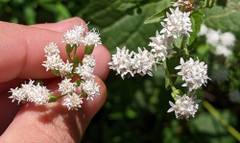
Ageratina altissima 'Chocolate' is an upright, clump-forming perennial reaching 36–48 inches (90–120 cm) tall and 24–36 inches (60–90 cm) wide. This cultivar of A. altissima produces dark chocolate-purple to bronze-green foliage, darker than the species type which has medium green leaves. Leaves are opposite, ovate, 3–5 inches (8–13 cm) long with coarsely toothed margins. New spring foliage emerges intensely dark purple, fading to bronze-green as summer temperatures rise above 80°F (27°C). Flat-topped clusters of small white flowers 3–5 inches (8–13 cm) across appear August through October, contrasting with the dark foliage. Individual flower clusters last 2–3 weeks; total bloom period extends 4–6 weeks. Plants spread by rhizomes and self-seed freely, producing 30–50 seedlings per plant annually if not deadheaded. Seedlings do not all retain the dark foliage color; approximately 50% revert to green. Stems are upright but may lean or flop in full shade or overly rich soils. All parts contain tremetol, which is toxic to livestock and humans if ingested in quantity. Historically, this toxin caused 'milk sickness' in humans who consumed milk from cattle that had grazed on the plant.
Native Range
The species A. altissima is native to eastern North America, from southern Canada through the eastern United States west to Texas. Found in moist woodland edges, stream banks, and partially shaded roadsides at 200–5,000 feet (60–1,500 m) elevation. The cultivar 'Chocolate' was selected from wild populations.Suggested Uses
Commonly planted in woodland gardens, shade borders, and naturalized areas at 24–30 inch (60–75 cm) spacing. Late bloom season complements earlier-flowering shade perennials. Prolific self-seeding and rhizome spread make this cultivar unsuitable for small, formal plantings without regular maintenance to control spread.How to Identify
Appearance
Size & Dimensions
Height3' - 4'
Width/Spread2' - 3'
Bloom Information
Flowers August through October in zones 4–8. Individual flower clusters last 2–3 weeks; total bloom period extends 4–6 weeks. In zone 8, bloom may begin in late July. Bloom timing is late in the perennial season, filling a gap when many summer perennials have finished.
Detailed Descriptions
Foliage Description
Dark chocolate-purple to bronze-green, opposite, toothedGrowing Conditions
Sun Requirements
Requires 3-8 hours of direct sunlight daily
• Full Sun: 6+ hours of direct sunlight
• Partial Shade: 3-6 hours of direct sunlight
• Full Shade: Less than 3 hours of direct sunlight
Care & Maintenance
Care Guide
Water regularly during the first growing season to establish. Established plants require consistent moisture; leaf margins scorch during prolonged drought. Foliage color is darkest in partial shade with 3–6 hours of direct sun. Full sun intensifies purple color in spring but may cause leaf scorch in hot climates (zones 7–8). Self-seeding is prolific; remove spent flower heads before seeds disperse to prevent volunteer seedlings. Pinch stems by one-third in early June to reduce mature height and promote bushier growth. Rhizome spread is moderate at 4–6 inches (10–15 cm) annually.Pruning
Cut all stems to ground level in late fall after frost or in early spring (March–April) before new growth emerges. Pinch growing tips by one-third in early June to reduce height by 6–12 inches (15–30 cm) and prevent late-season flopping. Deadhead spent flower clusters promptly to limit self-seeding. Divide clumps every 3–4 years in spring to manage spread.Pruning Schedule
Prune: March–April & June
early springsummer