Adenostoma, Genus, spp., Multiple species,
- Genus
- Multiple species
Chamise
California and Baja California (California Floristic Province)
Overview
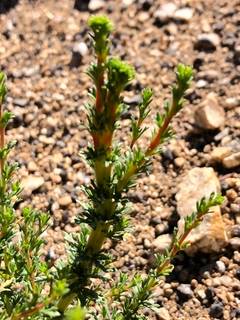
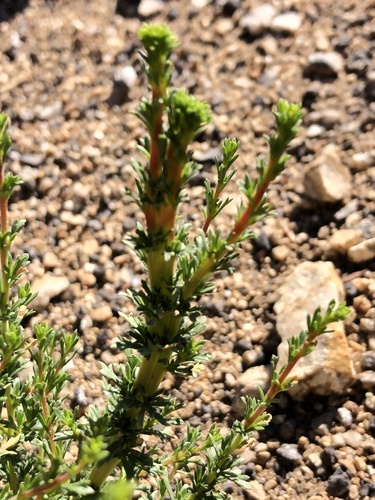
Adenostoma is a genus of two evergreen shrubs in the rose family, native to the chaparral of California and Baja California. A. fasciculatum, called chamise or greasewood, is a much-branched shrub 2-12 feet (0.6-3.7 m) tall with small, needle-like leaves clustered in bundles along the stems and broad sprays of tiny white flowers in late spring. A. sparsifolium, known as redshanks or ribbonwood, grows taller, to 6-20 feet (2-6 m), and has reddish bark that peels in thin papery strips and sparser, threadlike leaves. Both carry small, five-petalled white flowers in branched clusters that age rusty brown and persist on the plant. The genus dominates dry, sunny slopes on poor, rocky soils and is deeply drought-adapted, often shedding some leaves in the hottest months. The foliage and stems are resinous and highly flammable, and the shrubs are central to the fire cycle of chaparral; A. fasciculatum resprouts from a woody basal burl and from seed after fire, while A. sparsifolium regrows mainly from the base. The plants tolerate heat, drought, and poor soils but need sharp drainage and full sun.
Native Range
Adenostoma is native to the California Floristic Province, ranging through the coastal ranges, foothills, and lower mountains of California into Baja California, Mexico. It grows in chaparral and on dry, rocky slopes under a Mediterranean climate of wet winters and long dry summers.Suggested Uses
Grown in native, dry-slope, and habitat-restoration plantings across California, and used for erosion control on sunny banks. It supports chaparral wildlife and pollinators and suits low-water, fire-adapted landscapes on poor soils. The taller redshanks is also grown as a large specimen shrub for its red peeling bark.How to Identify
Appearance
Size & Dimensions
Height2' - 20'
Width/Spread4' - 15'
Bloom Information
Flowering runs from late spring into summer, roughly May to July depending on species and elevation. The small white flowers are massed in branched terminal clusters and fade to a rusty brown that lingers for months. A. sparsifolium tends to bloom later than A. fasciculatum.
Detailed Descriptions
Foliage Description
greenGrowing Conditions
Sun Requirements
Requires 6-12 hours of direct sunlight daily
• Full Sun: 6+ hours of direct sunlight
• Partial Shade: 3-6 hours of direct sunlight
• Full Shade: Less than 3 hours of direct sunlight
Care & Maintenance
Care Guide
Grow in full sun in sharply drained, rocky or sandy soil, as these chaparral shrubs decline in rich, moist, or poorly drained ground. Water occasionally only during the first year, after which established plants rely on winter rain and tolerate severe summer drought. No feeding or summer irrigation is needed, and overwatering in heat encourages root rot. The genus suits USDA zones 8 to 10 and frost-free Mediterranean climates. Because the foliage is resinous and flammable, the shrubs are kept well back from structures in fire-prone regions.Pruning
Prune lightly in late winter or early spring to shape the plant and remove dead, resinous twiggy growth, which builds up and adds fuel. A. fasciculatum tolerates harder cutting and resprouts from its basal burl, while A. sparsifolium is cut back more cautiously. Clearing accumulated dead material lowers flammability.Pruning Schedule
Prune: February–March
winterearly spring