Adelinia, Genus, spp., Multiple species,
- Genus
- Multiple species
Pacific Hound's tongue
Overview
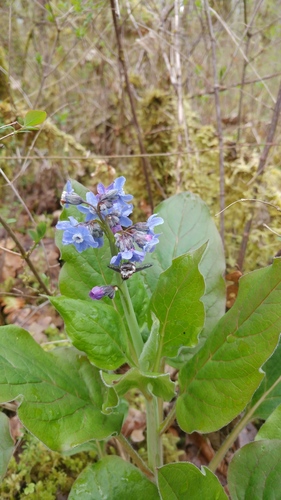
Adelinia is a genus in the borage family (Boraginaceae) with a single species, A. grandis, the Pacific hound's tongue, formerly placed in Cynoglossum. It is a deciduous woodland perennial 30–90 cm (12–35 in) tall, growing from a stout taproot. The large basal leaves are oval to elliptic, 10–30 cm (4–12 in) long, with long stalks and a soft, slightly rough surface, while the upper stem leaves clasp the stem. In spring, branched, curving clusters carry many five-lobed flowers about 1–1.5 cm (0.4–0.6 in) across, blue to blue-purple with a ring of small white appendages at the throat, much like a large forget-me-not. The flowers are followed by four nutlets covered in barbed prickles that cling to fur and clothing for dispersal. Adelinia grows in part to full shade in moist, humus-rich woodland soil and goes summer-dormant after flowering and seeding, disappearing until the following spring. It tolerates dry shade once dormant but needs spring moisture. The plant contains pyrrolizidine alkaloids, so the foliage and roots are poisonous if eaten, and the barbed seeds can become a nuisance on pets and clothing.
Native Range
Adelinia grandis is native to western North America, from British Columbia south through Washington and Oregon into California. It grows in open woodland, forest edges, and shaded slopes, often under oaks and conifers, at low to middle elevations.Suggested Uses
Planted in woodland and shade gardens, native plant borders, and under deciduous trees for spring colour. Grown with ferns and other spring-dormant woodlanders that fill the gap it leaves in summer. Suited to shaded, seasonally moist sites rather than hot, sunny borders.How to Identify
Appearance
Size & Dimensions
Height1' - 2'11"
Width/Spread1' - 2'
Bloom Information
Adelinia flowers in spring, generally April to May, soon after the leaves emerge. The coiled clusters open their blue flowers over three to four weeks. Barbed seeds follow, and the plant yellows and goes dormant by early summer.
Detailed Descriptions
Flower Description
blue to blue-purpleFoliage Description
medium greenGrowing Conditions
Sun Requirements
Tolerates up to 4 hours of direct sunlight daily
• Full Sun: 6+ hours of direct sunlight
• Partial Shade: 3-6 hours of direct sunlight
• Full Shade: Less than 3 hours of direct sunlight
Care & Maintenance
Care Guide
Grow Adelinia in part to full shade on moist, humus-rich, well-drained woodland soil. It needs moisture from winter through spring but tolerates dry shade in summer once it is dormant. A soil pH from about 6.0 to 7.0 suits it. Mulch with leaf-mould to keep the root zone cool and to mimic its woodland setting. Plants establish poorly after transplanting because of the deep taproot, so set them out young. Cold hardiness runs to about USDA zone 6.Pruning
Adelinia needs no pruning. Removing the barbed seed stalks before the nutlets ripen limits unwanted self-sowing and stops the burrs catching on pets and clothing. Tattered leaves can be cleared as the plant goes dormant in summer.Container Growing
Suitable for container growing
Minimum container size: 2 gallons
