Acrotriche, Genus, serrulata, Species,
- Genus & species
Honey-pots
Overview
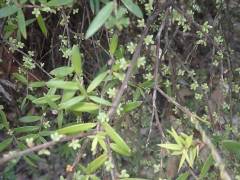
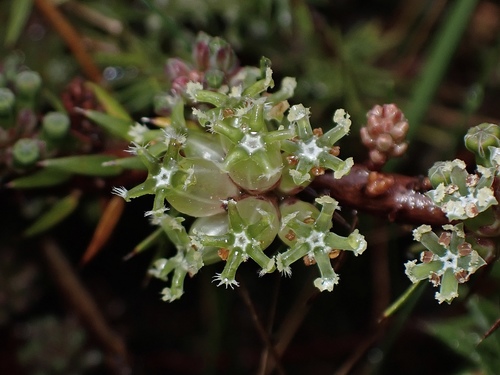
Acrotriche serrulata is a low, spreading evergreen shrub usually 10-50 cm (4-20 in) tall and spreading to about 1 m (3.3 ft) across, often forming a dense, ground-hugging mat. The small, stiff, lance-shaped leaves are 6-15 mm (0.2-0.6 in) long with finely toothed, sharply pointed margins and a paler underside. Dense clusters of small, tubular greenish-cream flowers are held close to the stems near ground level in late winter and spring; each flower holds nectar that gives the plant its common name and is taken by ants, insects, and small birds. Rounded fleshy fruits follow. It grows in heath, dry sclerophyll forest, and woodland on sandy or gravelly, low-nutrient soils, often in dappled light beneath taller shrubs and trees. The pungent, sharp-tipped leaves can make handling uncomfortable, and the low, slow-growing habit means it establishes gradually rather than giving quick cover.
Native Range
Native to south-eastern Australia, occurring in New South Wales, Victoria, Tasmania, and South Australia.Suggested Uses
Used as a groundcover in native, heath, and rockery gardens on sandy, low-nutrient soils. Suited to bush-garden underplanting and habitat plantings for nectar-feeding insects and birds. Also grown on banks for low, spreading cover.How to Identify
Appearance
Size & Dimensions
Height4" - 1'8"
Width/Spread1' - 3'3"
Bloom Information
Detailed Descriptions
Foliage Description
greenGrowing Conditions
Sun Requirements
Requires 3-7 hours of direct sunlight daily
• Full Sun: 6+ hours of direct sunlight
• Partial Shade: 3-6 hours of direct sunlight
• Full Shade: Less than 3 hours of direct sunlight
Care & Maintenance
Care Guide
Grows in dappled shade to full sun on free-draining sandy or gravelly soils that are low in nutrients, with an acidic pH of about 4.5-6.5. As a member of the heath family it is sensitive to phosphorus-rich fertilisers, which can damage the roots. Light watering during establishment helps the plant settle; thereafter supplemental water is needed only in extended dry spells. Heavy, wet, or limey soils are poorly tolerated. It withstands light to moderate frost within its native range. Growth is slow, so minimal intervention is needed once established.Pruning
Pruning is rarely required; light tip trimming after flowering can encourage denser growth. Old or damaged stems can be removed at the base. The naturally low, spreading habit needs little shaping.Pruning Schedule
Prune: October–November
spring