Acrotriche, Genus, aggregata, Species,
- Genus & species
ground berry
Overview
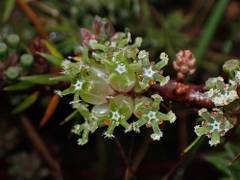
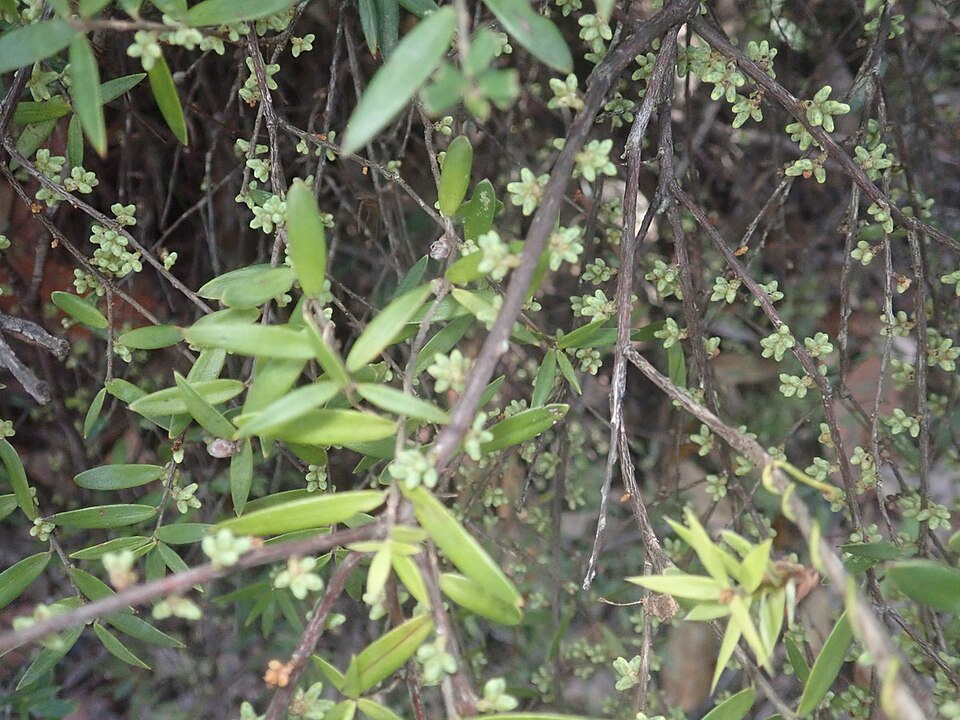
Acrotriche aggregata is an upright to spreading evergreen shrub in the heath family, reaching 3-10 feet (1-3 m) tall and 3-6 feet (1-2 m) wide, occasionally taller in sheltered forest. The stiff, narrow leaves are 0.4-1 inch (1-2.5 cm) long, lance-shaped with a sharp point and parallel veins on the underside, mid to dark green and crowded along the branches. Small tubular flowers about 0.1-0.2 inch (3-5 mm) long are packed in dense spikes among the leaves on older wood; they are cream to pale green with a ring of hairs inside the throat. Flowering is followed by rounded fleshy fruits 0.2-0.3 inch (5-8 mm) wide that ripen red and are edible, with a thin sweet flesh over a hard stone. Growth is slow, and plants form an open framework of arching branches with age. The species tolerates dry shade beneath taller trees but flowers and fruits more heavily in brighter positions.
Native Range
Native to eastern Australia, from Queensland through New South Wales to Victoria. It grows in dry sclerophyll forest and woodland, usually in the understorey on sandy or loamy soils over sandstone and granite.Suggested Uses
Used in native, woodland, and bush-food gardens as an understorey shrub, spaced 3-5 feet (1-1.5 m) apart. The red fruits are eaten fresh and draw birds. Suits dry-shade positions beneath established trees where many shrubs grow poorly.How to Identify
Appearance
Size & Dimensions
Height3' - 10'
Width/Spread3' - 6'
Bloom Information
Detailed Descriptions
Flower Description
cream to pale greenFoliage Description
mid to dark greenGrowing Conditions
Sun Requirements
Requires 3-8 hours of direct sunlight daily
• Full Sun: 6+ hours of direct sunlight
• Partial Shade: 3-6 hours of direct sunlight
• Full Shade: Less than 3 hours of direct sunlight
Care & Maintenance
Care Guide
Grows in part shade to full sun on freely draining sandy or loamy soils of low fertility, matching its forest-understorey origins. Regular watering through the first one to two years aids establishment; mature plants tolerate dry shade and seasonal drought once rooted. Waterlogged or heavy clay soils cause root decline. The species needs no routine feeding and responds poorly to high-phosphorus fertilizers common in the heath family. Growth is slow, so plants take several years to reach flowering size. Few pests affect it, though root-rot pathogens occur on poorly drained sites.Pruning
Light pruning after fruiting maintains a compact shape, as flowers form on older wood and hard pruning removes the flowering and fruiting stems. The shrub reshoots slowly from older branches. Pruning is otherwise minimal, with spent or damaged wood removed as needed.Pruning Schedule
Prune: December–January
summer
Container Growing
Suitable for container growing
Minimum container size: 5 gallons