Acronychia, Genus, spp., Multiple species,
- Genus
- Multiple species
acronychia
Tropical and subtropical Asia, Australia, and the Pacific
Overview
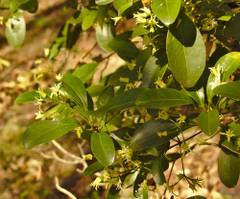
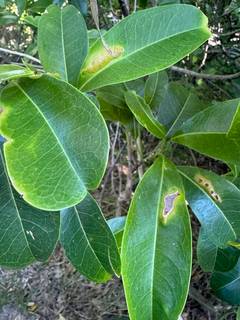
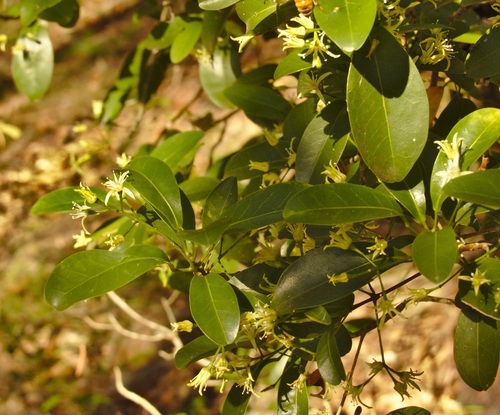
Acronychia is a genus of evergreen shrubs and small to medium trees in the citrus family (Rutaceae), with roughly forty to fifty species native to tropical and subtropical Asia, Australia, and the Pacific. Plants reach 3–25 m (10–80 ft) tall, with glossy, simple or trifoliate leaves that are dotted with oil glands and release a citrus scent when crushed. Small four-petalled cream to greenish-white flowers are carried in branched clusters and are followed by fleshy, four-lobed or rounded fruits, white, yellow, or pink, 1–2 cm (0.4–0.8 in) across. Several species, such as the Australian lemon aspen A. acidula, bear tart, edible fruit used as bush food. Acronychia grows in rainforest, margins, and moist open forest in full sun to part shade on fertile, well-drained soils, and most species are frost-tender and suited only to warm, frost-free climates. Growth is moderate, and the dense, glossy canopy casts heavy shade. The fleshy fruits drop and stain paving, and seedlings can appear nearby. Some species are pioneer trees that colonise rainforest clearings quickly.
Native Range
Acronychia is native to tropical and subtropical Asia, from India and southern China through Southeast Asia, and across Australia and the western Pacific islands. The trees grow in rainforest, rainforest margins, and moist open forest, from the lowlands into the hills.Suggested Uses
Grown as a shade, screening, and street tree in warm climates, in rainforest and bush-food gardens, and as a fruiting tree for species with edible fruit. Planted in parks and large gardens where the dense evergreen canopy casts shade. Suited to frost-free, moist sites rather than cold or dry gardens.How to Identify
Appearance
Size & Dimensions
Height10' - 80'
Width/Spread10' - 30'
Bloom Information
Acronychia flowers mainly in spring and summer in the subtropics and more irregularly in wetter tropical climates. The small cream flowers open in branched clusters over several weeks. Fleshy fruits ripen weeks to months later and can hang on the tree for an extended period.
Detailed Descriptions
Flower Description
cream to greenish-whiteFoliage Description
glossy dark greenGrowing Conditions
Sun Requirements
Requires 4-10 hours of direct sunlight daily
• Full Sun: 6+ hours of direct sunlight
• Partial Shade: 3-6 hours of direct sunlight
• Full Shade: Less than 3 hours of direct sunlight
Care & Maintenance
Care Guide
Grow Acronychia in full sun to part shade on fertile, moist, well-drained soil in a frost-free or nearly frost-free climate. It tolerates humidity, rainforest shade when young, and a range of soils but is damaged by frost and dry, exposed sites. A soil pH from about 5.5 to 7.0 suits most species. Water regularly through dry spells while plants establish, and mulch to keep the roots cool and moist. Feed in spring for steady growth. Shelter from strong wind reduces damage to the broad evergreen canopy.Pruning
Acronychia needs little pruning beyond shaping and removing dead or crossing wood. Prune after fruiting, in late summer to autumn, to control size and lift the canopy. Hard pruning is tolerated by many species, which resprout from older wood.Pruning Schedule
Prune: February–March
summerfall