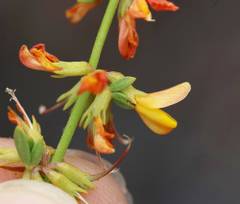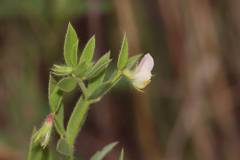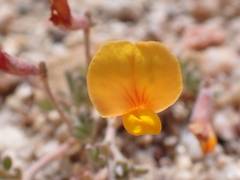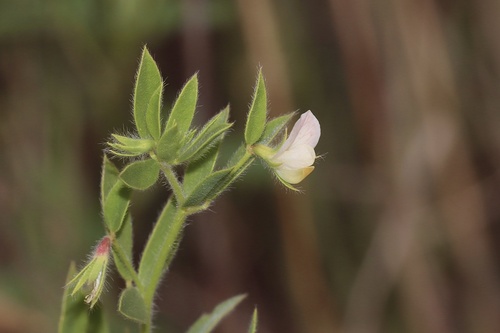
Acmispon, Genus, spp., Multiple species,
- Genus
- Multiple species
deervetch
Overview
Acmispon is a genus of about 30 to 50 species of annual and perennial herbs and small subshrubs in the pea family, Fabaceae, known as bird's-foot trefoils or deervetches, native to western North America with a few species reaching South America. Plants range from low, spreading annuals to upright subshrubs 4 to 48 inches (10 to 120 cm) tall, with small leaves divided into a few leaflets, sometimes silky-hairy. The pea-shaped flowers are small, 0.2 to 0.6 inch (5 to 15 mm) long, borne singly or in small clusters in the leaf axils, and are usually yellow or cream, often ageing to orange or red, with pink and white in some species. As members of the pea family, the roots form nodules with bacteria that fix nitrogen, letting the plants grow on poor soils. The flowers are followed by slender pods that split to scatter seed. Acmispon grows in chaparral, grassland, deserts, coastal scrub, and disturbed or burned ground, often appearing quickly after fire. The genus includes A. glaber, deerweed, a common shrubby fire-follower in California. Several species are larval hosts for blue and hairstreak butterflies, and the genus was formerly included in Lotus.
Native Range
Acmispon is native to western North America, from British Columbia through California and the Southwest into Mexico, with a few species in South America. Plants grow in chaparral, coastal scrub, grassland, desert, and open disturbed ground. Several species are most abundant in the first years after a fire.Suggested Uses
Grown in native, dryland, and pollinator gardens and in habitat and post-fire restoration for its drought tolerance and nitrogen-fixing roots. A. glaber is used on dry banks and disturbed slopes in California for quick cover. Several species are grown to support blue and hairstreak butterflies as larval hosts.How to Identify
Appearance
Size & Dimensions
Height4" - 4'
Width/Spread6" - 3'
Bloom Information
Acmispon flowers mainly in spring and early summer, roughly March to June, and shrubby species can flower over a longer season in mild climates. The small yellow flowers often turn orange or red as they age, giving mixed colours on one plant. Bloom is heaviest in the years after fire in fire-adapted species.
Detailed Descriptions
Flower Description
yellow or cream, often ageing to orange or redFoliage Description
green to grey-greenGrowing Conditions
Sun Requirements
Requires 6-12 hours of direct sunlight daily
• Full Sun: 6+ hours of direct sunlight
• Partial Shade: 3-6 hours of direct sunlight
• Full Shade: Less than 3 hours of direct sunlight