Image 1 of 15
1 / 15
Plant Reference
Acanthus, Genus, spinosus, Species,
- Genus & species
spiny Bear's breeches
Eastern Mediterranean — Italy, the Balkans, Greece, Turkey, and western Asia; rocky well-drained hillsides, woodland margins, disturbed ground
Overview
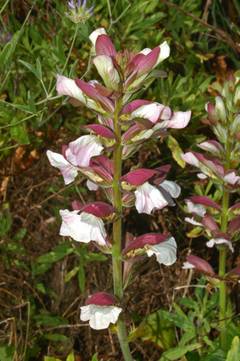
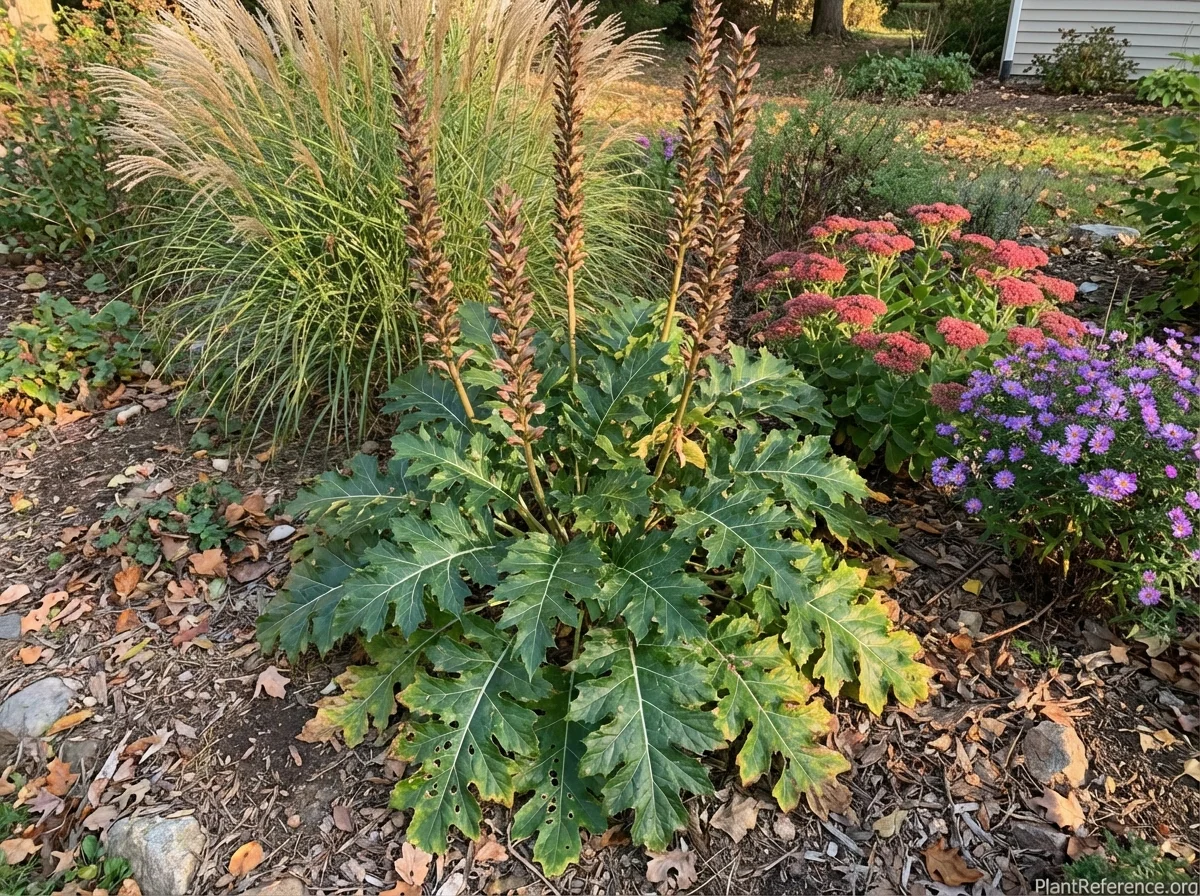
Acanthus spinosus (spiny bear's breeches) is a clump-forming semi-evergreen perennial reaching 3–5 feet (90–150 cm) tall in bloom and 2–3 feet (60–90 cm) wide. Deeply pinnately cut dark glossy green leaves 12–24 inches (30–60 cm) long have narrow lobes terminating in sharp white spines; the leaf texture is firmer and the dissection deeper than that of A. mollis. Flower spikes 3–5 feet (90–150 cm) tall bear tubular white flowers subtended by spiny purple-green bracts from June through August for about 8 weeks. The spines on both leaves and bracts can puncture skin on contact. The species belongs to Acanthaceae. Spinosus means spiny. Native to the eastern Mediterranean — Italy, the Balkans, Greece, Turkey, and western Asia — in rocky well-drained sites, hillsides, and woodland margins. Spreads by fleshy rhizomes; root fragments left in soil produce new shoots, and established clumps are difficult to fully remove — the rhizomatous spread and persistence of root fragments are the principal management limitations. In prolonged summer drought, foliage may go partially dormant by late August. Not reliably hardy below zone 5 without mulch protection; in zone 5, stems die back to the ground in winter and may not re-emerge reliably after severe winters. Slugs and snails feed on new spring growth. Toxic to pets (saponins). Deer-resistant. Hardy in zones 5–9.
Native Range
Native to the eastern Mediterranean — Italy, the Balkans, Greece, Turkey, and western Asia, in rocky well-drained sites, hillsides, woodland margins, and disturbed ground with thin soils in a Mediterranean climate.Suggested Uses
Used in perennial borders, gravel gardens, Mediterranean-style plantings, and on dry slopes, spaced 2–3 feet (60–90 cm). The spiny foliage and bracts deter browsing by deer and rabbits. The spreading rhizomatous habit requires management near paths, patios, and lawn edges. Not suited to small beds where containment of rhizomes is difficult. Toxic to pets. Zones 5–9.How to Identify
Appearance
Size & Dimensions
Height3' - 5'
Width/Spread2' - 3'
Bloom Information
Summer (June–August) over about 8 weeks. Flower spikes 3–5 feet (90–150 cm) bear tubular white flowers subtended by spiny purple-green bracts. Plants may produce 3–5 spikes per clump in a season. In cool Pacific Northwest summers, flowering may begin in late May. In hot dry summers, plants may enter partial dormancy before the bloom period ends.
Detailed Descriptions
Flower Description
White tubular flowers subtended by spiny purple-green bracts; on tall spikes 3-5 feet (90-150 cm); June-AugustFoliage Description
Dark glossy green; deeply pinnately cut; 12-24 inches (30-60 cm); narrow lobes with sharp white spine tips; firmer texture than A. mollisGrowing Conditions
Sun Requirements
Requires 3-8 hours of direct sunlight daily
• Full Sun: 6+ hours of direct sunlight
• Partial Shade: 3-6 hours of direct sunlight
• Full Shade: Less than 3 hours of direct sunlight
Care & Maintenance
Care Guide
Grows in part shade to full sun with 3–8 hours of direct light. Well-drained soil at pH 6.0–7.5 in loam, sand, rocky, or clay substrates. Tolerates dry, poor, or rocky soils once established; performs poorly in heavy wet clay. Established plants tolerate dry spells of 2–3 weeks. The rhizomatous root system spreads in moist fertile soils; root fragments left during removal regenerate new growth. Leaf and bract spines can puncture skin on contact. Slugs and snails feed on new spring growth. In zone 5, a 4–6 inch (10–15 cm) mulch layer over the root zone in fall improves winter survival. Toxic to pets (saponins). Deer-resistant. Suitable for zones 5–9.Pruning
Cut flower spikes to ground level after bloom in August–September to prevent self-seeding. Remove dead or yellowed leaves at any time. In climates where foliage dies back in winter, leave stems until new growth appears in spring, then cut old growth to the ground. In zones 8–9 where foliage persists, remove old leaves in early spring before new growth begins. Divide every 5 years or when flowering decreases.Pruning Schedule
Prune: March & August–September
summerearly spring