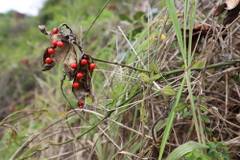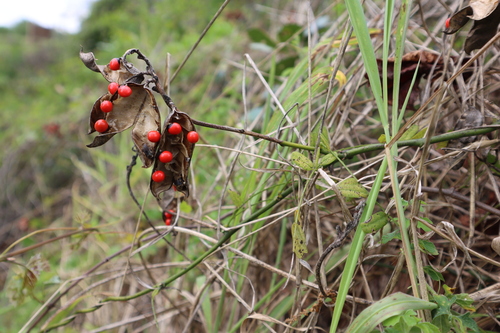
Abrus, Genus, spp., Multiple species,
- Genus
- Multiple species
rosary pea
Tropical Africa, Asia, and the Americas
Overview
Abrus is a genus of twining woody and herbaceous climbers in the pea family (Fabaceae), with about thirteen to eighteen species across the tropics of Africa, Asia, and the Americas. The widely naturalised A. precatorius, rosary pea, climbs 3–6 m (10–20 ft) by twining stems clothed in pinnate leaves of many small oval leaflets 1–2 cm (0.4–0.8 in) long. Pale pink to purple pea-flowers are carried in dense clusters, followed by short curved pods that split to reveal hard, glossy seeds, most often scarlet with a black eye. The seeds contain abrin, a highly toxic plant protein; ingestion of a single chewed seed can be fatal to humans and animals, and the foliage and roots are also poisonous. Abrus grows quickly in heat and full sun on most soils and is regarded as an invasive weed in Florida, Hawaii, and many other warm regions, where it smothers native vegetation. The hard-coated seeds remain viable for years. Cool temperatures and frost kill the top growth, limiting it to frost-free and subtropical climates.
Native Range
Species of Abrus are native to tropical Africa and Asia, with some in tropical America. A. precatorius is thought to originate in Asia or Africa and has spread through the tropics and subtropics worldwide, becoming naturalised and invasive far beyond its original range.Suggested Uses
Grown in tropical gardens as a fast screening climber on fences and trellises, and historically used for its hard seeds in beadwork and jewellery. Its invasive spread and poisonous seeds restrict its use to controlled settings away from children, pets, and livestock.How to Identify
Appearance
Size & Dimensions
Height10' - 20'
Width/Spread3' - 6'
Bloom Information
Abrus flowers through the warm, wet season, generally summer into autumn and nearly year-round in equatorial climates. The small pea-flowers open in dense axillary clusters over several weeks. Pods ripen weeks later and split to expose the scarlet-and-black seeds, which persist on the plant.
Detailed Descriptions
Flower Description
pink to purpleFoliage Description
light greenGrowing Conditions
Sun Requirements
Requires 6-12 hours of direct sunlight daily
• Full Sun: 6+ hours of direct sunlight
• Partial Shade: 3-6 hours of direct sunlight
• Full Shade: Less than 3 hours of direct sunlight