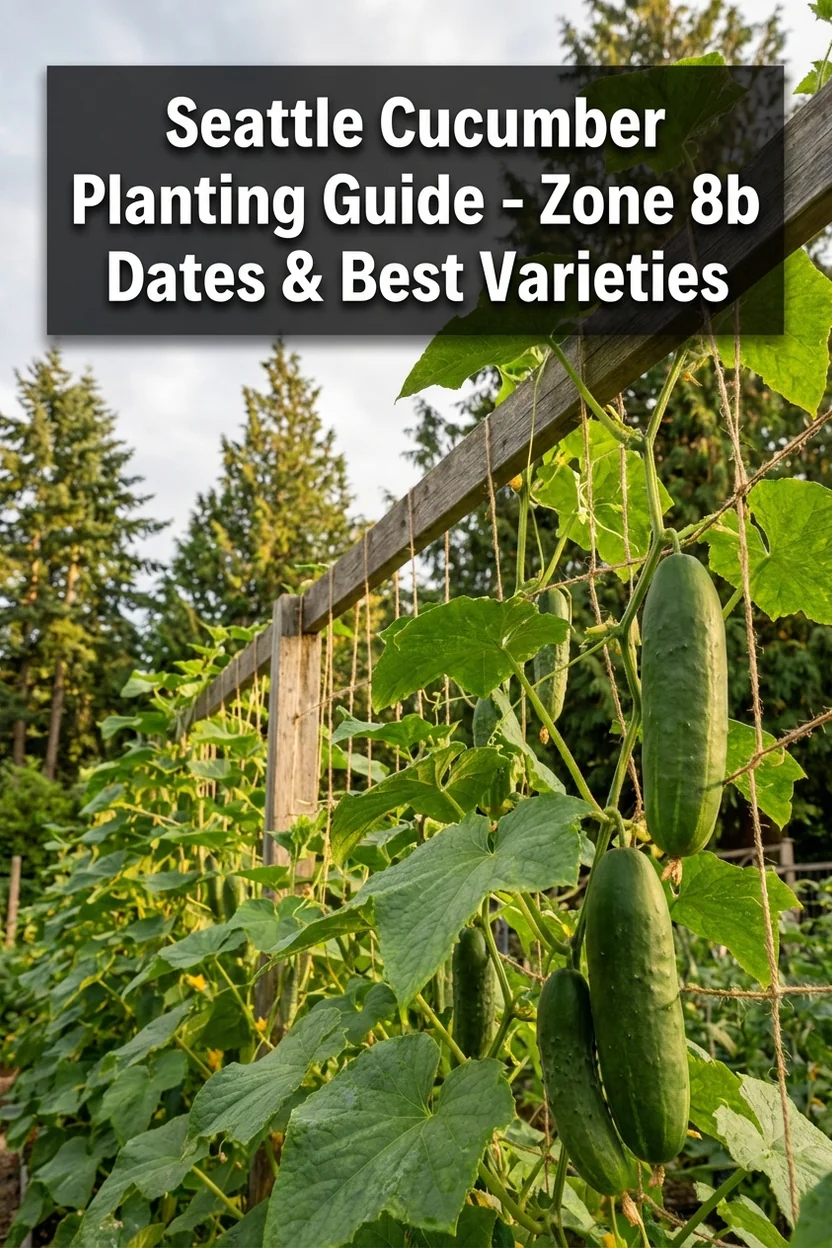
When to Plant Cucumbers in Seattle: Complete Guide + Best Varieties for Zone 8b
Pets & Toxicity
Recorded toxicity for plants linked in this guide. An unknown status is not a safety assessment.
No linked plant is recorded as toxicDetailsHide
Cucumis sativus 'Marketmore 76' — Toxicity
Non-toxicView Cucumis sativus 'Marketmore 76' plant profileCucumis sativus 'Straight Eight' — Toxicity
Non-toxicView Cucumis sativus 'Straight Eight' plant profileCucumis sativus 'Boston Pickling' — Toxicity
Non-toxicView Cucumis sativus 'Boston Pickling' plant profile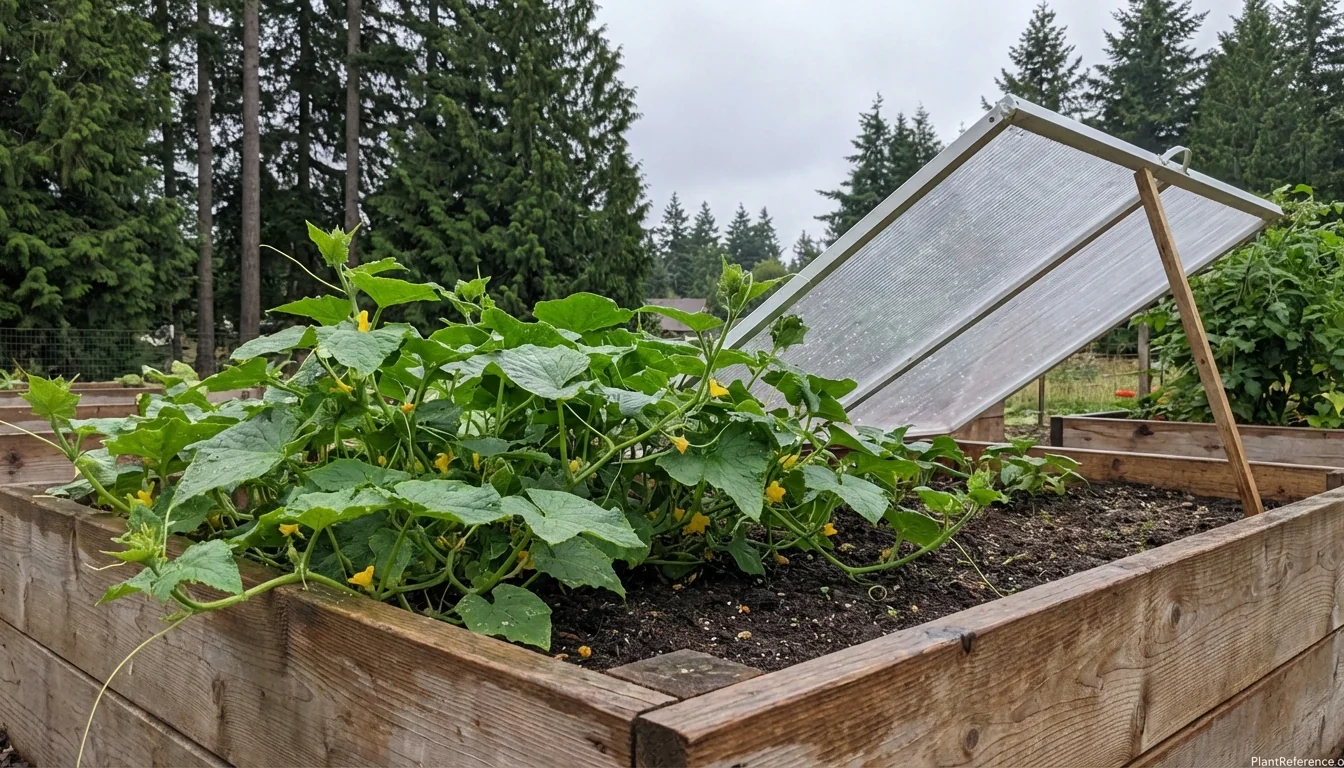
— Image © Plant Reference 2026
Growing cucumbers in Seattle is a different game than the rest of the country. On paper, our Zone 8b climate with a March 15 last frost and November 15 first frost gives us 245 growing days—longer than almost anywhere in the Midwest or Northeast. In practice, cucumbers don't care about frost dates. They care about heat, and heat is what Seattle doesn't reliably deliver. Our average July high is 76°F (24°C), and nighttime temperatures routinely drop into the mid-50s even in summer. Cucumbers want daytime temperatures above 80°F (27°C) and nights above 60°F (16°C) for optimal growth. We rarely hit those marks consistently. The gardeners who succeed with cucumbers here are the ones who create microclimates—raised beds with black plastic mulch, south-facing walls, row covers, and cold frames that trap the heat our marine climate won't provide naturally. When to Plant Tomatoes in Seattle: Complete Guide + Best Varieties for Zone 8b
Best Cucumber Varieties for Seattle's Climate
Seattle's marine climate means mild temperatures year-round but limited summer heat. Cucumber variety selection here prioritizes cool-temperature tolerance and fast maturity over the disease resistance that dominates variety choice in humid Eastern states. Downy Mildew (Pseudoperonospora cubensis) is less aggressive in the Pacific Northwest's drier summers, but Powdery Mildew still appears in late summer, and cool-weather physiological issues like poor fruit set from inadequate pollination at low temperatures are common challenges.
Variety | Type | Days to Harvest | Disease Resistance | Best For |
|---|---|---|---|---|
Slicing | 65 days | High (Scab, CMV, moderate DM/PM) | Most reliable slicer for PNW | |
🌿Cucumis sativus 'Persian' (Beit Alpha) | Specialty | 55 days | Moderate (PM) | Best for cool temps, parthenocarpic |
Pickling | 55 days | Low-Moderate | Fast maturity, pickling | |
Specialty | 65 days | Moderate (Rust, drought tolerant) | Novelty, reliable in cool conditions | |
Slicing | 63 days | Low (CMV tolerance only) | Traditional slicer with heat boosting | |
🌿Cucumis sativus 'Marketmore 76' (succession) | Slicing | 65 days | High | Second planting mid-June |
🌿Cucumis sativus 'Persian' types deserve top billing for Seattle gardens. These Beit Alpha strains mature in 55 days on compact vines, produce prolifically even in cooler conditions than standard varieties tolerate, and—critically—are parthenocarpic, setting fruit without pollinator visits. In Seattle's cool, overcast summers, bee activity is inconsistent, and many gardeners struggle with poor fruit set on standard monoecious varieties. Persian cucumbers solve that problem genetically. The thin-skinned, seedless fruit doesn't need peeling and has excellent flavor even when grown at lower temperatures.
🌿Cucumis sativus 'Marketmore 76' remains the best slicing variety for Seattle when grown with heat-boosting techniques. Its broad disease resistance package protects against the late-season Powdery Mildew that hits when summer humidity rises in August and September. The "stay-green" gene maintains fruit quality, and its vigor helps it power through the cooler growing conditions that stall weaker varieties.
🌿Cucumis sativus 'Lemon' performs surprisingly well in Seattle. Its genetic background includes traits adapted to variable conditions, and the round yellow fruit matures reliably in our cooler climate. Harvest at tennis ball size for best flavor—the mild, burpless flesh is a hit at farmers markets.
🌿Cucumis sativus 'Boston Pickling' at 55 days provides the fastest harvest timeline for Seattle's compressed warm period. Transplants set out in early June can produce by late July, giving you two solid months of picking before fall cool-down significantly slows vine growth. When to Plant Squash in Seattle: Complete Guide + Best Varieties for Zone 8b
Specific Planting Dates for Seattle Gardens
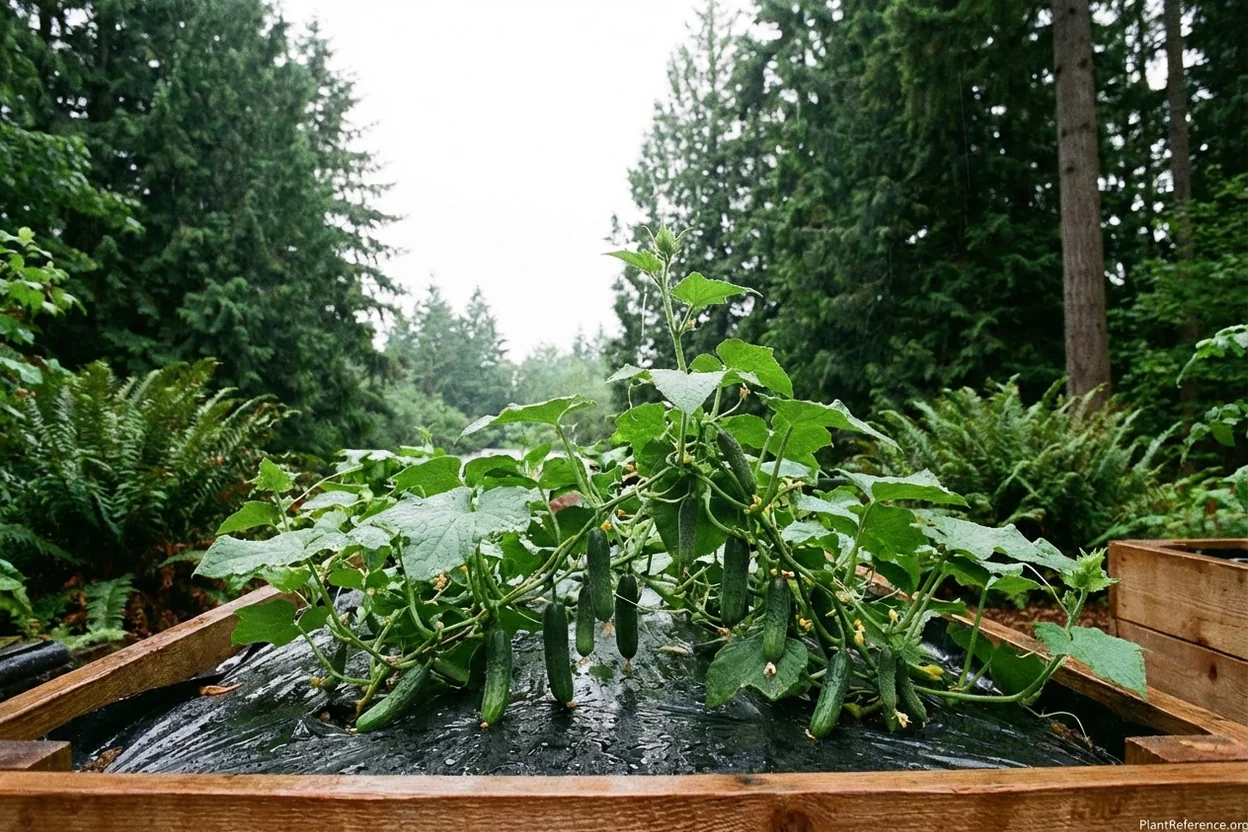
Forget the frost dates for cucumbers in Seattle. The March 15 last frost is irrelevant—soil doesn't hit 60°F (16°C) until late May at the earliest, and air temperatures won't support vigorous cucumber growth until June. Our effective cucumber season runs from late May through September, roughly 120 days. That's substantially shorter than the 245-day frost-free window suggests.
Indoor Seed Starting: April 1-15 (6-8 weeks before outdoor transplanting). Start earlier than other regions because Seattle transplants need to be robust before going outside. Use a heat mat at 75°F (24°C) and a grow light—April sunlight through a Seattle window isn't sufficient for stocky seedlings. Grow to 3-4 true leaves before transplanting.
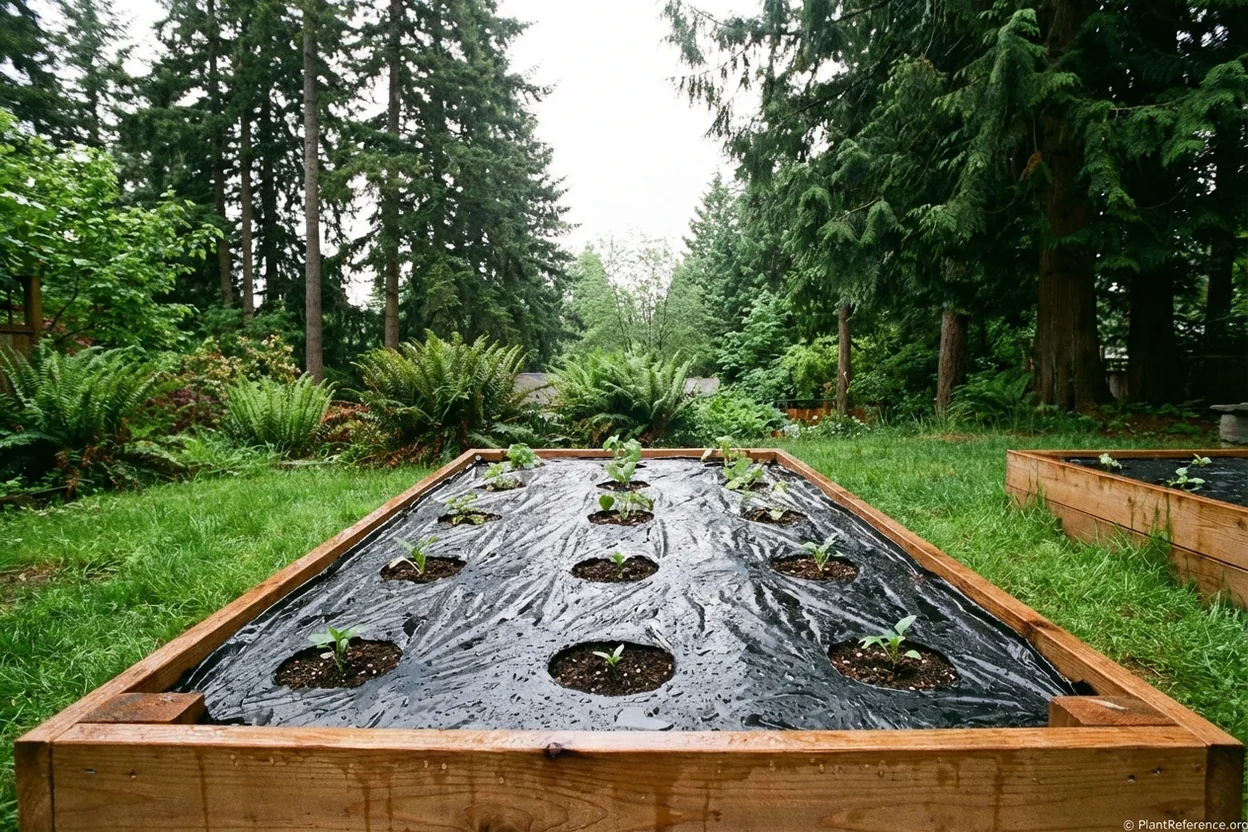
Transplant Outdoors: May 25-June 7. This feels late, but it's reality. Soil needs to be at 60°F (16°C) and nighttime air temperatures consistently above 50°F (10°C). Pre-warm beds with black plastic mulch for 2-3 weeks before transplanting. A south-facing wall or fence that radiates stored heat overnight creates the best microclimate for cucumbers in Seattle.
Direct Sow: Not recommended for Seattle. The soil temperature required for germination (60°F+) doesn't arrive until late May, and the 7-10 days lost to germination plus slow early growth in cool conditions means direct-sown cucumbers rarely produce before August. Transplants are the only practical approach here.
Succession Planting: One additional planting by mid-June at most. Seattle's season doesn't support the multiple successions possible in warmer climates. Focus on maximizing production from the primary planting rather than spreading effort across multiple sowings.
Effective Season End: Late September. Technically frost-free until November, but cucumber vines stop producing meaningful fruit once nighttime temperatures drop consistently below 55°F (13°C) in late September. Day length decline also slows growth significantly. Row covers can push production into early October in warm years. Raised Bed Vegetable Garden Layout: Planning for Maximum Production
Complete Growing Guide for Seattle
Creating Heat Where Nature Doesn't
This is the fundamental challenge and the key to cucumber success in Seattle. Every technique should aim at one goal: trapping and amplifying the limited heat our marine climate provides.
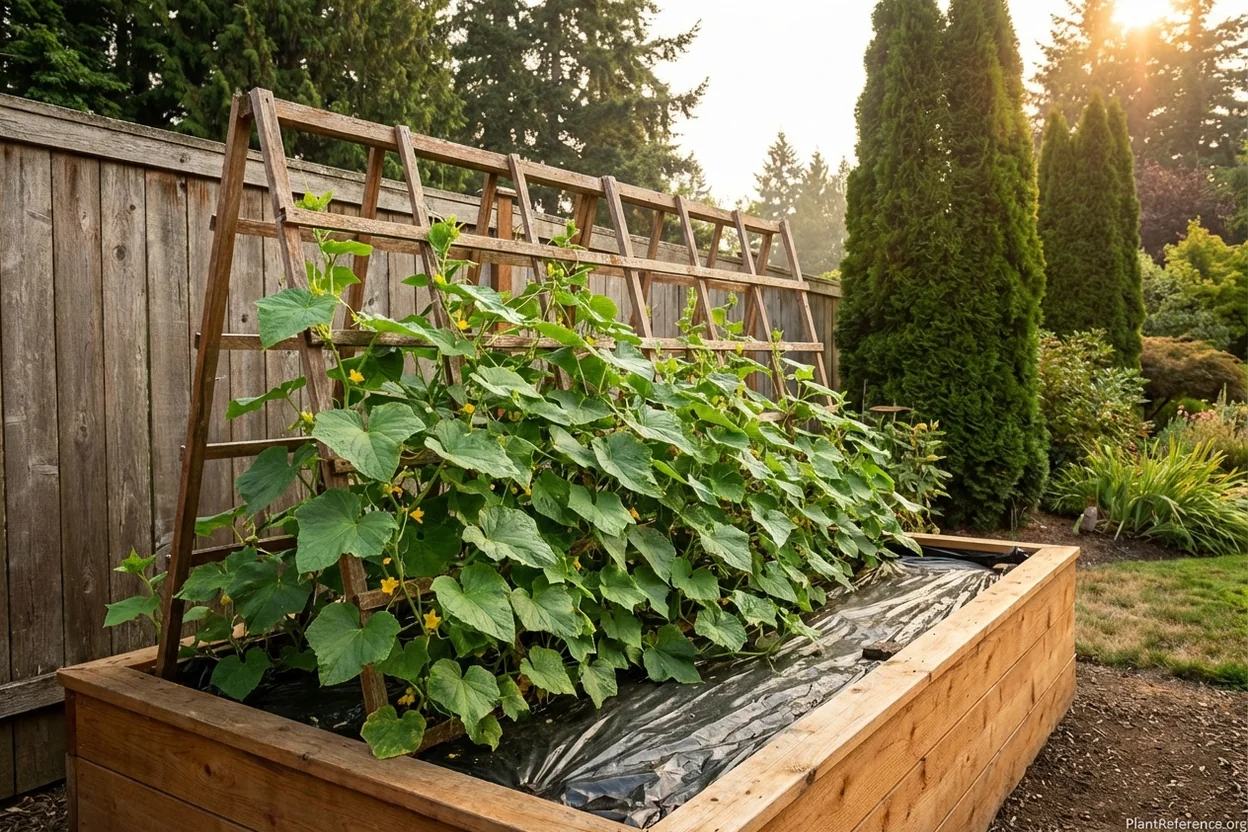
Raised beds are mandatory—not optional—for cucumbers in Seattle. They drain better than our heavy Pacific Northwest soils, warm faster in spring, and elevate plants above the cool ground layer. Build from cedar (it lasts 15-20 years untreated in our wet climate) and fill with a free-draining mix of 60% topsoil, 30% compost, and 10% perlite. Dark-colored raised beds absorb more solar radiation than light-colored ones. How to Build a Raised Garden Bed: Step-by-Step Construction Guide
Black plastic mulch is essential. It absorbs solar radiation and warms soil 5-10°F above ambient—the difference between cucumbers that grow and cucumbers that stall. Lay plastic 2-3 weeks before transplanting to pre-warm the bed. Cut slits for transplanting. Leave the plastic in place all season.
South-facing walls create the warmest microclimates in a Seattle garden. A south-facing fence, house wall, or garage reflects heat and blocks the cool north winds that keep our summer temperatures in check. Position your cucumber bed within 3 feet (1 m) of a south-facing vertical surface for maximum thermal benefit.
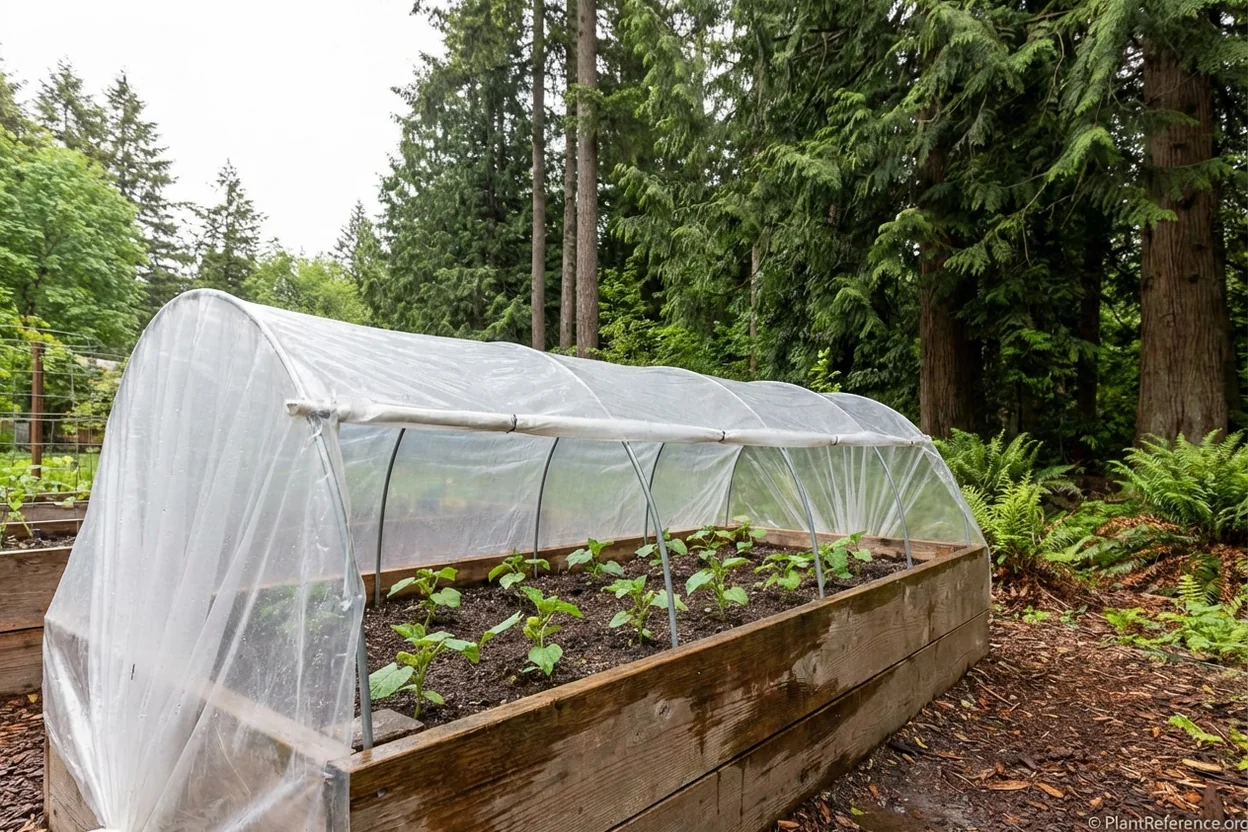
Row covers and cold frames boost air temperature around plants by 5-10°F. Use clear plastic over hoops during the cool June establishment period. Vent during the few days we hit 80°F+ to prevent overheating. Cold frames work well for early-season protection and can extend the fall harvest.
Trellising
Vertical growing in Seattle serves primarily to maximize sun exposure rather than disease management (our drier summers reduce disease pressure compared to Eastern states). A 6-foot (1.8 m) trellis angled to face south catches maximum solar radiation. Place the trellis on the north side of the bed so it doesn't shade other crops. Trellised cucumbers also dry faster after our frequent light rains, reducing the Powdery Mildew that arrives in late summer. 5 Best Drip Irrigation Kits for Raised Beds (Tested for Easy Installation)
Watering and Feeding
Seattle's dry summers (July and August often see less than 1 inch of rain total) mean irrigation is essential—contrary to our rainy reputation. Cucumbers need 1 to 1.5 inches (2.5-4 cm) weekly. Drip irrigation under the black plastic mulch delivers water efficiently to roots while keeping the plastic in place. Water in the morning to warm the root zone heading into the daytime heat window.
Feed aggressively compared to warmer climates. Seattle cucumbers grow slower and need consistent nutrition to maximize the limited warm window. Side-dress with balanced fertilizer at flowering and every two weeks during production. Fish emulsion or kelp-based fertilizers are widely available in the PNW and work well for cucumbers.
Pollination in Cool Conditions
This is a significant challenge in Seattle. Standard cucumber varieties like 🌿Cucumis sativus 'Marketmore 76' and 🌿Cucumis sativus 'Straight Eight' need pollinator visits, but Seattle's cool, overcast summer days keep many bees inactive. On cloudy days below 65°F (18°C), pollination rates drop dramatically. Hand-pollinate with a small brush on cool mornings to ensure fruit set. Better yet, grow 🌿Cucumis sativus 'Persian' types that don't need pollination at all—parthenocarpic fruit set is a genuine game-changer for Pacific Northwest cucumber growing. When to Plant Peppers in Seattle: Complete Guide + Best Varieties for Zone 8b
Troubleshooting Seattle-Specific Problems
Cool Temperatures and Slow Growth
The number one issue for Seattle cucumbers. Vines planted into soil below 60°F stall and may never recover. Pre-warming with black plastic mulch and using raised beds solves the soil temperature problem. For air temperature, row covers or cold frames boost daytime heat by 5-10°F. Remove covers on the rare days we hit 80°F+ to prevent leaf scorch. If growth seems stalled in June, be patient—once July's warmer temperatures arrive, vines often catch up rapidly.
Poor Fruit Set
Frequently caused by insufficient pollination in cool weather rather than plant health problems. Male flowers open but pollinators don't visit in overcast, cool conditions below 65°F (18°C). Hand-pollinate standard varieties with a small brush in the morning. Switch to 🌿Cucumis sativus 'Persian' types that produce fruit without pollination for the most reliable results in Seattle's climate. Raised Bed Pest Problems: Identification and Organic Control Methods
Powdery Mildew
The primary cucumber disease in Seattle, typically appearing in August and September when morning dew, cooler nights, and declining day length create ideal conditions. Space plants for airflow, trellis vertically, and apply neem oil preventatively every 7-10 days starting in late July. 🌿Cucumis sativus 'Marketmore 76' has intermediate Powdery Mildew resistance that extends its productive life by 2-3 weeks compared to susceptible varieties.
Slug Damage
Slugs are a Pacific Northwest reality that Eastern gardeners rarely deal with at cucumber-damaging levels. They feed on young transplants, seedlings, and low-hanging fruit at night. Copper tape around raised bed edges deters slugs effectively. Iron phosphate-based baits (safe for wildlife and pets) scattered around the bed perimeter provide reliable control. Elevating fruit on trellises removes it from slug feeding range entirely. Raised Bed Too Hot in Summer: Protecting Plants from Heat Stress
Harvest & Storage
Harvest slicing cucumbers at 6-8 inches (15-20 cm) and pickling types at 2-4 inches (5-10 cm). Seattle cucumbers grow slower than those in warmer climates, so the 48-hour doubling that happens in Midwest heat waves isn't typical here. Check vines every 2-3 days during peak production in July and August. Still, don't leave overripe fruit on the vine—it signals the plant to stop producing, and in our shorter effective season, every fruit counts.
Cut with pruners rather than pulling. Harvest in the afternoon when fruit is warmest and has the highest sugar content—opposite advice from hot-climate gardeners who pick in the cool morning. A healthy 🌿Cucumis sativus 'Persian' plant in a well-managed Seattle garden produces 12-18 snack cucumbers. 🌿Cucumis sativus 'Marketmore 76' yields 8-12 slicers with season-extending techniques.
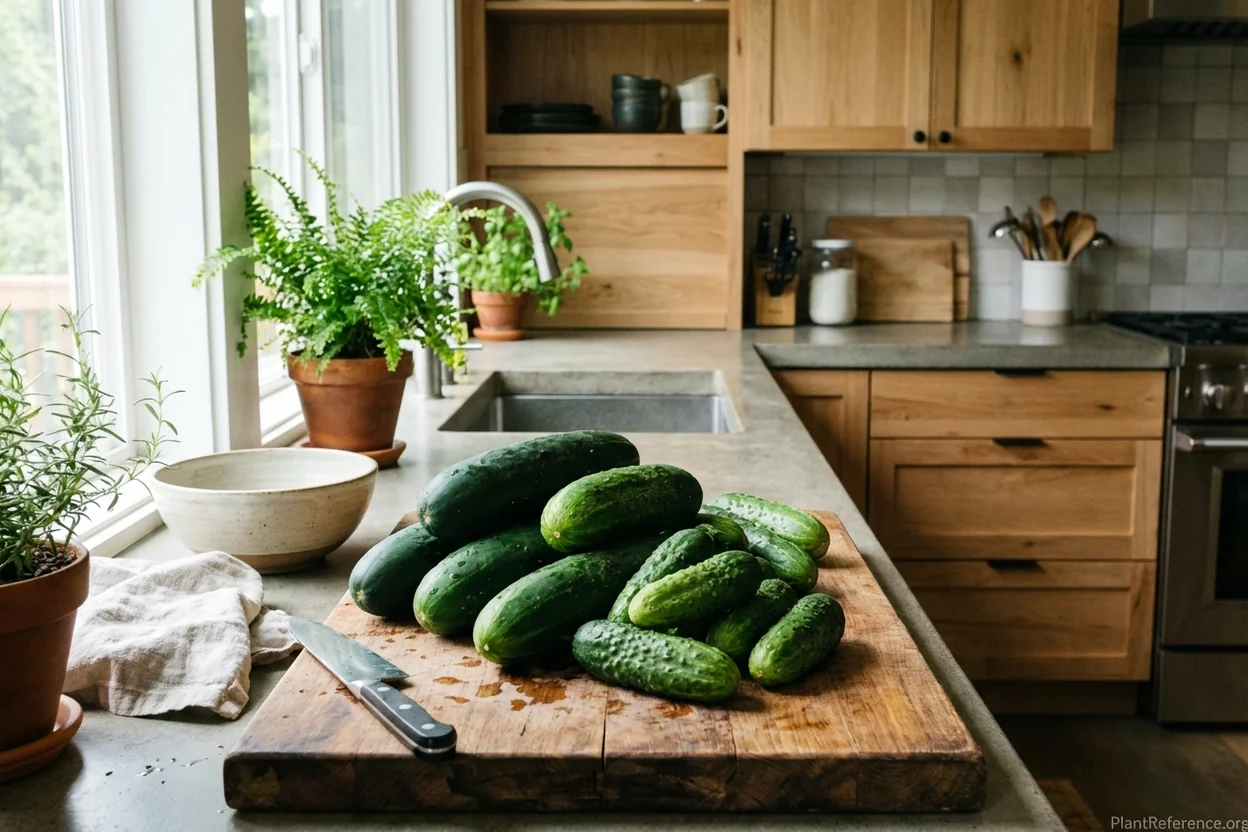
Fresh cucumbers store 7-10 days refrigerated in a towel inside a loose bag. 🌿Cucumis sativus 'Boston Pickling' makes excellent refrigerator pickles—the cool-grown fruit has particularly crisp texture that holds up well in brine. The Complete Guide to Raised Bed Gardening for Beginners (2025)
Frequently Asked Questions
Reading about plants and recognising them are different skills. These three build the second.
- Daily PlantIdentify the day’s mystery plant from a close-up photograph.
- Keyed OutWork a dichotomous key, lead by lead, to name a hidden specimen.
- Name That PlantName a specimen from botanical clues dealt hardest first.
Free to play, no account needed
Tagged with
Mike's been designing residential landscapes in the Seattle area, with a particular focus on Pacific Northwest natives and sustainable practices. He's a Washington State Master Gardener and worked in construction before landscaping, which gives him a practical edge when it comes to building raised beds and hardscaping projects. He runs a small side business propagating and selling unusual perennials at farmers markets on weekends. His property serves as a testing ground for low-maintenance, wildlife-friendly garden designs. Mike's philosophy: if it requires weekly maintenance, it's not sustainable.