Ziziphus, Genus, jujuba, Species,
- Genus & species
Chinese jujube
Northern and central China, west through central Asia
Overview
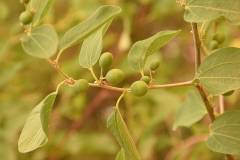
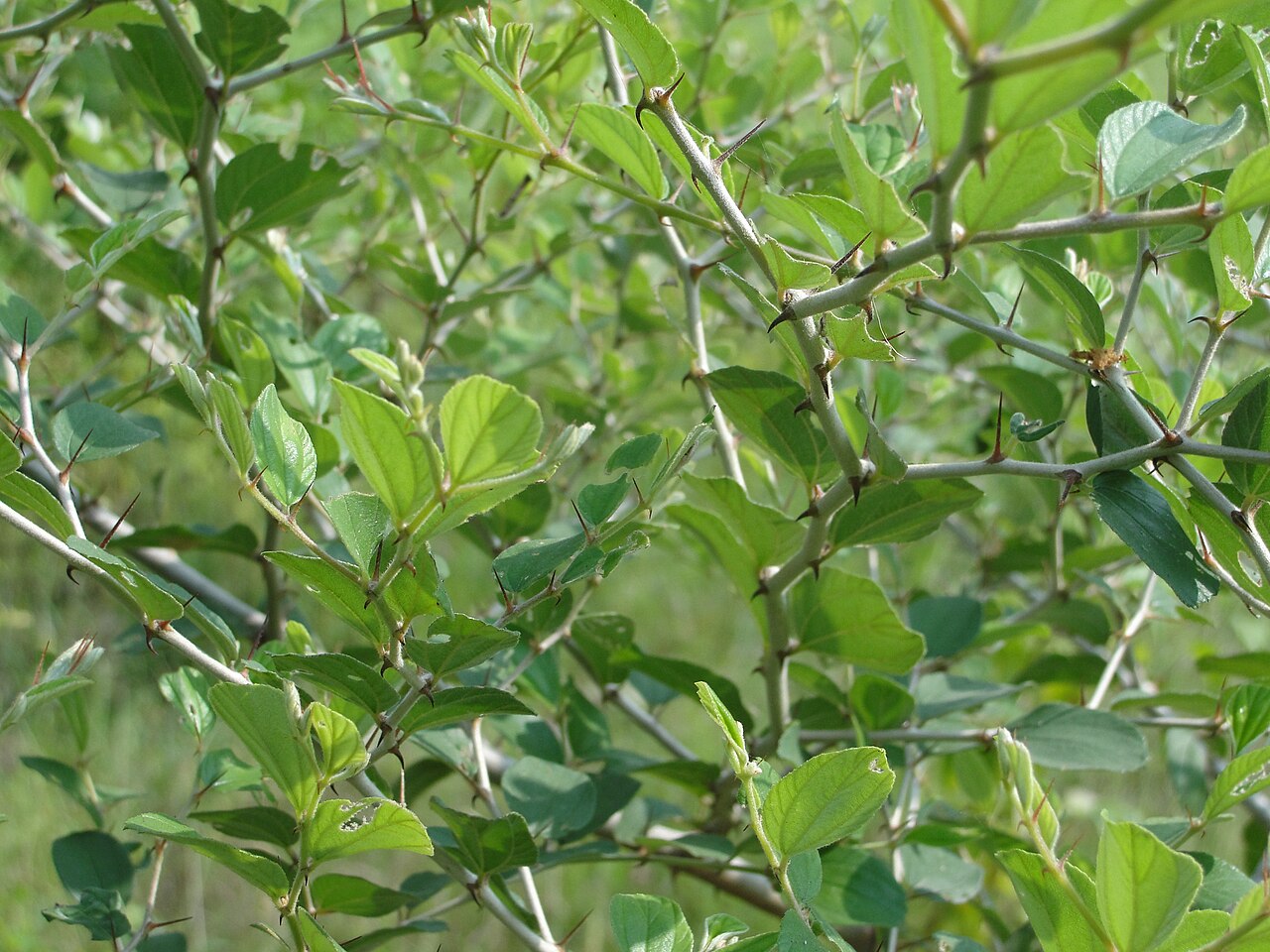
Ziziphus jujuba is a deciduous tree reaching 15-30 feet (4.5-9 m) tall and 10-20 feet (3-6 m) wide, with an open crown and shoots that zigzag between the nodes. Wild forms and seedling rootstocks carry paired stipular spines at each node, one straight to 1 inch (2.5 cm) and one shorter and hooked, while several fruiting cultivars carry few or none. Leaves are alternate, ovate to lance-shaped, 1-2.5 inches (2.5-6 cm) long, glossy, finely toothed, and marked by three veins running from the base; they emerge in May, later than most temperate fruit trees, and turn yellow before dropping in November. Flowers are 0.2 inch (5 mm) across, yellowish-green and scented, opening in axillary clusters over 6-8 weeks from May to July. Fruit is a drupe 0.5-2 inches (1.3-5 cm) long, ripening from green through mottled reddish-brown in September and October, crisp and apple-textured at the reddish stage and wrinkling to a date-like texture if left on the tree. Trees crop in USDA zones 6-9 and hold through summer temperatures above 110F (43C), soil pH to 8.5, and 4-6 weeks without water. Roots sucker 20-30 feet (6-9 m) from the trunk, and suckers on seedling rootstock carry the full spine complement.
Native Range
Ziziphus jujuba is native to northern and central China, where it grows on dry hill slopes and loess soils, with the range extending west through central Asia to Iran and the Caucasus. Cultivation in China runs back more than 4,000 years and about 400 cultivars are recognised there. Plants reached the United States in 1837, improved Chinese cultivars followed through USDA collectors in 1908, and the species has naturalized on disturbed ground in parts of the southwestern United States.Suggested Uses
Grown as an orchard tree at 12-20 foot (3.7-6 m) spacing and as a single fruit and shade tree in hot, dry gardens across USDA zones 6-9, including desert regions of Arizona, New Mexico, and inland California. Fruit is eaten fresh at the crisp reddish-brown stage, dried to about 20 percent of fresh weight for storage, or cooked into Chinese and Korean soups and teas. Container culture in pots of 15 gallons (57 L) or larger holds dwarf cultivars at 6-8 feet (1.8-2.4 m) and confines the root suckering that follows field planting.How to Identify
Appearance
Size & Dimensions
Height15' - 30'
Width/Spread10' - 20'
Bloom Information
Flowers open over 6-8 weeks from May to July, later than most temperate fruit trees, so spring frosts seldom reach the crop. Each flower is 0.2 inch (5 mm) across and yellowish-green, producing nectar through the day with a scent that carries several yards. Flies, small bees, and honeybees pollinate; some cultivars set fruit alone, while others carry heavier crops with a second cultivar within 100 feet (30 m). Fruit set drops in humid weather above 90 percent relative humidity.
Detailed Descriptions
Foliage Description
Glossy bright green turning yellow in autumnGrowing Conditions
Sun Requirements
Requires 8-12 hours of direct sunlight daily
• Full Sun: 6+ hours of direct sunlight
• Partial Shade: 3-6 hours of direct sunlight
• Full Shade: Less than 3 hours of direct sunlight
Care & Maintenance
Care Guide
Fruiting calls for 8 or more hours of direct sun and summer heat; in maritime summers below 75F (24C) fruit ripens slowly or not at all. Soils from sand to clay at pH 5.5-8.5 are tolerated, including saline and alkaline ground where most fruit trees fail. Established trees crop through 4-6 weeks without rain, though fruit size falls; 1 inch (25 mm) of water per week during fruit fill holds size on cultivars such as Li and Honey Jar. Nitrogen at 0.25-0.5 pound (110-225 g) per tree in early spring covers the annual requirement. Root suckers appear 20-30 feet (6-9 m) from the trunk and are cut or mown as they emerge, since suckers from seedling rootstock revert to thorny, small-fruited growth. Few pests occur in North America, jujube witches broom phytoplasma is the main disease in China and Korea, and fruit cracks in rain during the ripening window.Pruning
Pruning is carried out in late winter while the tree is dormant, removing crossing limbs and thinning the crown to 4-6 main scaffolds. Fruit forms on short spurs on permanent wood and on the current season's deciduous shoots, so heading cuts into the framework do not eliminate the following crop. Suckers are cut below ground level rather than at the surface, since surface cuts produce multiple regrowth points. Shortening the leaders every 2-3 years holds trees at 12-15 feet (3.7-4.5 m) and keeps fruit within reach.Pruning Schedule
Prune: February–March
early spring
Container Growing
Suitable for container growing
Minimum container size: 15 gallons