Zieria, Genus, smithii, Species,
- Genus & species
Sandfly zieria
Overview
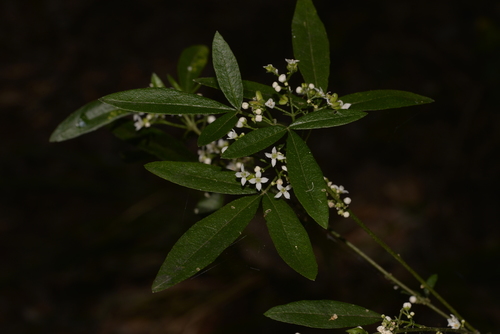
Zieria smithii is an evergreen shrub in the citrus family reaching 3-8 feet (1-2.5 m) tall and 3-6 feet (0.9-1.8 m) wide, with an upright, open to bushy habit. Leaves are opposite and trifoliate, each leaflet narrow to elliptic, 0.6-2.4 inches (1.5-6 cm) long, dark green above and paler beneath, dotted with oil glands that release a strong scent when crushed. Young stems are warty and minutely hairy. Clusters of small four-petalled star-shaped flowers about 0.3 inch (8 mm) across, white to pale pink, form in the leaf axils, mainly in winter and spring. Small dry segmented fruit follow, splitting to release seed. Growth is moderate, with plants reaching flowering size in 2-3 years and living about 6-10 years. The species tolerates a range of well-drained soils but is sensitive to extended wet conditions and becomes open and woody with age.
Native Range
Native to eastern Australia, from Queensland through New South Wales to Victoria. Grows in heath, dry sclerophyll forest, rainforest margins, and coastal scrub on sandy and rocky soils from near sea level to about 3,300 feet (1,000 m).Suggested Uses
Planted in native, habitat, and coastal gardens, in shrub borders, and on sandy banks, spaced 3-5 feet (0.9-1.5 m) apart. The scented foliage and winter flowers suit sensory and informal plantings. Sensitivity to wet soil and a short lifespan limit use in poorly drained or formal beds.How to Identify
Appearance
Size & Dimensions
Height3' - 8'
Width/Spread3' - 6'
Bloom Information
Detailed Descriptions
Flower Description
White to pale pinkFoliage Description
Dark greenGrowing Conditions
Sun Requirements
Requires 5-9 hours of direct sunlight daily
• Full Sun: 6+ hours of direct sunlight
• Partial Shade: 3-6 hours of direct sunlight
• Full Shade: Less than 3 hours of direct sunlight
Care & Maintenance
Care Guide
Grows in full sun to light shade in well-drained sandy, loamy, or rocky soil. Water through the first season to establish; established plants tolerate dry periods and decline in soils that stay wet over winter. Light tip-pruning after flowering keeps growth dense and slows the open habit of older plants. Low-phosphorus native fertilizer suits it, as high phosphorus harms many plants in the citrus family. Few pests affect it, though scale insects appear on stressed or shaded stems.Pruning
Tip-prune after flowering, removing up to one-third of the new growth to maintain a dense form. Pruning into green wood reshoots reliably, while cutting into bare old wood often does not. Regular light pruning slows the leggy habit of older plants.Pruning Schedule
Prune: October–November
late spring
Container Growing
Suitable for container growing
Minimum container size: 5 gallons