Zephyranthes, Genus, atamasco, Species,
- Genus & species
atamasco lily
Overview
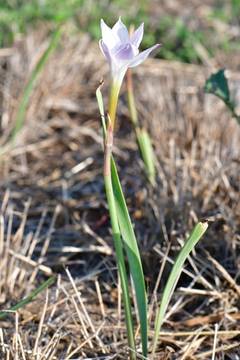
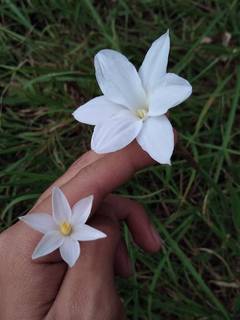
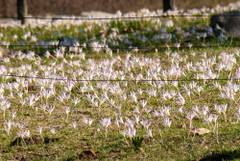
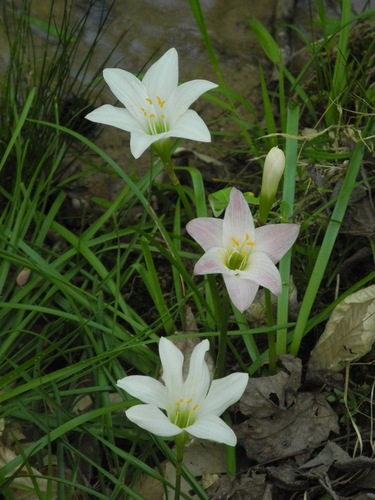
Zephyranthes atamasco is a bulb-forming perennial that produces a tuft of narrow, glossy, grass-like basal leaves 6-15 inches (15-38 cm) long from a rounded bulb about 1 inch (2.5 cm) wide. In spring it sends up a hollow, leafless stalk 6-12 inches (15-30 cm) tall, each topped by a single upward-facing, funnel-shaped flower 2-3.5 inches (5-9 cm) long. The six tepals are white, often flushed pink on the outside and aging to pink as the flower fades. Bloom is triggered by spring rains, so flowers appear in flushes after wet weather. After flowering the plant sets a three-lobed capsule of flat black seeds, and the foliage persists into summer before dying back, with the bulb dormant through the hottest and coldest months. Plants form slow-spreading colonies from offset bulbs and seed. All parts contain alkaloids that are poisonous if eaten.
Native Range
Native to the southeastern United States, from Virginia south to Florida and west to Mississippi. Grows in moist meadows, low woodlands, floodplains, and damp clearings on rich, seasonally wet soils.Suggested Uses
Planted in moist meadows, woodland edges, rain gardens, and borders in the Southeast, set in drifts at 4-6 inch (10-15 cm) spacing. The spring flowers draw bees and other insects. Its summer dormancy leaves bare gaps, so it is combined with later perennials to fill the space.How to Identify
Appearance
Size & Dimensions
Height6" - 1'
Width/Spread6" - 1'
Bloom Information
Flowers from March through May, with flushes following spring rains, so bloom comes in waves rather than all at once. Each flower lasts 2-4 days, and a colony blooms over several weeks. Dry springs reduce flowering.
Detailed Descriptions
Foliage Description
greenGrowing Conditions
Sun Requirements
Requires 4-10 hours of direct sunlight daily
• Full Sun: 6+ hours of direct sunlight
• Partial Shade: 3-6 hours of direct sunlight
• Full Shade: Less than 3 hours of direct sunlight
Care & Maintenance
Care Guide
Grows in full sun to part shade in moist, humus-rich, slightly acidic soil that stays damp in spring; it tolerates seasonal flooding but goes dormant in summer drought. Bulbs are planted 2-3 inches (5-8 cm) deep in fall or after dormancy. Heavy summer watering of dormant bulbs and poorly drained, compacted soil can rot them. Established colonies need little care and multiply slowly from offsets and seed. Slugs may chew the foliage, while the bulbs are seldom troubled by pests because of their toxicity. All parts contain alkaloids that are poisonous to people and animals if eaten.Pruning
No pruning is needed. The leaves are left to yellow and die back after bloom to recharge the bulb. Spent flower stalks can be removed if seed is not wanted.Container Growing
Suitable for container growing
Minimum container size: 2 gallons