Zantedeschia, Genus, aethiopica, Species,
- Genus & species
white calla lily
Overview
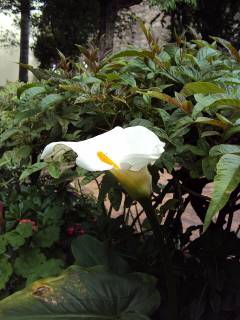
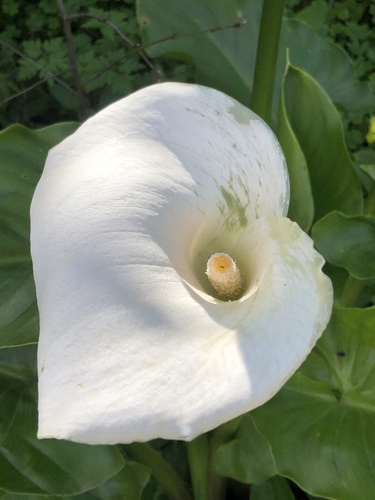
Zantedeschia aethiopica is an herbaceous rhizomatous perennial reaching 24-36 inches (60-90 cm) tall and 18-24 inches (45-60 cm) wide, with a clumping habit. Foliage arrow-shaped (sagittate), 12-18 inches (30-45 cm) long and 6-10 inches (15-25 cm) wide, dark green and glossy with prominent pale midribs and lateral veins, on stout petioles roughly equal to leaf length. Inflorescences (spadix-spathe structures) borne on stems 28-36 inches (70-90 cm) tall above the foliage; spathe a flared funnel 6-10 inches (15-25 cm) long and 4-6 inches (10-15 cm) wide, white with a green base, surrounding a yellow cylindrical spadix 3-4 inches (7.5-10 cm) long. Bloom from late spring through midsummer in zones 8-10, with individual flowers persisting 2-3 weeks. Foliage evergreen in zones 9-11; dies back to ground in zones 7-8 and resprouts each spring. Berries red-orange when ripe, 0.4-0.6 inch (1-1.5 cm), forming on spent spadices. All parts contain calcium oxalate crystals (raphides); ingestion causes oral irritation, swelling, and gastrointestinal upset in mammals. Naturalized invasively in Western Australia, parts of California, and South African coastal wetlands outside its native range.
Native Range
Z. aethiopica is native to southern and eastern Africa, occurring naturally in seasonally wet meadows, marsh edges, and riverbanks at 0-7,500 feet (0-2,300 m) elevation. South African distribution spans the Eastern Cape through KwaZulu-Natal. Cultivated worldwide as a garden plant and cut flower; invasive in Western Australia, California coastal regions, and parts of New Zealand.Suggested Uses
Massed in moist perennial borders at 18-24 inch (45-60 cm) spacing in zones 8-10. Planted at pond and stream margins in 0-4 inches (0-10 cm) of standing water for stable submerged-foot conditions. Container culture is workable in pots of at least 3 gallons (11 L) with bottom drainage; container plants in zones 7-8 can be moved indoors at 50-55°F (10-13°C) for winter storage.How to Identify
Appearance
Size & Dimensions
Height2' - 3'
Width/Spread1'6" - 2'
Bloom Information
Late April through July in zones 8-10, peaking in May-June. Bloom may extend into autumn under continuous moisture in coastal climates such as central California. Individual flowers last 2-3 weeks; total bloom on a clump extends 8-12 weeks. Cool-summer climates (Pacific Northwest, coastal UK) often produce a second bloom flush in autumn.
Detailed Descriptions
Flower Description
White spathe with yellow spadixFoliage Description
Dark green, glossy with pale midribsGrowing Conditions
Sun Requirements
Requires 4-8 hours of direct sunlight daily
• Full Sun: 6+ hours of direct sunlight
• Partial Shade: 3-6 hours of direct sunlight
• Full Shade: Less than 3 hours of direct sunlight
Care & Maintenance
Care Guide
Water 1-2 inches (2.5-5 cm) per week during the growing season; the species accepts standing water and is grown at pond margins in 1-6 inches (2.5-15 cm) of water. Apply a balanced 10-10-10 fertilizer at half-strength monthly from March through July; reduce feeding during summer dormancy in hot inland climates. Soft rot (bacterial) develops in poorly-drained soils combined with overhead irrigation in summer; ground-level watering reduces incidence. Aphids cluster on flower stalks in spring; insecticidal soap reduces populations within 3-5 days. In zones 7-8, mulch crowns 4-6 inches (10-15 cm) deep with composted material after the first hard frost to overwinter rhizomes. Divide every 3-4 years in autumn or early spring as flowering decreases.Pruning
Cut spent flower stalks at the base after bloom finishes to direct energy into rhizome growth and prevent self-seeding. Remove yellowing leaves at the base as they appear; new leaves replace them within 2-3 weeks during active growth. In zones 7-8, cut foliage to ground level after first hard frost; clumps emerge from rhizomes the following spring. Berry production is prevented by deadheading immediately after spathe browning.Pruning Schedule
Prune: July–August & November
summerfall
Container Growing
Suitable for container growing
Minimum container size: 3 gallons