Brunfelsia, Genus, pauciflora, Species,
- Genus & species
Yesterday-today-and-tomorrow
Atlantic Forest of southeastern Brazil from Bahia south to Rio de Janeiro and São Paulo
Overview
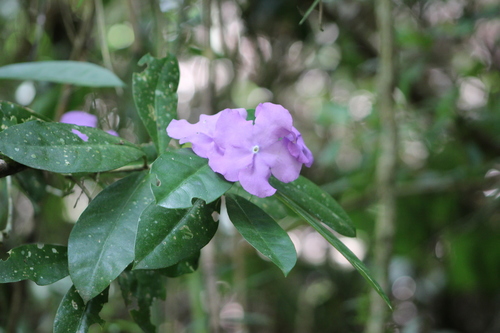
Brunfelsia pauciflora is the yesterday-today-and-tomorrow shrub, an evergreen flowering shrub from the Brazilian Atlantic Forest, growing 36–96 inches (90–240 cm) tall and 36–60 inches (90–150 cm) wide as a rounded multi-stemmed shrub in container culture and outdoor zones 9–11. The common name refers to the color-changing flowers: each blossom opens deep purple on day one (yesterday), fades to pale lavender on day two (today), and finishes near-white on day three (tomorrow), with all three colors present on the plant simultaneously during peak bloom. Each flower is salverform, 1.5–2.5 inches (4–6 cm) across, with five flat petals around a narrow tube; flowers appear in clusters of 3–10 at branch tips from spring through summer for about 8 weeks of bloom, with sweet jasmine-like fragrance strongest at dusk. Foliage is composed of glossy oval dark green leaves 3–5 inches (8–13 cm) long arranged alternately along woody stems; the leaves persist year-round in zones 10–11 and may be semi-deciduous in zone 9 winters. The species was named by botanist Lambert Bentham in 1846; the genus Brunfelsia honors the 16th-century German botanist Otto Brunfels, and the species epithet 'pauciflora' translates as 'few-flowered' (a misnomer — the plant flowers heavily). All parts contain brunfelsamidine, scopoletin, and other neurotoxic compounds; ingestion causes seizures, vomiting, and tremors in dogs and humans, with seeds and unripe fruit carrying the highest concentration. Hardy outdoors only in USDA zones 9–11.
Native Range
Brunfelsia pauciflora is native to the Atlantic Forest of southeastern Brazil, with a range from Bahia south to Rio de Janeiro and São Paulo, where it grows as an understory shrub in coastal and lower-montane forest at low to mid elevations.Suggested Uses
Used as a flowering specimen shrub in tropical and subtropical mixed borders, in container culture in zones 7–8 (where the plant overwinters indoors as a houseplant), and as a sweetly fragrant shrub near patios and entryways where the dusk fragrance is appreciable. Combines with other tropical shrubs such as Tibouchina and Plumbago in zone 9–11 plantings. Less suited to households with cats and dogs that browse foliage, and to pet-owning gardeners with outdoor specimens within reach of dogs, due to the seizure risk from the neurotoxic compounds.How to Identify
Appearance
Size & Dimensions
Height3' - 8'
Width/Spread3' - 5'
Colors
Bloom Information
Flowers from mid-April through mid-June for approximately 8 weeks across USDA zones 9–11; bloom begins about 2 weeks earlier in zone 11 and 1–2 weeks later in zone 9. Color-changing salverform flowers progress from deep purple through pale lavender to near-white over a 3-day cycle, with all three colors present at peak bloom. Sweet jasmine-like fragrance strongest at dusk.
Detailed Descriptions
Flower Description
Color-changing salverform flowers 1.5-2.5 inches (4-6 cm) across that progress from deep purple through pale lavender to near-white over a 3-day cycle, in clusters of 3-10 at branch tipsFoliage Description
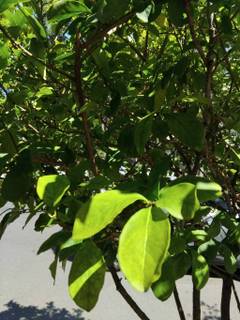
Glossy oval dark green leaves 3-5 inches (8-13 cm) long arranged alternately along woody stemsGrowing Conditions
Sun Requirements
Requires 4-6 hours of direct sunlight daily
• Full Sun: 6+ hours of direct sunlight
• Partial Shade: 3-6 hours of direct sunlight
• Full Shade: Less than 3 hours of direct sunlight
Care & Maintenance
Care Guide
Place in bright indirect light to partial sun for 4–6 hours daily; full direct sun above 6 hours scorches the foliage in hot-summer climates. Soil should be moist, humus-rich, and slightly acidic (pH 5.5–6.5); the species develops chlorosis on alkaline soils above pH 7.0 and yellows progressively until soil pH is corrected. Water during the active growing season to keep soil consistently moist; the plant tolerates short dry periods less well than most outdoor flowering shrubs. Maintain temperatures above 50°F (10°C) at all times for evergreen foliage; brief frost causes leaf drop but the plant recovers from the woody stems in spring. Feed with an acidic fertilizer (azalea or rhododendron formulation) at half the label rate monthly during active growth and skip feeding in winter. Indoor specimens flower better with a 6–8 week cool-and-dry rest period in winter (50–60°F / 10–16°C, reduced watering), which sets flower buds for the spring bloom.Pruning
Prune lightly after the spring bloom finishes in mid- to late June to shape the shrub and encourage branching; the species flowers on new wood, so post-bloom pruning supports the next season's flowering. Remove crossing or damaged branches at the base. Hard renewal pruning every 5–7 years can refresh aging specimens.Pruning Schedule
Prune: June–July
late springsummer
Container Growing
Suitable for container growing
Minimum container size: 5 gallons