Xanthium, Genus, spp., Multiple species,
- Genus
- Multiple species
cockleburs
The Americas; now worldwide as a weed
Overview
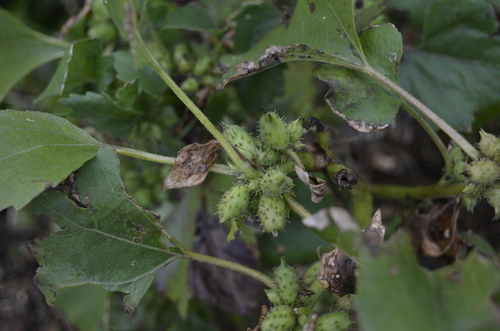
Xanthium is a genus of coarse annual herbs in the daisy family (Asteraceae), native to the Americas and now spread as weeds across temperate and warm regions worldwide. Plants grow 1–5 feet (30–150 cm) tall on rough, branching stems, with large, broad, sandpapery leaves that are lobed or toothed and carried on long stalks. Unlike most of the daisy family, the flower heads are small, green, and without showy rays; separate male and female heads form on the same plant, and the wind carries pollen between them. The female heads harden into woody burs, about 0.5–1.5 inches (1–4 cm) long, covered in hooked spines that catch on fur and clothing and so carry the two seeds inside to new ground. This hitchhiking dispersal has made cockleburs persistent weeds of fields, pastures, and waste places. The seedlings and seeds contain a toxin, carboxyatractyloside, that is poisonous to livestock and people if eaten. Plants complete their cycle in a single season, dying after the burs ripen, and rely entirely on seed to return. Xanthium grows in full sun on disturbed, often damp or seasonally flooded ground.
Native Range
Xanthium is native to the Americas and possibly parts of Asia, and has spread with agriculture to temperate and subtropical regions around the world. Plants grow on disturbed, open ground, including riverbanks, field edges, floodplains, and waste places.Suggested Uses
Xanthium has no ornamental use and is treated as a weed in most settings. The burs have been studied for their hooked spines, which influenced the design of hook-and-loop fasteners. Some species have a history of use in traditional medicine, despite the toxicity of the seeds and seedlings.How to Identify
Appearance
Size & Dimensions
Height1' - 5'
Width/Spread1' - 3'
Bloom Information
The small green flower heads form in late summer and autumn, with separate male and female heads on the same plant pollinated by wind. There is no petal display. Burs develop after pollination and harden as they ripen, persisting on the dead stems into winter.
Detailed Descriptions
Flower Description
Green, inconspicuousFoliage Description
GreenGrowing Conditions
Sun Requirements
Requires 6-12 hours of direct sunlight daily
• Full Sun: 6+ hours of direct sunlight
• Partial Shade: 3-6 hours of direct sunlight
• Full Shade: Less than 3 hours of direct sunlight
Water & Climate
Water Needs