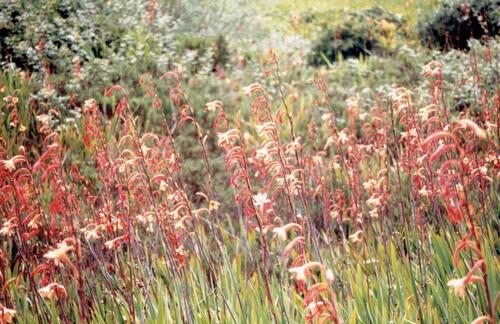
Watsonia, Genus, spp., Multiple species,
- Genus
- Multiple species
watsonias
Overview
Watsonia is a genus of about 50 cormous perennials in the family Iridaceae, native to South Africa and Eswatini and closely related to Gladiolus. Plants grow from underground corms and form fans of erect, sword-shaped leaves 12–40 in (30–100 cm) long, from which tall, branched flower spikes rise to 3–6 ft (0.9–1.8 m) depending on species. From late spring into summer, the spikes carry two ranks of tubular flowers, each 1.5–3 in (4–8 cm) long and flaring into six lobes, in shades of pink, red, orange, mauve, and white. The flowers are visited by sunbirds and long-tongued insects, and dry capsules of winged seeds follow. Most species come from winter-rainfall regions and are summer-flowering, dying back to the corm in their dry season, while a few from summer-rainfall areas stay evergreen. Watsonia grows in full sun and well-drained soil in USDA zones 8–10, tolerating drought once dormant. Some species multiply quickly from cormlets and seed and have naturalised as weeds in parts of Australia and California, spreading well beyond garden plantings.
Native Range
Watsonia is native to southern Africa, chiefly the Cape Floristic Region of South Africa, with the greatest diversity in the winter-rainfall southwest and outliers in summer-rainfall areas and Eswatini. The plants grow on mountain slopes, sandy flats, marshes, and ground recently cleared by fire, which triggers heavy flowering in several species.Suggested Uses
Watsonia is grown in mixed borders, gravel and Mediterranean gardens, and large drifts for its tall summer flower spikes, and the cut stems last well in arrangements. The drought-tolerant species suit dry banks and naturalistic plantings in frost-free regions. Where summers are wet or winters cold, the corms are grown in containers and rested under cover.How to Identify
Appearance
Size & Dimensions
Height3' - 6'
Width/Spread1' - 2'
Bloom Information
Flowering runs mainly from late spring into summer, roughly May to July, with timing shifting by species and climate. Each spike opens its flowers from the base upward over two to four weeks. Several species flower most heavily in the season after a fire has cleared the surrounding vegetation.
Detailed Descriptions
Flower Description
pink, red, orange, mauve, and whiteFoliage Description
greenGrowing Conditions
Sun Requirements
Requires 6-12 hours of direct sunlight daily
• Full Sun: 6+ hours of direct sunlight
• Partial Shade: 3-6 hours of direct sunlight
• Full Shade: Less than 3 hours of direct sunlight
Care & Maintenance
Care Guide
Watsonia grows in full sun and well-drained sandy or loamy soil, with water during the growing season and a drier rest period after the leaves die down. Winter-rainfall species are watered in autumn and winter and kept dry in summer dormancy, while evergreen summer-rainfall species take moisture year-round. Hardiness reaches about USDA zone 8, and corms are lifted or mulched where the ground freezes. The corms multiply into clumps that are divided every few years when flowering thins. Propagation is by offset cormlets or by seed, which can flower in two to three years. In mild climates some species spread aggressively and can escape cultivation.Pruning
Spent flower spikes are cut to the base after blooming to limit unwanted self-seeding. Evergreen species keep their foliage, while deciduous species are tidied as the leaves yellow and die back. Old leaves are removed once they have withered to expose the corm.Pruning Schedule
Prune: July–August
summer
Container Growing
Suitable for container growing
Minimum container size: 3 gallons
