Image 1 of 11
1 / 11
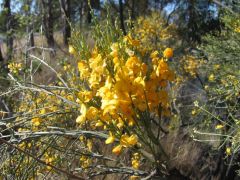
© Peter Greenwell at English Wikipedia, some rights reserved (CC-BY) · Wikimedia Commons
Viminaria, Genus, juncea, Species,
- Genus & species
native broom
Overview
Viminaria juncea is an evergreen shrub or small tree in the family Fabaceae reaching 6-20 feet (2-6 m) tall and 5-10 feet (1.5-3 m) wide, with slender, weeping, rush-like green branchlets that carry out most of the plant's photosynthesis. Mature plants are nearly leafless, with juvenile leaves reduced to occasional thin segments on young growth. Small yellow to orange pea flowers about 0.3 inch (8 mm) long are carried in slender sprays along the drooping branchlets in spring and early summer, followed by small one-seeded pods. The plant grows in wet, swampy, and seasonally flooded ground and fixes nitrogen through root nodules. Growth is fast, and plants reach full height in 3-4 years but are relatively short-lived, often 8-15 years. The thread-like weeping branchlets give a soft, broom-like outline.
Native Range
Native to southern and eastern Australia, including Western Australia, South Australia, Victoria, New South Wales, Queensland, and Tasmania. Grows in swamps, along watercourses, and in seasonally wet sandy or peaty ground.Suggested Uses
Planted in bog gardens, dam and pond margins, and wet revegetation sites, spaced 5-8 feet (1.5-2.4 m) apart. The weeping green branchlets and spring flowers suit damp, sunny positions where many shrubs fail. The short life and need for wet soil make it less suited to dry or formal gardens.How to Identify
Appearance
Size & Dimensions
Height6' - 20'
Width/Spread5' - 10'
Bloom Information
Detailed Descriptions
Flower Description
yellow to orangeFoliage Description
greenGrowing Conditions
Sun Requirements
Requires 6-10 hours of direct sunlight daily
• Full Sun: 6+ hours of direct sunlight
• Partial Shade: 3-6 hours of direct sunlight
• Full Shade: Less than 3 hours of direct sunlight
Care & Maintenance
Care Guide
Grows in full sun in wet, swampy, or seasonally flooded sandy and peaty soils, and tolerates standing water that kills many shrubs. Plants establish fast and fix their own nitrogen, so added fertiliser is rarely needed. Drought and prolonged dryness slow growth and shorten the plant's life. The species is moderately frost-tolerant once established. Plants are relatively short-lived and are replaced as they decline. Few pests or diseases affect it in suitable wet conditions.Pruning
Light pruning after flowering keeps the plant dense and removes spent flower sprays. Cutting back hard is tolerated and brings fresh branchlets from lower down. Dead or declining stems are removed as plants age.Pruning Schedule
Prune: December–January
summer