Vigna, Genus, luteola, Species,
- Genus & species
wild cowpea
Southeastern United States and pantropical
Overview
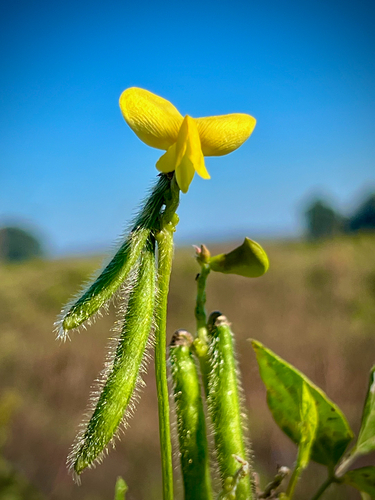
Vigna luteola is a trailing and twining perennial vine in the pea family, with slender stems 3-10 feet (1-3 m) long that sprawl over the ground or climb low vegetation. The leaves are divided into three lance-shaped to oval leaflets 1-3 inches (2.5-7.5 cm) long, often with short hairs. From summer into autumn it bears yellow pea-shaped flowers about 0.75-1 inch (2-2.5 cm) across, carried a few together on long stalks held above the foliage. Slender, slightly curved seed pods 1.5-2.5 inches (4-6 cm) long follow and split to release several seeds. As a legume it fixes nitrogen through root nodules and grows in damp, sandy, or disturbed soils, often near the coast. It is found along marsh edges, beach margins, ditches, and stream banks in warm regions. The twining stems can scramble over nearby plants and form tangled mats. It serves as a larval host for several butterfly and skipper species, and bees visit the flowers. In cold winters the top growth dies back, while in frost-free areas it stays green much of the year.
Native Range
Vigna luteola is native to the southeastern United States and tropical and subtropical regions worldwide. In the United States it ranges along the Gulf and southern Atlantic coasts from Texas to the Carolinas, growing in coastal marshes, dunes, ditches, and stream banks.Suggested Uses
Vigna luteola is used in coastal and native plant gardens, dune and wetland restoration, and as a nitrogen-fixing groundcover or scrambling vine on sandy sites. It suits pollinator and butterfly plantings as a larval host. Its spreading habit fits naturalized and erosion-control settings more than tidy borders.How to Identify
Appearance
Size & Dimensions
Height3' - 10'
Width/Spread3' - 6'
Bloom Information
Flowering runs from summer into autumn, roughly June to November in warm regions, with scattered bloom possible year-round in frost-free areas. The yellow flowers open a few at a time on raised stalks over a long season. Bees are the main pollinators. Pods mature and split through late summer and fall to release seed.
Detailed Descriptions
Foliage Description
greenGrowing Conditions
Sun Requirements
Requires 6-10 hours of direct sunlight daily
• Full Sun: 6+ hours of direct sunlight
• Partial Shade: 3-6 hours of direct sunlight
• Full Shade: Less than 3 hours of direct sunlight
Care & Maintenance
Care Guide
Vigna luteola grows in full sun to part shade in damp, sandy, or average soils and tolerates brackish coastal conditions and periodic flooding. As a nitrogen-fixing legume it needs no extra feeding and grows in low-fertility ground. It tolerates drought once established but grows more strongly with steady moisture. The twining stems spread quickly, so giving room or a support keeps the planting in order. It is hardy in USDA zones 8 through 11 and dies back in cold winters, regrowing from the root in spring. Seed germinates faster after scarification because of the hard coat.Pruning
Little pruning is needed. Trailing stems can be cut back to control spread and keep the vine within its space. Old growth is cut to the ground in late winter before spring regrowth in zones where it dies back.Pruning Schedule
Prune: February
winter