Veronicastrum, Genus, virginicum, Species,
- Genus & species
culver's root
Eastern North America, from Ontario and Manitoba south to Georgia, Louisiana, and Kansas; moist prairies, wet meadows, open woodland edges, and stream margins.
Overview
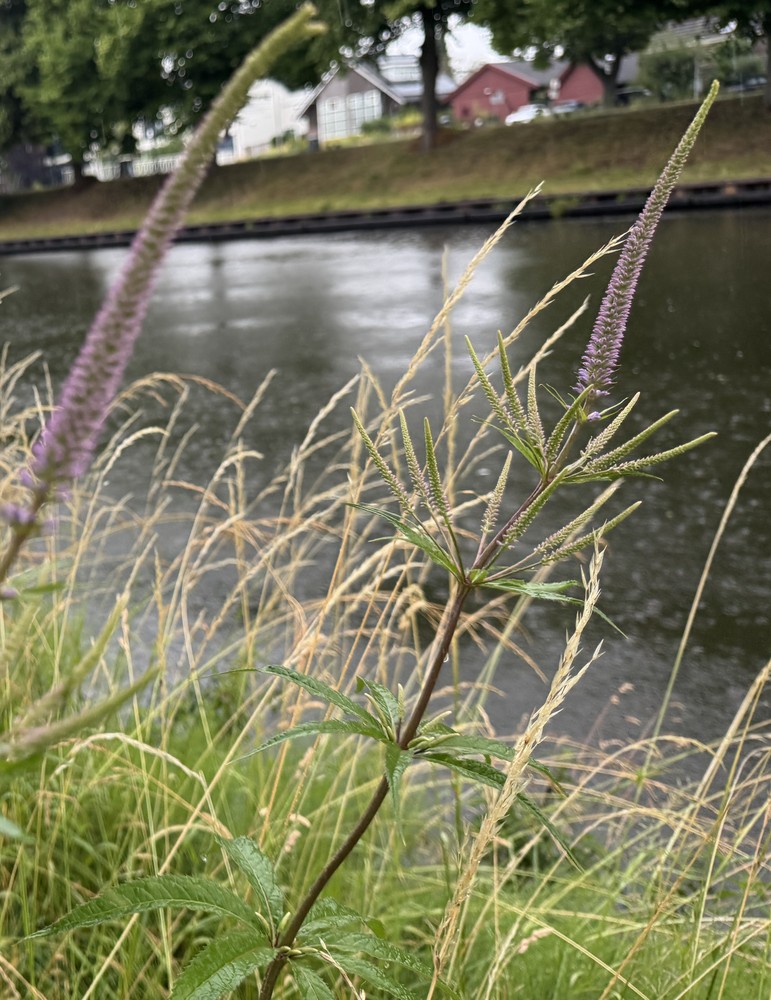
Veronicastrum virginicum is a tall, upright, clump-forming herbaceous perennial reaching 4-7 feet (120-210 cm) tall and 2-3 feet (60-90 cm) wide, producing sturdy erect stems from a slowly spreading crown. Leaves are lance-shaped, sharply toothed, dark green, 3-6 inches (8-15 cm) long, and arranged in whorls of 3-6 at regular intervals along each stem; this whorled tiered leaf pattern is the identifying feature. From July through September, the upper portion of each stem branches into multiple slender tapering terminal racemes 4-8 inches (10-20 cm) long bearing hundreds of tiny four-petaled white to pale lilac tubular flowers that open progressively from the base of each spike upward; a mature clump of 5-9 stems may carry 20-40 simultaneous spikes. Hardy in USDA zones 3-8 (-40°F / -40°C). The dried stem, whorled leaf points, and persistent seed spikes hold their form through fall and winter, and goldfinches and sparrows work the seeds. Cultivars include 'Fascination' (soft lavender-pink) and 'Album' (white). In dry soils, stems are shorter, flowering is reduced, and crown lifespan drops from 7-10 years to 2-3 years.
Native Range
Veronicastrum virginicum is native to eastern North America, from Ontario and Manitoba south to Georgia, Louisiana, and Kansas. It grows in moist prairies, wet meadows, open woodland edges, and stream margins on moist to seasonally wet, humus-rich soils.Suggested Uses
Planted at the back of mixed perennial borders, in prairie-style plantings, and in rain gardens at 24-36 inch (60-90 cm) spacing in USDA zones 3-8. The tiered whorled foliage, simultaneous tapering terminal spikes, and persistent winter skeleton suit New Perennial-style plantings of the type associated with Piet Oudolf, where the species is combined with Echinacea, Rudbeckia, Sanguisorba, and ornamental grasses. Cultivars in the trade include 'Fascination' (lavender-pink) and 'Album' (white). Not grown in dry sandy soils, where stem height and flowering are substantially reduced.How to Identify
Appearance
Size & Dimensions
Height4' - 7'
Width/Spread2' - 3'
Bloom Information
Slender tapering terminal racemes 4-8 inches (10-20 cm) long open progressively from the base upward from July through September, for a total bloom span of 6-8 weeks. A mature clump of 5-9 stems carries 20-40 simultaneous spikes, with each individual spike remaining in color for 3-4 weeks. The dried stem-and-spike skeleton holds its form through fall and winter, and goldfinches and sparrows work the persistent seeds.
Detailed Descriptions
Flower Description
White to pale lilac; hundreds of tiny four-petaled tubular flowers in slender tapering terminal racemes 4-8 inches (10-20 cm) long; opening progressively from the spike base to the tapering tip; 20-40 simultaneous spikes on a mature plantFoliage Description
Dark green; lance-shaped and sharply toothed; 3-6 inches (8-15 cm) long; held in whorls of 3-6 at regular intervals along the stemGrowing Conditions
Sun Requirements
Requires 4-8 hours of direct sunlight daily
• Full Sun: 6+ hours of direct sunlight
• Partial Shade: 3-6 hours of direct sunlight
• Full Shade: Less than 3 hours of direct sunlight
Care & Maintenance
Care Guide
Plants grow in full sun to partial shade in moist to average, humus-rich, neutral to slightly acid soil with a pH of 5.5-7.0. Hardy in USDA zones 3-8 (-40°F / -40°C). Plants tolerate consistently moist soils and grow well adjacent to water features or in rain gardens. In dry sandy soils, stems are shorter at 2-4 feet (60-120 cm), flowering is reduced, and crown lifespan drops from 7-10 years to 2-3 years. In Pacific Northwest summers, supplemental irrigation during July-August dry periods maintains stem height and bloom density. Stems are self-supporting and require no staking. Divide every 4-5 years in early spring to maintain clump vigor.Pruning
Leave the full plant standing through fall and winter — the dried stems, whorled leaf attachment points, and persistent seed spikes hold their form and feed goldfinches and sparrows. Cut all stems to 4-6 inches (10-15 cm) above ground in late February or early March before new growth begins. Divide every 4-5 years in early spring by lifting the crown and separating it into sections with several shoots each, replanting at 24-36 inch (60-90 cm) spacing.Pruning Schedule
Prune: February–March
early spring