Vachellia, Genus, farnesiana, Species,
- Genus & species
sweet acacia
Overview
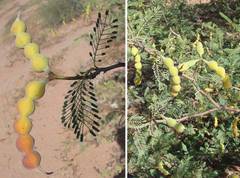
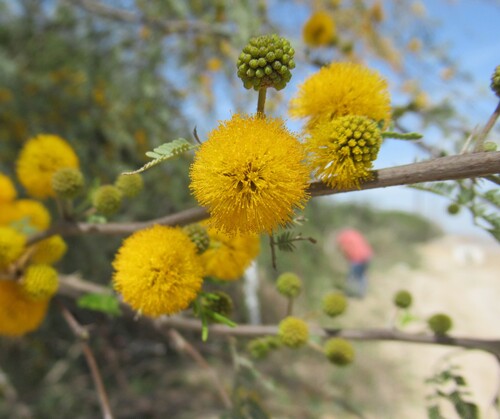
Vachellia farnesiana, formerly Acacia farnesiana, is a thorny deciduous to semi-evergreen shrub or small tree of the pea family, reaching 10-30 feet (3-9 m) tall with a rounded, often multi-stemmed crown. Pairs of sharp white spines guard the branches, and the feathery, bipinnate leaves are divided into many tiny leaflets that fold in the heat and at night. From late winter into spring it bears round, golden-yellow flower heads about 0.5 inch (12 mm) across, packed with fragrant stamens that smell strongly of violets and have long been distilled for perfume. The flowers ripen into dark, woody, cylindrical seed pods 1.5-3 inches (4-7.5 cm) long that stay on the branches. The plant grows fast, fixes nitrogen through its roots, and tolerates heat, drought, salt, and poor soil. It can sucker and self-sow into thickets and has naturalized as a weed in some warm regions. Frost cuts back young growth, limiting it to mild climates, and the spines make pruning and handling difficult.
Native Range
Native to the Americas, most likely originating in Mexico, Central America, and the southern United States, though its exact native range is blurred by centuries of cultivation. It now grows across tropical and subtropical regions worldwide and has naturalized in Australia, Africa, and southern Asia.Suggested Uses
Grown as a flowering specimen, barrier hedge, or small patio tree in warm, dry climates, spaced 10-15 feet (3-4.6 m) apart. It is also used for erosion control, windbreaks, and as a nectar and perfume source on hot, poor sites.How to Identify
Appearance
Size & Dimensions
Height10' - 30'
Width/Spread10' - 20'
Bloom Information
Detailed Descriptions
Foliage Description
greenGrowing Conditions
Sun Requirements
Requires 6-12 hours of direct sunlight daily
• Full Sun: 6+ hours of direct sunlight
• Partial Shade: 3-6 hours of direct sunlight
• Full Shade: Less than 3 hours of direct sunlight
Care & Maintenance
Care Guide
Grows in full sun on well-drained soil of almost any type, including sand, clay, and limestone, across a pH of 6.0-8.5. It tolerates heat, drought, salt, and poor fertility once established and needs little water. As a legume it fixes its own nitrogen and needs no feeding. It is grown from scarified seed and grows quickly in warm conditions. Frost damages young wood, restricting it to zones 9-11, and wet, poorly drained soil causes root problems. It suckers and self-sows, so seedlings and root sprouts may need removal to keep it in bounds.Pruning
Prune in late spring after flowering to shape the plant or raise it into a single-trunked small tree, working carefully around the paired spines. Remove suckers and low branches to lift the canopy. Thin congested growth to open the crown and reduce storm damage.Pruning Schedule
Prune: May
late spring
Container Growing
Suitable for container growing
Minimum container size: 10 gallons