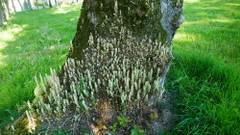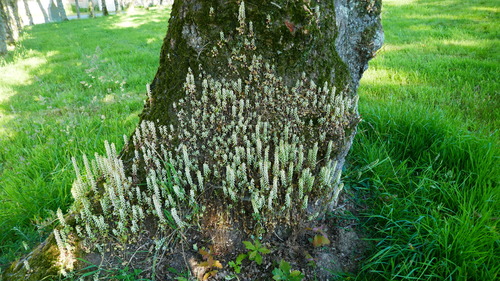
Umbilicus, Genus, spp., Multiple species,
- Genus
- Multiple species
navelworts
Europe, Mediterranean, and western Asia
Overview
Umbilicus is a genus of about 15-20 species of perennial succulents in the stonecrop family, native to western Europe, the Mediterranean, and western Asia. Plants grow from a rounded tuber and produce fleshy, rounded leaves with a navel-like dimple where the stalk joins the centre of the blade, the feature behind the common names navelwort and pennywort. The leaves form low rosettes 5-20 cm (2-8 in) across, and slender flowering spikes 10-40 cm (4-16 in) tall carry many small, tubular, drooping flowers in greenish-white to pale yellow or pink. Species grow in rock crevices, on old walls, shaded banks, and among boulders, often in winter-moist, summer-dry sites where the tuber rests through the dry season. The leaves appear in autumn and winter and die back in summer. Plants tolerate shade and poor, thin soil but rot in heavy, waterlogged ground. U. rupestris is the most widespread species across Atlantic Europe.
Native Range
Umbilicus is native to western and southern Europe, the Mediterranean region, North Africa, and western Asia. Species grow on rock outcrops, old walls, shaded banks, and in crevices, mainly in mild, winter-wet climates.Suggested Uses
Umbilicus is grown in shaded rock gardens, on living walls, in crevice plantings, and in containers in cool, mild climates. The succulent rosettes suit shaded stonework and north-facing banks. The flowers draw bees and other small pollinators.How to Identify
Appearance
Size & Dimensions
Height4" - 1'4"
Width/Spread2" - 8"
Bloom Information
Detailed Descriptions
Flower Description
greenish-white to pinkFoliage Description
greenGrowing Conditions
Sun Requirements
Requires 2-6 hours of direct sunlight daily
• Full Sun: 6+ hours of direct sunlight
• Partial Shade: 3-6 hours of direct sunlight
• Full Shade: Less than 3 hours of direct sunlight
Care & Maintenance
Care Guide
Umbilicus grows in part to full shade in cool, free-draining sites such as rock crevices, walls, and shaded banks, in thin, gritty soil. Plants are watered through their autumn-to-spring growth and kept dry in summer dormancy, when the tuber rests and wet soil causes rot. A soil pH around 6.0-7.5 suits most species. They tolerate light frost but vary in hardiness, and several are damaged by hard freezes. Little feeding is needed. Plants self-seed into walls and crevices where conditions suit.Pruning
Pruning is not required. Spent flowering spikes are removed after seeding, and the summer-dormant foliage is left to die back to the tuber. Self-sown seedlings can be thinned where they crowd.Container Growing
Suitable for container growing
Minimum container size: 1 gallons