Ulex, Genus, europaeus, Species,
- Genus & species
gorse
Western Europe and the British Isles (native); widely naturalized in the Pacific Northwest west of the Cascades
Overview
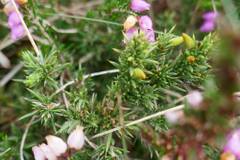
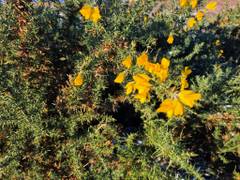
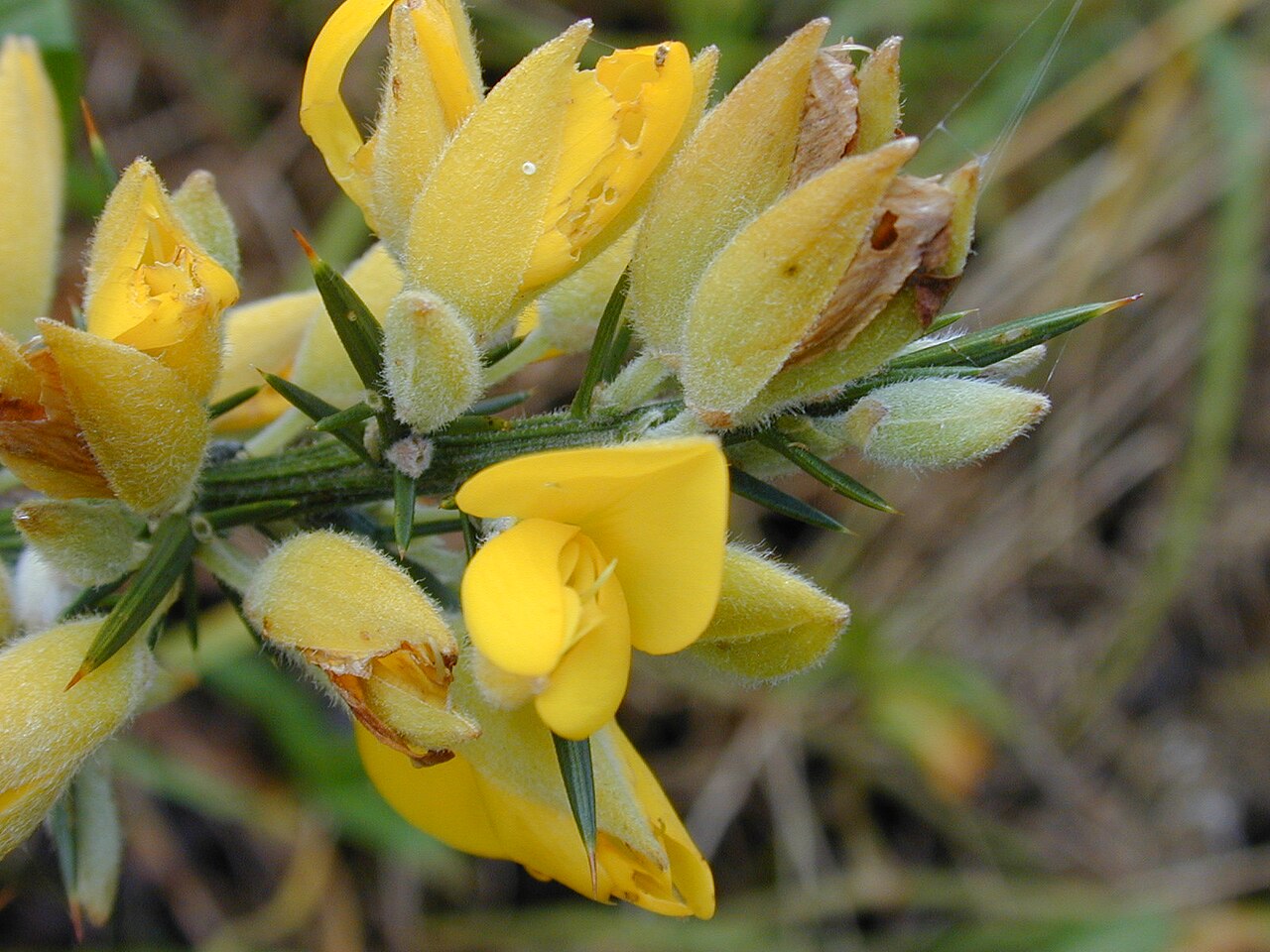
Ulex europaeus is a densely spiny evergreen shrub in the pea family (Fabaceae) reaching 3–10 feet (0.9–3 m) tall and 3–8 feet (0.9–2.4 m) wide, forming impenetrable thickets. True leaves are reduced to stiff, sharp, triple-branched spines 0.5–1.5 inches (1–4 cm) long (seedling leaves are trifoliate but mature plants carry only spines). Photosynthesis is performed by the green stems and spines. Stems are densely branched, green, rigid, with spines at every node. Flowers are bright yellow, 0.5–0.8 inch (12–20 mm) long, papilionaceous (pea-type), with a coconut-like fragrance, carried in dense clusters along the stems. Fruit is a black hairy legume pod 0.4–0.6 inch (10–15 mm) long containing 2–6 seeds. Pods dehisce explosively in warm weather, ejecting seeds up to 15 feet (4.5 m) — the audible popping is a field identification feature in summer. A single plant produces 5,000–18,000 seeds per year, viable in soil for 30+ years. Seeds have a hard coat requiring scarification for germination, and fire scarifies seeds en masse. Nitrogen-fixing via Rhizobium root nodules. Highly flammable: the dense oily resinous stems and spines carry fire rapidly. The species is listed as a Class B noxious weed in Washington State and is a severe invasive shrub in the Pacific Northwest, particularly on coastal and lowland sites.
Native Range
Ulex europaeus is native to western Europe and the British Isles, occurring on coastal bluffs, roadsides, pastures, and disturbed sites from sea level to approximately 3,000 feet (900 m). The species is widely naturalized in the Pacific Northwest west of the Cascades and ranks with the hardest invasive shrubs to manage in western Oregon and Washington, particularly on coastal and lowland sites.Suggested Uses
Used in Fabaceae identification for the papilionaceous flower, explosive pod dehiscence, nitrogen fixation, and the leaf-to-spine modification. The fire ecology (flammable resinous tissue, fire-scarified seed bank, post-fire mass germination) is a primary teaching case alongside Cytisus scoparius. The coconut flower fragrance is a sensory identification exercise. Studied in invasion ecology, fire management, and coastal habitat restoration.How to Identify
Appearance
Size & Dimensions
Height3' - 10'
Width/Spread3' - 8'
Bloom Information
Flowers from February through June, with peak bloom in March through May. Dense clusters of yellow flowers emit a strong coconut-like fragrance detectable from several meters. Pollination is by bees. Pods mature 6–8 weeks after flowering and dehisce explosively on warm days. In the Pacific Northwest, bright yellow masses on coastal bluffs and roadsides are conspicuous in early spring.
Detailed Descriptions
Flower Description
Bright yellow; papilionaceous (pea-type); 0.5–0.8 inch (12–20 mm) long; carried in dense clusters along the stems; coconut-like fragranceFoliage Description
Green; true leaves modified into stiff sharp triple-branched spines 0.5–1.5 inches (1–4 cm) long; photosynthesis performed by green stems and spinesGrowing Conditions
Sun Requirements
Requires 6-12 hours of direct sunlight daily
• Full Sun: 6+ hours of direct sunlight
• Partial Shade: 3-6 hours of direct sunlight
• Full Shade: Less than 3 hours of direct sunlight
Care & Maintenance
Care Guide
The species is listed as a Class B noxious weed in Washington State. The dense spines make manual handling difficult; heavy leather gloves, chaps, and face protection are required. Cutting at ground level stimulates vigorous regrowth from the root crown. Repeated cutting 3–4 times per year for 3–5 years gradually depletes root reserves. The long-lived seed bank (30+ years) and fire-stimulated germination complicate management. Fire kills above-ground growth but stimulates mass germination from the seed bank, requiring follow-up treatment. Revegetation with competitive native species after removal is critical. Goat grazing suppresses regrowth in some management programs.Pruning
Pruning is not applicable in a weed context. Plants are cut at ground level and root crowns are treated. The spines require full protective equipment. In managed settings (European hedgerows), gorse is cut annually to maintain hedge height.Pruning Schedule
Prune: July–August
summer