Trochocarpa, Genus, laurina, Species,
- Genus & species
tree heath
Overview
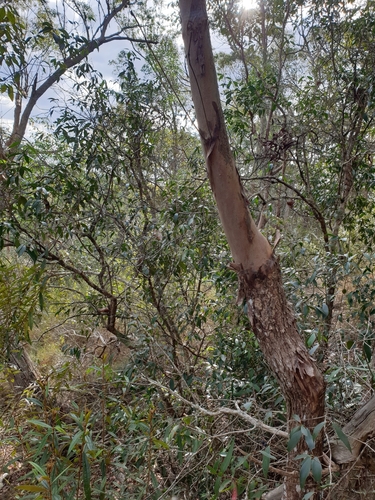
Trochocarpa laurina is an evergreen shrub to small tree reaching 10-25 feet (3-8 m) tall, with a dense, often columnar crown and dark, finely fissured bark. The leaves are spirally arranged, oval to lance-shaped, 1.5-3 inches (4-8 cm) long, leathery, glossy dark green, with several curved parallel veins running from base to tip. New growth emerges in flushes of red, pink, and bronze before hardening to green. Small white to cream flowers about 0.1 inch (2-3 mm) long are packed in slender drooping spikes 1-2 inches (2.5-5 cm) long in late winter and spring. Rounded berries 0.2 inches (4-6 mm) across follow, ripening through blue and purple to near black. Growth is slow. The dense habit gives heavy shade, and the surface roots compete with nearby plants. New growth is sensitive to hard frost.
Native Range
Native to eastern Australia, from Victoria through New South Wales to Queensland. Grows in rainforest, moist eucalypt forest, and along streams and gullies, from the coast to the ranges on moist, well-drained soils.Suggested Uses
Planted as a screen, hedge, or small shade tree in native and rainforest gardens, spaced 5-10 feet (1.5-3 m) apart. The coloured new growth and dark berries give changing interest through the year. It grows in large containers of at least 10 gallons (38 L) while young, and the berries draw birds.How to Identify
Appearance
Size & Dimensions
Height10' - 25'
Width/Spread6' - 12'
Bloom Information
Detailed Descriptions
Flower Description
white to creamFoliage Description
glossy dark greenGrowing Conditions
Sun Requirements
Requires 3-8 hours of direct sunlight daily
• Full Sun: 6+ hours of direct sunlight
• Partial Shade: 3-6 hours of direct sunlight
• Full Shade: Less than 3 hours of direct sunlight
Care & Maintenance
Care Guide
Grows in part shade to full sun in moist, well-drained soil with organic matter, with young plants preferring shade. Water through dry spells until established, after which it tolerates short dry periods in sheltered positions. It grows on loam and sandy soils and shelters from strong wind, which browns the foliage. New growth is damaged by hard frost, so it suits frost-free to light-frost areas. Few pests trouble it. Growth is slow, so plants take several years to reach screening height.Pruning
Light pruning after flowering keeps the crown dense and can shape the plant as a hedge or screen. It tolerates regular clipping and reshoots from cut wood. Removal of lower branches lifts it into a single-stemmed small tree.Pruning Schedule
Prune: November–December
late springsummer
Container Growing
Suitable for container growing
Minimum container size: 10 gallons