Tristaniopsis, Genus, spp., Multiple species,
- Genus
- Multiple species
water gum
Southeast Asia, Australia, and the western Pacific
Overview
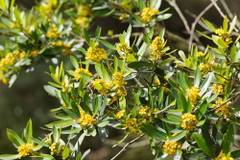
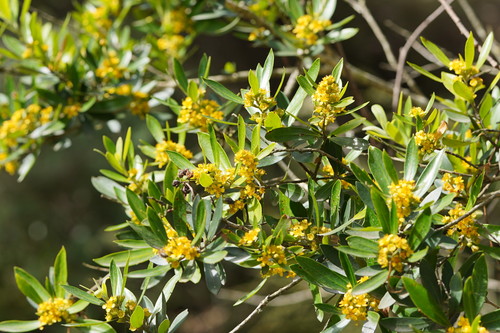
Tristaniopsis is a genus of about 40 species of evergreen trees and shrubs in the myrtle family (Myrtaceae), native to Southeast Asia, Malesia, eastern Australia, New Caledonia, and the western Pacific. Plants range from multi-stemmed shrubs to single-trunked trees 15-100 feet (4.5-30 m) tall, many with smooth bark that peels in patches to reveal pale, mottled underbark. The leaves are simple, alternate or clustered at branch tips, leathery and glossy dark green, often turning red before they drop individually. Clusters of small flowers, each with five yellow petals and tufts of stamens, open in summer and are followed by small woody capsules. Several species grow along watercourses and tolerate seasonal flooding, while others occupy heath and forest on poorer soils. Tristaniopsis laurina, the water gum, is widely cultivated as a street and shade tree for its dense crown and tolerance of urban conditions. Growth is moderate, and most species are frost-sensitive when young.
Native Range
Native to Southeast Asia, Malesia, eastern Australia, New Caledonia, and islands of the western Pacific, growing in rainforest, along watercourses, and in heath and open forest.Suggested Uses
Grown as street, shade, and specimen trees and as screening shrubs in mild climates. Streamside species are used for bank stabilisation and in rain gardens that flood periodically.How to Identify
Appearance
Size & Dimensions
Height15' - 100'
Width/Spread10' - 30'
Bloom Information
Flowering occurs mainly in summer, roughly December to February in the Southern Hemisphere. The yellow flowers open in clusters and draw nectar-feeding insects. Woody seed capsules develop over the following months and persist on the branches.
Detailed Descriptions
Foliage Description
glossy dark greenGrowing Conditions
Sun Requirements
Requires 4-12 hours of direct sunlight daily
• Full Sun: 6+ hours of direct sunlight
• Partial Shade: 3-6 hours of direct sunlight
• Full Shade: Less than 3 hours of direct sunlight