Tripsacum, Genus, spp., Multiple species,
- Genus
- Multiple species
gamagrass
Overview
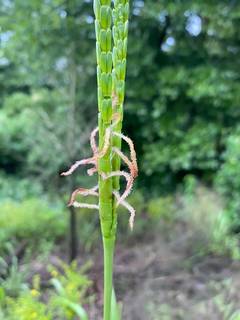
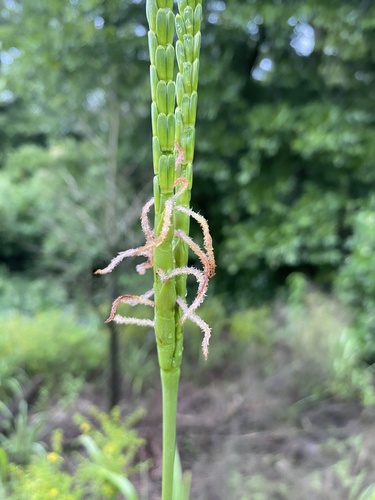
Tripsacum is a genus of about a dozen species of robust, warm-season perennial grasses in the family Poaceae, native to the Americas and closely related to maize. Eastern gamagrass (T. dactyloides) forms dense clumps of arching leaves 3-9 feet (0.9-2.7 m) tall from thick, knotty rhizomes. The leaf blades are flat, 0.5-1 inch (12-25 mm) wide, with a raised midrib and rough margins. Flowering stems carry spikes in which male and female flowers are separated: the slender upper portion bears pollen-shedding male spikelets, while the thicker lower portion holds bead-like female spikelets that break into hard, segmented units at maturity. Plants grow in moist prairies, stream banks, and seasonally wet ground from the eastern and central United States south through Mexico into South America. Deep-rooted and long-lived, the genus is grown for forage, erosion control, and prairie restoration. Establishment from seed is slow, as the seed germinates unevenly and benefits from cold, moist stratification.
Native Range
Native to the Americas, ranging from the eastern and central United States through Mexico, Central America, and parts of South America. Tripsacum dactyloides is widespread across the eastern and central United States.Suggested Uses
Grown as forage and hay, for streambank and slope stabilisation, and in prairie and wetland restoration. Also used as a tall accent grass in large native and rain gardens.How to Identify
Appearance
Size & Dimensions
Height3' - 9'
Width/Spread2' - 4'
Bloom Information
Detailed Descriptions
Flower Description
green to brownishFoliage Description
green to blue-greenGrowing Conditions
Sun Requirements
Requires 6-12 hours of direct sunlight daily
• Full Sun: 6+ hours of direct sunlight
• Partial Shade: 3-6 hours of direct sunlight
• Full Shade: Less than 3 hours of direct sunlight