Tripleurospermum, Genus, spp., Multiple species,
- Genus
- Multiple species
mayweeds
Europe, North Africa, and temperate Asia
SunFull Sun
Overview
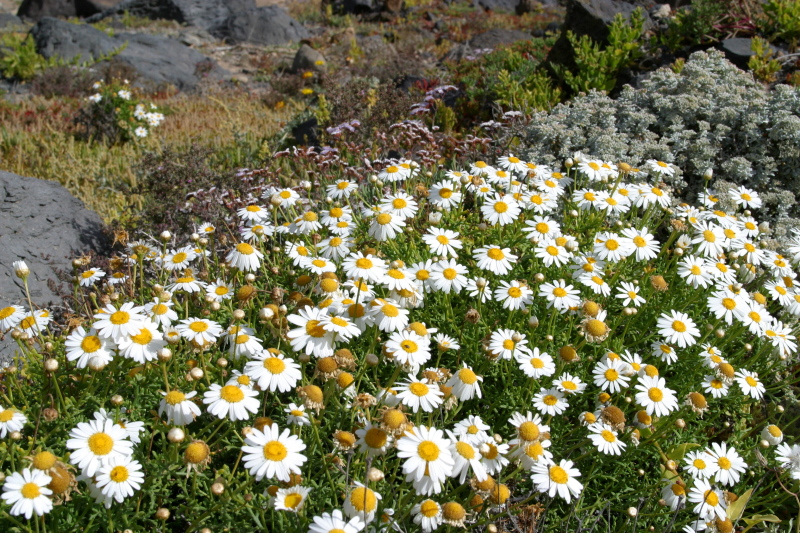
Tripleurospermum is a genus of about 40 species of annual, biennial, and short-lived perennial herbs in the daisy family Asteraceae, native to Europe, North Africa, and temperate Asia, with a few species in North America. Plants form erect, branching stems 6-32 in (15-80 cm) tall above finely dissected, almost feathery leaves divided into thread-like segments. The flower heads are daisy-like, 0.8-1.8 in (2-4.5 cm) across, with white ray florets surrounding a domed yellow disc, borne singly at the branch tips. Unlike true chamomile, the crushed foliage of most species has little or no scent, giving the common name scentless mayweed. The widespread T. inodorum is an annual or biennial weed of arable land, roadsides, and waste ground across the northern hemisphere, while coastal T. maritimum is a fleshier-leaved perennial of sea cliffs and shingle. Flowering extends through summer and into autumn, and a single plant can produce many thousands of seeds. The genus grows in open, disturbed, well-drained sites and is often regarded as an agricultural weed.
Native Range
Tripleurospermum is native to Europe, North Africa, and temperate Asia, with a few species in North America. Several species, especially T. inodorum, have spread as weeds across temperate regions worldwide. Plants occur on cultivated land, roadsides, waste ground, and coastal shingle.Suggested Uses
Ornamental and coastal Tripleurospermum species are grown in informal, wildflower, and seaside plantings for their long succession of white daisies. The cut flowers last well in arrangements. Most weedy species are not planted intentionally and are managed where they appear in cultivated ground.How to Identify
Appearance
Size & Dimensions
Height6" - 2'8"
Width/Spread6" - 1'6"
Bloom Information
Detailed Descriptions
Flower Description
white with yellow centerFoliage Description
greenGrowing Conditions
Sun Requirements
Requires 6-10 hours of direct sunlight daily
• Full Sun: 6+ hours of direct sunlight
• Partial Shade: 3-6 hours of direct sunlight
• Full Shade: Less than 3 hours of direct sunlight
Water & Climate
Water Needs
Drought Tolerance
Drought tolerant when established