Tripladenia, Genus, spp., Multiple species,
- Genus
- Multiple species
bush lily
Overview
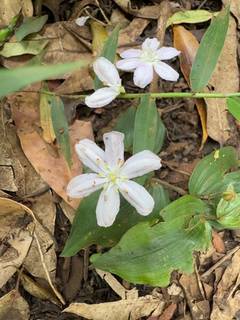
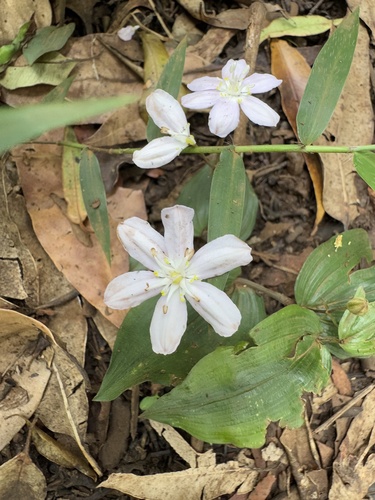
Tripladenia is a small genus in the family Colchicaceae native to the rainforests and moist eucalypt forests of eastern Australia. Plants are low, perennial herbs growing from slender rhizomes and reaching 8-16 inches (20-40 cm) tall. The stems are weak and somewhat sprawling, bearing alternate, broadly lance-shaped leaves 2-4 inches (5-10 cm) long with prominent parallel veins and glossy upper surfaces. Small star-shaped flowers, about 0.4-0.6 inch (10-15 mm) across, appear singly or in small clusters at the leaf axils; they range from greenish-cream to pink or mauve, with six tepals and a central cluster of stamens. Flowering is followed by fleshy, three-lobed capsules. The genus grows in shaded, humus-rich soils on the forest floor and spreads slowly to form loose colonies. Like other members of Colchicaceae, the tissues may contain alkaloids, so the plant is treated as potentially toxic if eaten. Its shade tolerance and low stature suit it to woodland and fern gardens in frost-free climates.
Native Range
Native to eastern Australia, occurring in rainforest and moist sclerophyll forest from northern New South Wales into Queensland.Suggested Uses
Used as a groundcover or understorey plant in shaded woodland gardens, fern gardens, and moist borders in frost-free climates. Also grown in containers kept in sheltered, humid conditions.How to Identify
Appearance
Size & Dimensions
Height8" - 1'4"
Width/Spread1' - 2'
Bloom Information
Detailed Descriptions
Flower Description
cream to pink or mauveFoliage Description
glossy greenGrowing Conditions
Sun Requirements
Tolerates up to 4 hours of direct sunlight daily
• Full Sun: 6+ hours of direct sunlight
• Partial Shade: 3-6 hours of direct sunlight
• Full Shade: Less than 3 hours of direct sunlight
Care & Maintenance
Care Guide
Plants grow in dappled to full shade in moist, free-draining soils rich in leaf litter. They are frost-tender and grow year-round only where temperatures stay above freezing, performing as understorey plants beneath taller trees and ferns. Consistent moisture and high humidity support steady growth, though established colonies tolerate short dry spells. Propagation is by division of the rhizomes in spring or by seed sown fresh. The plants have few pest problems when grown in suitable shade and soil.Pruning
No regular pruning is needed. Spent stems and damaged foliage can be removed at the base in late winter to tidy the clump before new growth resumes.Container Growing
Suitable for container growing