Tricoryne, Genus, spp., Multiple species,
- Genus
- Multiple species
yellow rush lily
Overview
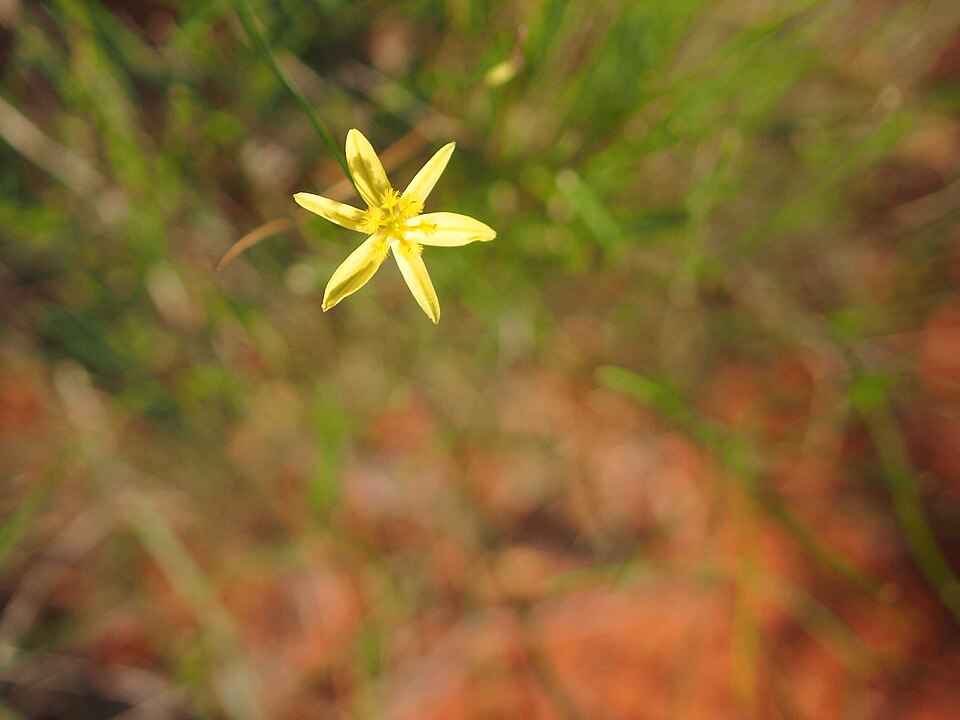
Tricoryne is a genus of about eight perennial herbs in the family Asphodelaceae, native to Australia. Plants grow from a short rhizome or tuberous rootstock and send up wiry, branching stems 8-24 inches (20-60 cm) tall, with the leaves reduced to small scales or short grass-like blades so that the green stems do much of the photosynthesis. Small yellow flowers with six spreading segments open at the stem tips, each lasting a single day and then spiralling closed as it withers. The widely seen T. elatior, the yellow rush lily, flowers over a long season and grows in open forest, woodland, and grassland across much of the country. The rush-like stems and scattered yellow stars give a loose, airy look rather than a solid clump. Plants survive dry seasons by dying back to the rootstock and resprout after rain or fire. The genus is drought-tolerant and frost-tender, suited to warm, dry-climate gardens. Flowering is light at any one time, since each bloom is short-lived, though the succession continues for weeks.
Native Range
Native to Australia, occurring in all mainland states in open eucalypt forest, woodland, heath, and grassland, on a range of well-drained soils.Suggested Uses
Grown in native, dry-climate, and rockery gardens and in containers within its climate range, for its airy stems and long succession of yellow flowers. Used in grassland and bushland restoration where it occurs naturally.How to Identify
Appearance
Size & Dimensions
Height8" - 2'
Width/Spread8" - 1'4"
Bloom Information
Flowering runs over a long season, mainly spring to autumn and peaking in the warmer months. Each yellow flower opens for a single day and spirals closed by evening, with a succession following over many weeks. Bees and other insects visit the open flowers.
Detailed Descriptions
Foliage Description
greenGrowing Conditions
Sun Requirements
Requires 6-12 hours of direct sunlight daily
• Full Sun: 6+ hours of direct sunlight
• Partial Shade: 3-6 hours of direct sunlight
• Full Shade: Less than 3 hours of direct sunlight
Care & Maintenance
Care Guide
Plants grow in full sun in light, free-draining soil with a pH of about 5.5 to 7.5, including sandy and gravelly ground. Once established they are drought-tolerant and need watering only in long dry spells. The genus is frost-tender and grown outdoors in warm, near-frost-free climates, roughly zones 9 to 11. Seed and division of the rootstock are both used for increase, and plants resprout readily after dying back. Wet, heavy soil in winter is the main cause of loss. Little feeding is needed on the lean soils where the genus grows.Pruning
No formal pruning is needed. Old, dried stems are cut back at the end of the season as the plant dies down. Fresh growth rises from the rootstock with the return of warmth and moisture.Container Growing
Suitable for container growing
Minimum container size: 2 gallons