Trichophorum, Genus, spp., Multiple species,
- Genus
- Multiple species
deergrass
Northern Hemisphere boreal and montane
Overview
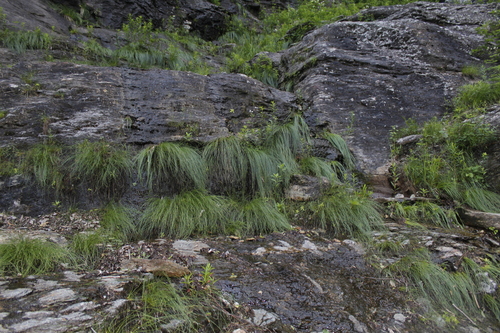
Trichophorum is a genus of about ten grass-like sedges in the family Cyperaceae, found across the cooler parts of the Northern Hemisphere and on mountains farther south. Plants are tufted or shortly creeping perennials of 6-24 inches (15-60 cm), with very narrow, almost thread-like leaves and slender, three-sided or rounded stems. Small brown spikelets sit singly or in clusters at the stem tips, and in some species the seeds carry pale bristles that lengthen as they ripen. The deergrass, T. cespitosum, forms dense tussocks and is a dominant plant of blanket bog and wet moorland, where its foliage turns orange-brown through autumn and winter. T. alpinum bears spreading white bristles that recall the cottongrasses. The genus grows in wet, acidic, peaty ground that is poor in nutrients, and most species fail in dry or limey soil. Spread is by seed and by short rhizomes, and the tussocks build up slowly over years. Plants are wind-pollinated with inconspicuous flowers, the interest lying in the narrow foliage and its seasonal colour.
Native Range
Native across boreal and cool-temperate parts of the Northern Hemisphere, from North America through Europe to northern Asia, and on mountains and bogs farther south, in Britain extending onto upland blanket bog.Suggested Uses
Grown at bog and pond edges, in rain gardens, and in wet, acidic ground where ordinary grasses fail, for foliage texture and winter colour. Used in moorland and wetland restoration where it occurs naturally.How to Identify
Appearance
Size & Dimensions
Height6" - 2'
Width/Spread6" - 1'
Bloom Information
Detailed Descriptions
Foliage Description
green, orange-brown in winterGrowing Conditions
Sun Requirements
Requires 4-12 hours of direct sunlight daily
• Full Sun: 6+ hours of direct sunlight
• Partial Shade: 3-6 hours of direct sunlight
• Full Shade: Less than 3 hours of direct sunlight
Care & Maintenance
Care Guide
These are sedges of wet, acidic, peaty ground in full sun to light shade, with a pH of about 4.0 to 6.5 and constant moisture at the roots. They grow well at pond and bog margins and in rain gardens, and most species decline in dry or alkaline soil. Hardiness is high, with cold tolerance into the coldest zones, roughly zones 2 to 7. Increase is by seed sown fresh on damp peat or by division of the tussocks in spring. Few pests trouble them. Old foliage is combed out by hand in spring.Pruning
Little pruning is needed. Old, weathered foliage is combed or trimmed out in early spring before new growth. Tussocks are divided rather than cut back to renew them.Container Growing
Suitable for container growing
Minimum container size: 2 gallons