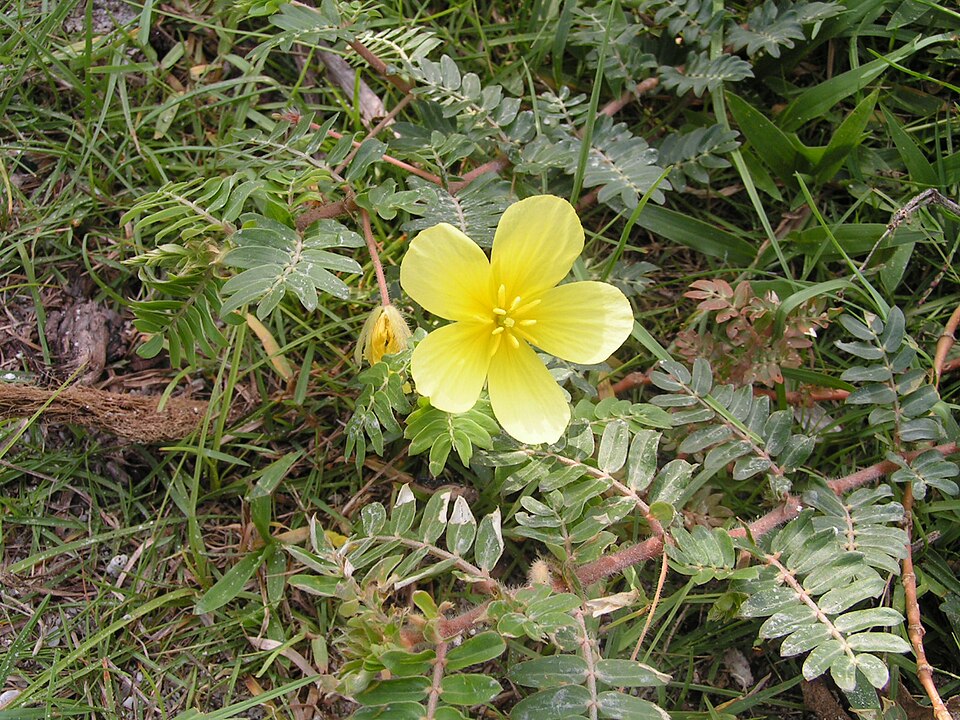
Tribulus, Genus, spp., Multiple species,
- Genus
- Multiple species
devil thorns
Southern Europe, Africa, southern Asia, and Australia
Overview
Tribulus is a genus of about 25 species of low, trailing annual and perennial herbs in the family Zygophyllaceae, found across warm-temperate and tropical regions worldwide. Stems radiate flat along the ground, forming mats 0.3-1.5 m (1-5 ft) across and rising only 5-15 cm (2-6 in) high. The leaves are opposite and pinnately compound, divided into several pairs of small oblong leaflets 3-15 mm long. Five-petalled flowers, usually yellow and 4-15 mm (0.2-0.6 in) wide, open singly in the leaf axils through the warm months. Each flower gives way to a hard fruit that splits into nutlets bearing two or more sharp spines. T. terrestris is widely naturalized as puncturevine, caltrop, or goathead, and its spined fruit can puncture bicycle tyres, lame livestock, and injure bare feet. The genus tolerates heat, drought, and poor sandy soils, and several species are listed as noxious weeds far outside their native range.
Native Range
Tribulus is native to warm regions of southern Europe, Africa, southern Asia, and Australia, growing in deserts, dry grasslands, roadsides, and disturbed sandy ground; several species have spread to the Americas and other continents as weeds.Suggested Uses
Tribulus is seldom planted by choice. T. terrestris is grown on a small scale for traditional herbal preparations and studied as a soil-cover and forage plant in arid regions, while in most gardens the genus appears as a weed to be managed. Where grown for research or herbal use, plants are spaced 30-45 cm (12-18 in) apart in full sun.How to Identify
Appearance
Size & Dimensions
Height2" - 6"
Width/Spread1' - 5'
Bloom Information
Flowering continues through the warm months, from late spring until autumn frost, with new yellow flowers opening daily in the leaf axils. Each flower lasts a single day and is quickly followed by the spiny fruit. In hot climates plants can flower and set seed within a few weeks of germination.
Detailed Descriptions
Foliage Description
green to grey-greenGrowing Conditions
Sun Requirements
Requires 6-12 hours of direct sunlight daily
• Full Sun: 6+ hours of direct sunlight
• Partial Shade: 3-6 hours of direct sunlight
• Full Shade: Less than 3 hours of direct sunlight
Water & Climate
Water Needs
Drought Tolerance
Drought tolerant when established
Care & Maintenance
Care Guide
Tribulus grows in full sun on dry, sandy, or gravelly soils and withstands prolonged drought and high heat once rooted. It tolerates poor, alkaline ground and needs no supplemental water in most settings. The annual species complete their life cycle in a single warm season, while perennial species persist from a deep taproot. Growth is fast, and a single plant can produce hundreds of long-lived spiny seeds, so the weedy species establish quickly on bare soil. Hand-pulling is easiest before the fruit hardens, as the dried burrs cling to skin, tyres, and animal feet.Pruning
Routine pruning is not used for these low-growing plants. Where the weedy species are unwanted, plants are removed by hand or hoe before the spiny fruit forms and hardens. Cut or pulled material is bagged because detached burrs stay sharp and can root or reseed.Toxicity Warning
Toxic to petsPlanting Guide
Planting Methods & Timing
Planting Method
direct sow
Direct Sow Timing
after the last frost when the soil is warm
Days to Maturity
30–60 days
Plant Spacing
15 inches
