Triadica, Genus, sebifera, Species,
- Genus & species
Chinese tallow
Overview
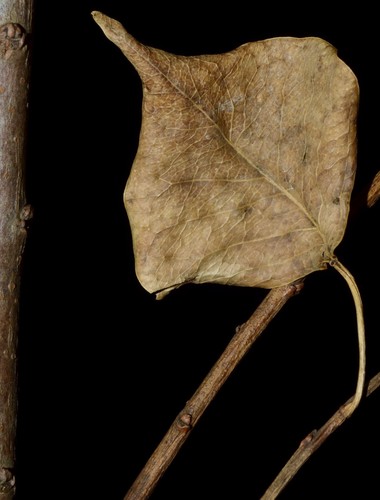
Triadica sebifera is a fast-growing deciduous tree native to eastern Asia, reaching 30-50 feet (9-15 m) tall with a rounded crown of similar spread. The broadly rhombic to heart-shaped leaves are 1.5-3 inches (4-7.5 cm) long on slender stalks that let them flutter in wind, turning red, orange, and purple in autumn. Slender yellow-green flower spikes appear in late spring, the small flowers without petals. By autumn the tree produces three-lobed capsules that split to reveal seeds coated in white, waxy tallow, persisting on bare branches through winter and giving rise to the name popcorn tree. T. sebifera was introduced to North America for seed oil and ornament and has since naturalized across the southeastern United States, where it is listed as a noxious or invasive species in Texas, Florida, Louisiana, and other Gulf states. It forms dense stands that displace native vegetation, tolerating flooding, salt, and a wide range of soils. All parts contain compounds that irritate skin and are toxic if ingested. Growth is rapid, with trees fruiting within three years and a typical lifespan of 50 years or less.
Native Range
Triadica sebifera is native to eastern China, Taiwan, and Japan. In North America it has naturalized widely across the southeastern coastal plain from North Carolina to Texas, where it colonizes wet prairies, stream banks, and disturbed ground.Suggested Uses
T. sebifera was historically planted as a shade and street tree and for seed-oil and wax production in its native range. In much of the southeastern United States its sale and planting are prohibited under state invasive-species laws. Where permitted, it has been used for quick shade on poor, wet soils.How to Identify
Appearance
Size & Dimensions
Height30' - 50'
Width/Spread25' - 40'
Bloom Information
T. sebifera blooms in late spring, roughly April to June depending on latitude. The petalless yellow-green flowers are borne in slender terminal spikes, with male flowers above and a few female flowers at the base. Wind and insects carry the pollen.
Detailed Descriptions
Foliage Description
green, turning red, orange, and purple in fallGrowing Conditions
Sun Requirements
Requires 6-12 hours of direct sunlight daily
• Full Sun: 6+ hours of direct sunlight
• Partial Shade: 3-6 hours of direct sunlight
• Full Shade: Less than 3 hours of direct sunlight
Care & Maintenance
Care Guide
T. sebifera grows in full sun to part shade and tolerates a wide range of conditions, including drought, flooding, salt spray, and soils from sand to heavy clay. It establishes quickly and self-seeds prolifically, the seeds carried by birds and water. Hardy in USDA zones 8-10, it withstands brief cold but is damaged by hard freezes. Because it resprouts vigorously from cut stumps and roots, control is difficult once it naturalizes. The seeds, sap, and foliage are toxic to people and livestock. The tree needs no feeding or irrigation in suitable climates.Pruning
T. sebifera needs no pruning for form and resprouts strongly after cutting, which complicates removal. Cut stumps regrow unless the wood is treated with herbicide. Where the tree is grown, dead or crossing branches are removed in winter while dormant.Pruning Schedule
Prune: December–February
winter