Image 1 of 16
1 / 16
Plant Reference
Trachystemon, Genus, orientalis, Species,
- Genus & species
giant borage
Southeastern Europe and western Asia — Turkey, Caucasus, Bulgaria, and Georgia; moist deciduous woodlands and stream banks
Overview
Trachystemon orientalis is giant borage (Abraham-Isaac-Jacob), a spreading deciduous perennial growing 18-24 inches (45-60 cm) tall and 24-48 inches (60-120 cm) wide. Violet-blue flowers 0.5 inch (1.3 cm) with reflexed petals and white-fringed corolla tube in coiled cymes on bare stems in February-March (4 weeks) — the flowers appear before the leaves. Enormous broadly heart-shaped rough-hairy leaves 10-16 inches (25-40 cm) expand after bloom to form a dense weed-suppressing canopy. In Boraginaceae. Orientalis = from the east. Native to southeastern Europe and western Asia. Spreads by thick rhizomes. Tolerates dry shade under established trees once the rhizome system is established (2-3 years of consistent moisture first). The aggressive rhizomatous spread and the very large leaf size require ample space — this is the primary spatial limitation. The leaves collapse untidily after the first hard frost. Tolerates clay, poor soil, and root competition. Deer-resistant. Non-toxic. Zones 5-9. Part shade to full shade. Growth rate is fast (via rhizomes).
Native Range
Native to southeastern Europe and western Asia — Turkey, Caucasus, Bulgaria, and Georgia. Found in moist deciduous woodlands and stream banks.Suggested Uses
Grown as a weed-suppressing shade ground cover under established trees, along shaded banks, and in wild areas, spaced 24-48 inches (60-120 cm). Tolerates dry shade and root competition. Pre-foliar bloom. Non-toxic. Zones 5-9.How to Identify
Appearance
Size & Dimensions
Height1'6" - 2'
Width/Spread2' - 4'
Bloom Information
Late winter to early spring (February-March). Violet-blue flowers 0.5 inch (1.3 cm) with reflexed petals in coiled cymes on bare stems. Pre-foliar (before leaves). 4 weeks. Bee-visited.
Detailed Descriptions
Flower Description
Violet-blue, small, 0.5 inch (1.3 cm), with reflexed petals and a white-fringed corolla tube; in coiled cymes (scorpioid) on bare stems in late winter — the flowers appear before the leavesFoliage Description
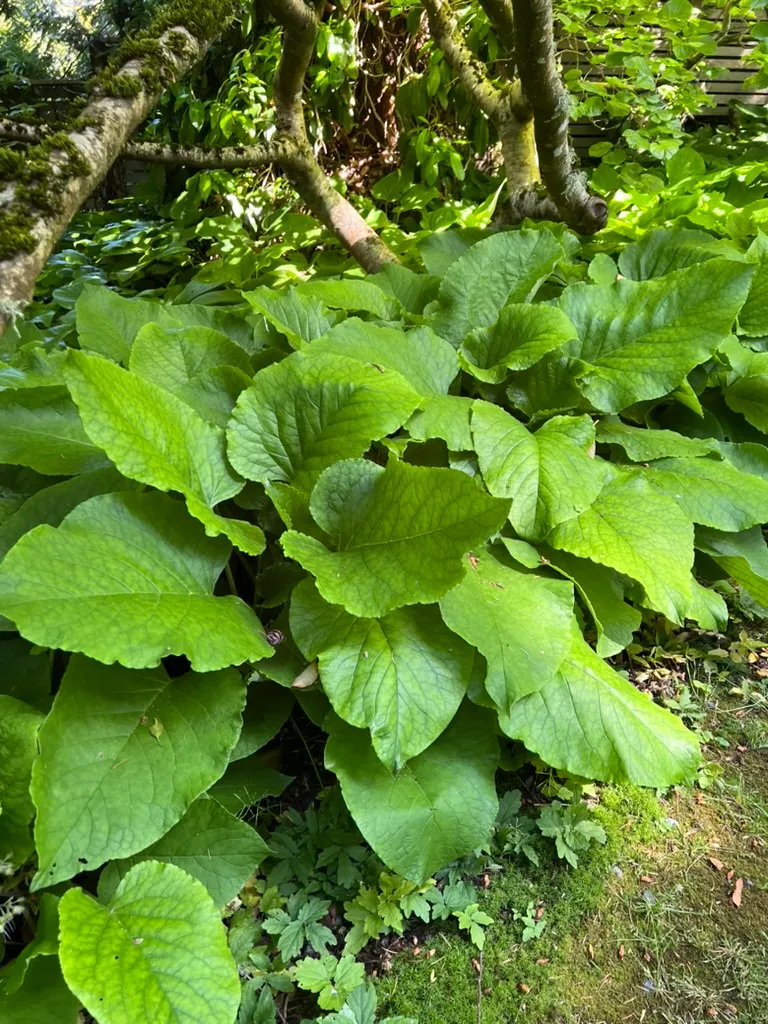
Broadly heart-shaped, 10-16 inches (25-40 cm), rough-hairy, prominently veined, mid-green; the leaves are among the largest of any hardy shade perennialGrowing Conditions
Sun Requirements
Requires 1-4 hours of direct sunlight daily
• Full Sun: 6+ hours of direct sunlight
• Partial Shade: 3-6 hours of direct sunlight
• Full Shade: Less than 3 hours of direct sunlight
Care & Maintenance
Care Guide
Part shade to full shade (1-4 hours). Any soil pH 5.5-7.5 — tolerates clay, poor soil, and root competition. Drought-tolerant once established (2-3 years). Spreads by rhizomes — allow ample space. Cut old dead foliage in early spring (March). Deer-resistant. Non-toxic. Zones 5-9.Pruning
Cut old dead foliage to the ground in early spring (March) before new flower stems emerge. No other pruning needed. Thin rhizome spread if colonies exceed desired area.Pruning Schedule
Prune: March
early spring