Image 1 of 15
1 / 15
Plant Reference
Trachycarpus, Genus, fortunei, Species,
- Genus & species
windmill palm
Central and eastern China — Hubei, Guizhou, Sichuan, and Yunnan provinces; mountain forests at 3,000-8,000 feet (900-2,400 m)
Overview
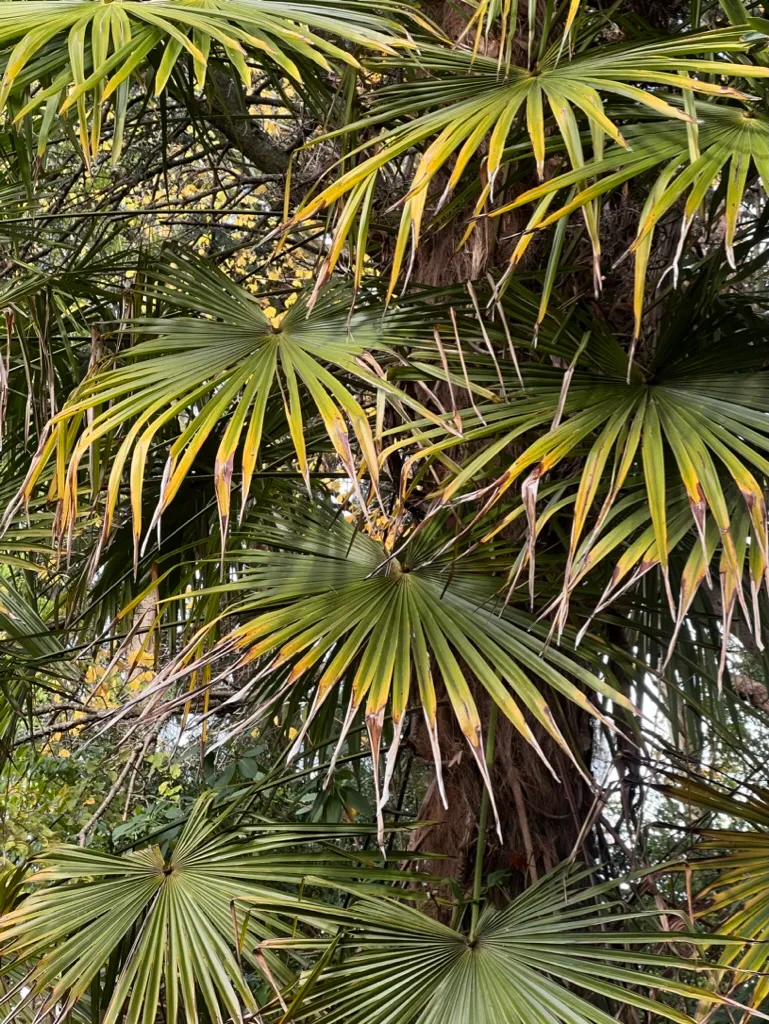
Trachycarpus fortunei is windmill palm (Chinese windmill palm), an upright single-trunked evergreen palm growing 20-40 feet (6-12 m) tall and 6-10 feet (1.8-3 m) wide. Bright yellow flower panicles 1-2 feet (30-60 cm) in May-June (3 weeks). Blue-black drupes on female plants in fall. Dark green fan-shaped palmate fronds 2-3 feet (60-90 cm) across on a trunk covered in dense dark brown fibrous hair. In Arecaceae. Named for Robert Fortune. The hardiest commonly cultivated palm (to about 5°F / -15°C — zone 7b). The fibrous trunk insulation contributes to cold tolerance. Slow-growing (10-20 years to mature). This slow growth and the frond damage below zone 7b are the primary limitations. Dioecious. Not drought-tolerant. Wind can shred frond segments. Non-toxic. Deer-resistant. Zones 7-10. Full sun to partial shade. Growth rate is slow.
Native Range
Native to central and eastern China — Hubei, Guizhou, Sichuan, and Yunnan provinces. Found in mountain forests at 3,000-8,000 feet (900-2,400 m).Suggested Uses
Grown as an evergreen tropical-effect specimen tree and in containers of at least 15 gallons (57 L), spaced 6-10 feet (1.8-3 m). Hardiest palm. Shelter from wind. Non-toxic. Zones 7-10.How to Identify
Appearance
Size & Dimensions
Height20' - 40'
Width/Spread6' - 10'
Bloom Information
Detailed Descriptions
Flower Description
Bright yellow (male) to greenish-yellow (female), tiny, in large branched pendulous panicles 1-2 feet (30-60 cm) emerging from the trunk below the frond crown; May-June; dioecious; female plants produce blue-black kidney-shaped drupes 0.5 inch (1.3 cm) in fallFoliage Description
Dark green above, silvery-blue beneath, fan-shaped (palmate), 2-3 feet (60-90 cm) across, divided into 30-50 stiff segments radiating from a 2-3 foot (60-90 cm) petiole; the trunk is covered in dense dark brown fibrous hair (the persistent leaf base sheaths)Growing Conditions
Sun Requirements
Requires 4-10 hours of direct sunlight daily
• Full Sun: 6+ hours of direct sunlight
• Partial Shade: 3-6 hours of direct sunlight
• Full Shade: Less than 3 hours of direct sunlight
Care & Maintenance
Care Guide
Full sun to partial shade (4-10 hours). Well-drained soil pH 5.5-7.5. Not drought-tolerant — consistent moisture. Hardiest common palm (zone 7b). Wind can shred fronds — site in a sheltered position in exposed areas. Remove old brown fronds in early spring (March-April). Non-toxic. Deer-resistant. Zones 7-10.Pruning
Remove old brown or damaged fronds in early spring (March-April). Cut fronds close to the trunk. Do not cut into the trunk fiber or the growing crown. Remove spent flower panicles if desired.Pruning Schedule
Prune: March–April
early spring
Container Growing
Suitable for container growing
Minimum container size: 15 gallons