Overview
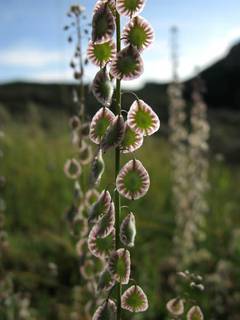
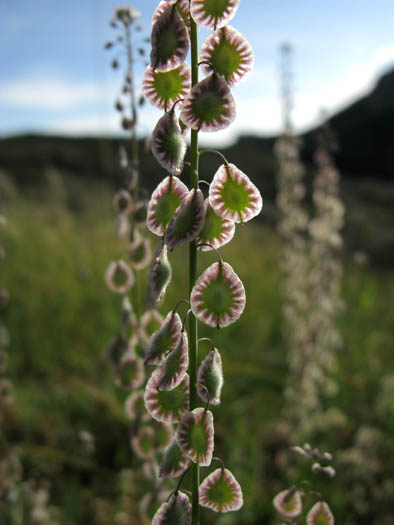
Thysanocarpus is a genus of about five slender annual herbs in the mustard family, native to open, sunny habitats of western North America, especially California and adjacent states. Plants begin as a basal rosette and send up wiry, branching stems 8-24 inches (20-60 cm) tall, with narrow leaves that clasp the stem by arrow-shaped lobes. Tiny four-petaled flowers in white to pinkish or purplish open in spring along the stem tips. The flowers are easy to overlook, but the fruit is the genus signature: a flattened, circular seedpod ringed by a thin, often perforated or fringed wing, which gives the plants their common names of fringepod and lacepod. The translucent winged pods catch the light and persist as the plant dries. As cool-season annuals, plants germinate with autumn and winter rains, flower and set seed in spring, then die as the soil dries for summer. They grow on poor, rocky, or sandy soils in full sun and depend on seasonal moisture, completing the whole cycle in a few months.
Native Range
Thysanocarpus is native to western North America, centered on California and extending through the western United States into Baja California. It grows on grassy slopes, open woodland, chaparral edges, and rocky ground.Suggested Uses
Used in native wildflower plantings, meadow seed mixes, and rock gardens for the airy, winged seedpods. Suited to dry, sunny, low-water sites and naturalistic plantings that mimic spring annual habitats.How to Identify
Appearance
Size & Dimensions
Height8" - 2'
Width/Spread2" - 6"
Bloom Information
Tiny four-petaled flowers in white to pinkish or purplish open along the stem tips in spring. They are small and easy to overlook. Flattened, fringed, winged seedpods follow and persist as the plant dries through late spring.
Detailed Descriptions
Flower Description
white to pinkish or purplishFoliage Description
greenGrowing Conditions
Sun Requirements
Requires 6-10 hours of direct sunlight daily
• Full Sun: 6+ hours of direct sunlight
• Partial Shade: 3-6 hours of direct sunlight
• Full Shade: Less than 3 hours of direct sunlight
Water & Climate
Water Needs
Drought Tolerance
Drought tolerant when established
Care & Maintenance
Care Guide
Grow in full sun on poor, sharply drained sandy, rocky, or gravelly soil, sowing seed in autumn for spring bloom. Plants depend on cool-season rain or watering and need little care once growing. Avoid rich soil and overwatering, which produce weak, leggy growth. Allow plants to set and drop seed for a self-sustaining stand. They die back naturally as the soil dries in summer.Pruning
No pruning is needed for these short-lived annuals. Leave the winged pods in place to scatter seed for the next season. Pull spent plants once seed has dropped if a tidier look is wanted.Container Growing
Suitable for container growing
Minimum container size: 2 gallons
Toxicity: Not assessed
UnknownPlanting Guide
Planting Methods & Timing
Planting Method
direct sow
Direct Sow Timing
autumn or early spring
Days to Maturity
60–90 days
Plant Spacing
4 inches