Image 1 of 10
1 / 10
Plant Reference
Thujopsis, Genus, dolabrata, Species,
- Genus & species
Japanese false arborvitae
Japan (Honshu, Shikoku, Kyushu); montane forests at 980-6,600 feet (300-2,000 m); harvested historically for temple construction
Overview
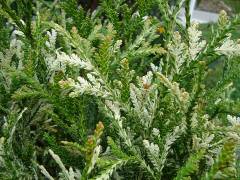
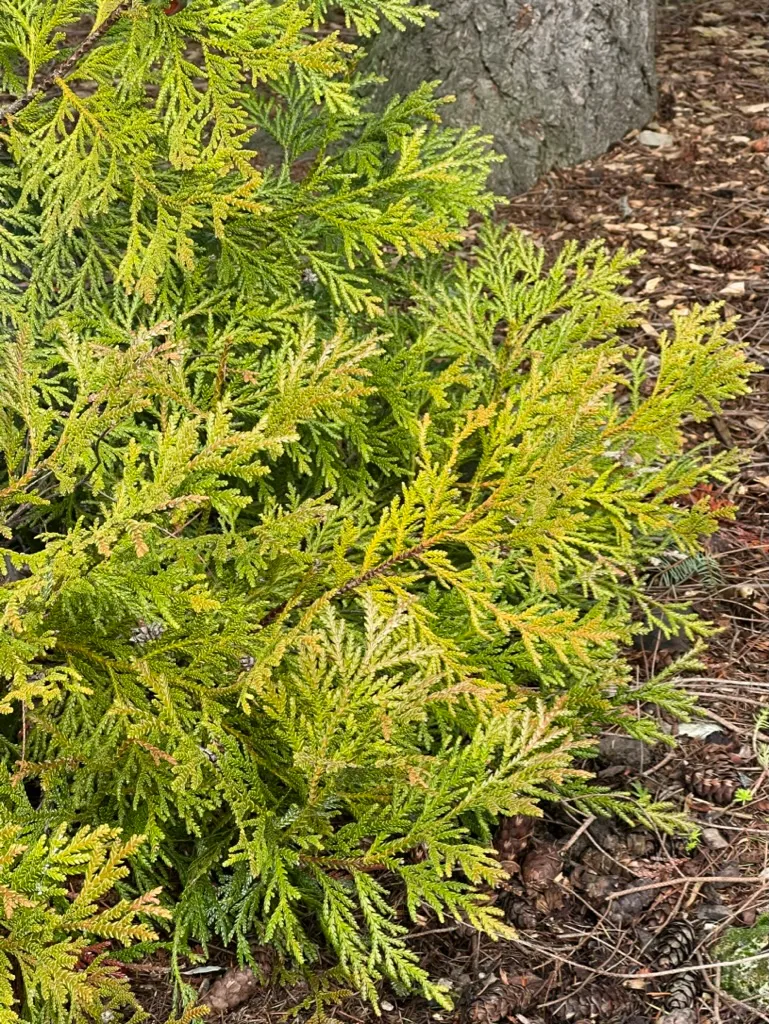
Thujopsis dolabrata is hiba false arborvitae (Japanese false arborvitae), an upright evergreen coniferous tree growing 20-50 feet (6-15 m) tall and 10-20 feet (3-6 m) wide. Dark glossy green scale-like foliage in flat fan-shaped sprays with bold white butterfly-shaped stomatal markings on the underside. In Cupressaceae. Thujopsis = resembling Thuja. Dolabrata = hatchet-shaped. The sole living member of the genus Thujopsis — a monotypic genus. Native to Japan. Called 'hiba' in Japanese — historically harvested for temple construction. The bold white butterfly-shaped stomatal markings are the largest of any commonly cultivated conifer. Coarse broad leaves (0.2-0.3 inch / 5-8 mm wide) distinguish Thujopsis from finer-textured Thuja. REQUIRES HIGH MOISTURE — does not tolerate drought. Limited heat tolerance. The high water requirement and heat sensitivity are the primary limitations. Tolerates deep shade. Non-toxic. Deer-resistant. Zones 5-8. Part shade to full shade. Growth rate is slow.
Native Range
Native to Japan (Honshu, Shikoku, and Kyushu). Found in montane forests at 980-6,600 feet (300-2,000 m). Historically harvested for temple construction.Suggested Uses
Grown as a specimen tree in shaded woodland gardens with consistent moisture, spaced 10-20 feet (3-6 m). Sole member of its genus. Bold white butterfly markings below. Not drought-tolerant. Non-toxic. Not suitable for containers. Zones 5-8.How to Identify
Appearance
Size & Dimensions
Height20' - 50'
Width/Spread10' - 20'
Reproduction
Monoecious. Small dark red-brown male strobili at branch tips and small green female cones in March-April. Small woody globular cones 0.5 inch (1.3 cm), maturing in fall.
Detailed Descriptions
Foliage Description
Dark glossy green above with bold white BUTTERFLY-shaped stomatal markings on the underside — these are the largest and most conspicuous stomatal markings of any commonly cultivated conifer; scale-like foliage in flat fan-shaped sprays, much coarser and broader than Thuja (the leaves are 0.2-0.3 inch / 5-8 mm wide vs. 0.05-0.1 inch / 1-2 mm in Thuja)Growing Conditions
Sun Requirements
Requires 2-6 hours of direct sunlight daily
• Full Sun: 6+ hours of direct sunlight
• Partial Shade: 3-6 hours of direct sunlight
• Full Shade: Less than 3 hours of direct sunlight