Thuidiopsis, Genus, sparsa, Species,
- Genus & species
sparse fern moss
Overview
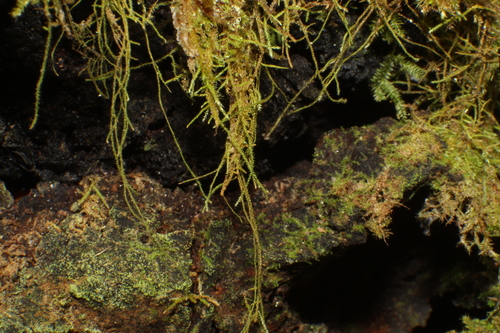
Thuidiopsis sparsa is a small pleurocarpous moss that forms loose, spreading mats over soil, rock, and decaying wood. The creeping primary stems carry regularly branched secondary shoots, producing a flattened, two- to three-times-divided frond that resembles a miniature fern, typically 0.4-1.6 inches (1-4 cm) long. Individual leaves are minute, under 0.04 inch (1 mm), triangular to lance-shaped, and arranged closely along the stems, giving a feathery texture. Colour ranges from yellow-green to mid green, darkening in shade and drying to a duller tone. As a non-vascular plant it has no roots, drawing moisture directly through its surface and anchoring by thread-like rhizoids. Reproduction is by spores released from capsules raised on slender stalks, supplemented by fragmentation of the shoots. Mats remain low, rarely exceeding 0.4 inch (1 cm) in height, and spread laterally where moisture is steady. Growth slows or halts during dry periods, with the moss reviving after rain.
Native Range
Native to Australia and New Zealand, where it grows in moist, shaded habitats in forests and woodlands. It occurs on damp soil, rock surfaces, and rotting logs, mainly in temperate and montane regions with reliable rainfall.Suggested Uses
Used in shaded moss gardens, terrariums, and between stepping stones in damp, low-traffic areas. Suits naturalistic plantings on rock, logs, and shaded soil where humidity stays high. Not suited to hot, dry, or exposed positions.How to Identify
Growing Conditions
Sun Requirements
Tolerates up to 3 hours of direct sunlight daily
• Full Sun: 6+ hours of direct sunlight
• Partial Shade: 3-6 hours of direct sunlight
• Full Shade: Less than 3 hours of direct sunlight
Care & Maintenance
Care Guide
Grows in shade to part shade on consistently moist, well-drained substrates such as humus-rich soil, rock, or rotting wood. Steady humidity and shelter from drying wind and direct midday sun keep mats green and actively growing. The moss has no roots and takes up water over its whole surface, so it browns and goes dormant during drought, then greens again after rain. No fertilizer is required, and excess nutrients or competition from vascular plants reduces cover. Mats lift readily and can be pressed onto new moist surfaces to spread them. Foot traffic and prolonged dryness are the main causes of decline.Pruning
No pruning is required. Overgrown or damaged patches can be trimmed or lifted, and the removed pieces re-establish on moist ground. Clearing fallen leaves and debris off the mat keeps light reaching the shoots.Container Growing
Suitable for container growing
Minimum container size: 1 gallons