Overview
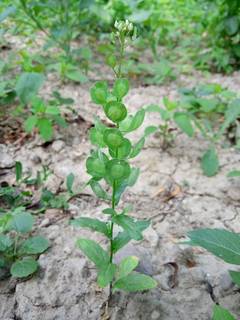
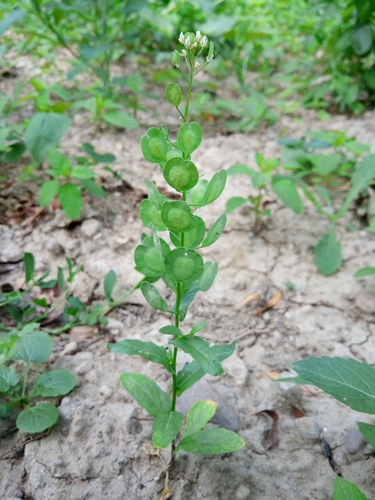
Thlaspi is a genus of annual, biennial, and short-lived perennial herbs in the mustard family, native to temperate Eurasia and widely naturalized elsewhere. Field pennycress, T. arvense, the most familiar species, is an erect annual 6-24 inches (15-60 cm) tall with smooth, lobed or toothed leaves clasping the stem. Small four-petaled white flowers are carried in dense, rounded racemes in spring and summer, followed by flattened, circular seed pods notched at the top, the pennies that give the plant its common name. Each pod holds several oil-rich seeds, and a single plant can shed thousands, so the genus spreads readily on disturbed ground, field margins, and roadsides. T. arvense is studied as an oilseed cover crop and biofuel source. Crushed foliage gives off a pungent, mustard-like smell, and the seeds can taint the milk of livestock that graze heavily on it. Plants grow quickly in cool weather on most soils in full sun, completing their cycle in a single season, and can become weedy where allowed to self-seed.
Native Range
Thlaspi is native to temperate Europe and Asia. Field pennycress, T. arvense, has spread worldwide as a weed of cultivated and disturbed ground, including across North America.Suggested Uses
Grown as a cool-season cover crop and studied oilseed, and sometimes used in wildlife and pollinator strips. The young leaves are eaten as a pungent wild green. Suited to field margins and cover-cropping rather than ornamental beds.How to Identify
Appearance
Size & Dimensions
Height6" - 2'
Width/Spread4" - 10"
Bloom Information
Detailed Descriptions
Foliage Description
greenGrowing Conditions
Sun Requirements
Requires 6-10 hours of direct sunlight daily
• Full Sun: 6+ hours of direct sunlight
• Partial Shade: 3-6 hours of direct sunlight
• Full Shade: Less than 3 hours of direct sunlight
Water & Climate
Water Needs
Drought Tolerance
Drought tolerant when established
Care & Maintenance
Care Guide
Grow in full sun on most free-draining soils, sowing seed directly in early spring or autumn. Plants need little care and tolerate poor, dry ground once up. Thin seedlings to give each room to branch. Remove spent plants before the pods shed to limit unwanted self-seeding. Growth is fast in cool weather, and the whole cycle finishes in one season.Pruning
No formal pruning is needed. Pull or cut whole plants once flowering ends to stop the pods from scattering seed. Removing plants early limits spread on disturbed ground.Container Growing
Suitable for container growing
Minimum container size: 2 gallons
Toxicity: Not assessed
UnknownPlanting Guide
Planting Methods & Timing
Planting Method
direct sow
Direct Sow Timing
early spring or autumn
Days to Maturity
60–100 days
Plant Spacing
6 inches