Thelesperma, Genus, filifolium, Species,
- Genus & species
stiff greenthread
Overview
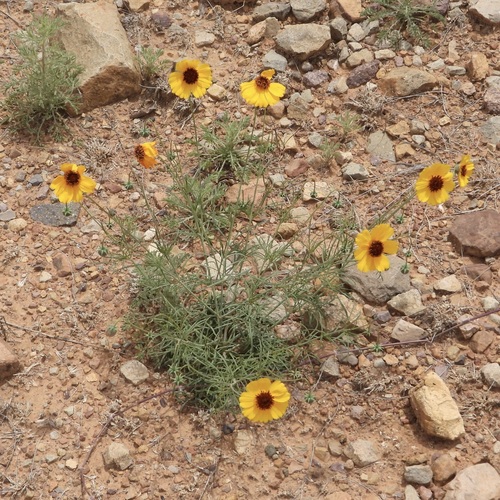
Thelesperma filifolium is an annual to short-lived perennial in the aster family, growing 12-24 inches (30-60 cm) tall with slender, wiry, much-branched stems that form an open, airy mound. The leaves are divided into thread-like segments under 0.1 inch (2 mm) wide, giving the plant a feathery look and the common name greenthread. From spring into summer, long bare stalks lift daisy-like flower heads about 1-1.5 inches (2.5-4 cm) across, each with eight yellow ray florets, sometimes marked with reddish-brown at the base, surrounding a darker central disk. The species grows on prairies, plains, roadsides, and rocky open ground across the southern Great Plains, tolerating heat, drought, and poor soils. In good conditions it self-seeds and can form drifts of bloom. The dried flower heads of greenthreads have long been steeped as a tea by Indigenous peoples of the Southwest. Limitations include a short individual lifespan, a tendency to flop in rich or shaded sites, and a brief presence in cool or wet years. The deep taproot supports drought tolerance but makes transplanting difficult once the plant is established.
Native Range
Thelesperma filifolium is native to the central and southern Great Plains of the United States, from Nebraska and Colorado south through Kansas, Oklahoma, Texas, and New Mexico into northern Mexico. It grows on prairies, plains, roadsides, and rocky slopes.Suggested Uses
Grown in prairie, meadow, and pollinator gardens and in low-water, native plantings on lean soils. Used along roadsides and in restoration seed mixes for the southern plains. Suited to naturalized areas where its self-seeding is welcome.How to Identify
Appearance
Size & Dimensions
Height1' - 2'
Width/Spread1' - 1'6"
Bloom Information
Bloom runs from spring into summer, generally April through July, and longer where summers stay mild and moist. Each head lasts about a week, with the branched stems producing flowers over a long period. Cool springs bring earlier bloom. Dry seed heads follow and release flattened seeds.
Detailed Descriptions
Flower Description
Yellow, sometimes reddish-brown at baseFoliage Description
Green, threadlikeGrowing Conditions
Sun Requirements
Requires 6-12 hours of direct sunlight daily
• Full Sun: 6+ hours of direct sunlight
• Partial Shade: 3-6 hours of direct sunlight
• Full Shade: Less than 3 hours of direct sunlight
Care & Maintenance
Care Guide
Grows in full sun and dry, well-drained soil, including sandy, rocky, loamy, and clay ground at a pH of 6.5-8.0. Established plants are drought tolerant and need little supplemental water once rooted. Lean soils keep the stems sturdy, while rich or shaded sites cause floppy growth and fewer flowers. Hardy in USDA zones 5-9, the plant overwinters by taproot or reseeds from spring-germinating seed. No fertilizer is needed in average or poor soil. Plants self-sow where the ground stays open and undisturbed.Pruning
Shear lightly after the first flush of bloom to tidy the plant and bring a second round of flowers. Cut spent stems to the base in late fall or winter. Clearing some seed heads before they ripen limits self-seeding.Pruning Schedule
Prune: November
fallwinter