Image 1 of 17
1 / 17
Plant Reference
Tellima, Genus, grandiflora, Species,
- Genus & species
Fringecup
Western North America — Alaska south through British Columbia, Washington, Oregon to northern California; moist coniferous and mixed forests, shaded stream banks, and moist forest edges
Overview
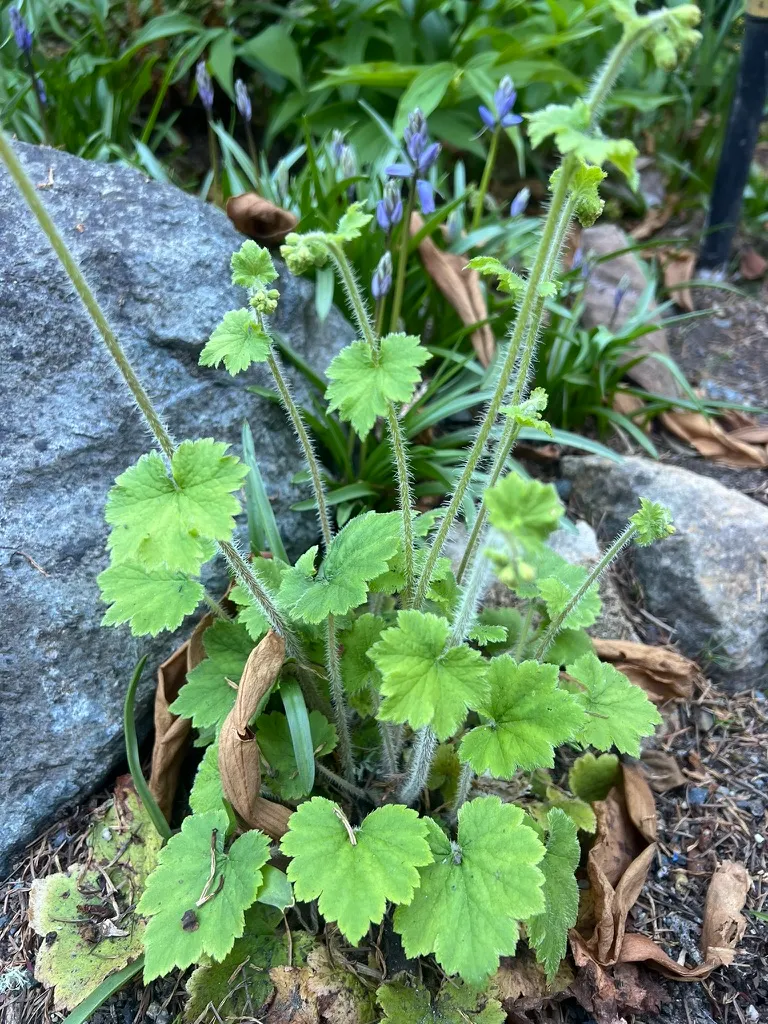
Tellima grandiflora is fringecup, a mounding semi-evergreen perennial growing 16-36 inches (40-90 cm) tall and 12-24 inches (30-60 cm) wide. Cup-shaped flowers 0.3-0.4 inch (8-10 mm) with deeply fringed petals in erect racemes of 15-35, aging from greenish-white to cream to pink to rose-purple on the same raceme — multiple color stages displayed simultaneously — in April-June (8 weeks). Lightly fragrant. Heart-shaped to kidney-shaped lobed toothed softly hairy semi-evergreen basal leaves 2-4 inches (5-10 cm). In Saxifragaceae. A monotypic genus — the only species. Tellima is an anagram of Mitella. Grandiflora = large-flowered. The deeply fringed petals are diagnostic (fringecup). Native to the Pacific Northwest — Alaska to California in moist forests. Self-seeds freely in moist shade. Drought-tolerant once established (unlike many PNW natives). The self-seeding can be either an asset (naturalizing) or a limitation (weedy in some garden settings). The cultivar 'Forest Frost' has silver-marbled foliage. Deer-resistant. Non-toxic. Zones 4-9. Part shade to full shade. Growth rate is moderate.
Native Range
Native to western North America — Alaska south through British Columbia, Washington, Oregon to northern California. Found in moist coniferous and mixed forests, shaded stream banks, and moist forest edges.Suggested Uses
Grown as a shade ground cover, in woodland gardens, native plant gardens, and in containers of at least 3 gallons (11 L), spaced 12-24 inches (30-60 cm). Fringed flowers aging green to pink. Native to PNW. Non-toxic. Deer-resistant. Zones 4-9.How to Identify
Appearance
Size & Dimensions
Height1'4" - 3'
Width/Spread1' - 2'
Bloom Information
Mid to late spring (April-June). Cup-shaped flowers with deeply fringed petals, 15-35 per raceme, aging from greenish-white to pink to rose-purple. Lightly fragrant. 8 weeks. Bee-visited. Self-seeds.
Detailed Descriptions
Flower Description
Deeply fringed petals — greenish-white to cream, aging to pink to rose-purple on the same raceme (multiple color stages displayed simultaneously); cup-shaped, 0.3-0.4 inch (8-10 mm), nodding, 15-35 flowers on erect racemes 16-36 inches (40-90 cm); lightly fragrantFoliage Description
Medium to dark green, heart-shaped to kidney-shaped, 2-4 inches (5-10 cm), with 5-7 shallow lobes and coarse teeth; softly hairy; semi-evergreen — foliage persists through mild wintersGrowing Conditions
Sun Requirements
Requires 1-4 hours of direct sunlight daily
• Full Sun: 6+ hours of direct sunlight
• Partial Shade: 3-6 hours of direct sunlight
• Full Shade: Less than 3 hours of direct sunlight
Care & Maintenance
Care Guide
Part shade to full shade (1-4 hours). Moist soil pH 5.5-7.5. Drought-tolerant once established. Self-seeds freely — remove seedlings to control or allow naturalization. Remove old tattered foliage in early spring (March). Deer-resistant. Non-toxic. Zones 4-9.Pruning
Remove spent flower stalks at the base after bloom. Remove old tattered basal foliage in early spring (March). Remove unwanted self-sown seedlings.Pruning Schedule
Prune: March & June
late springearly spring
Container Growing
Suitable for container growing
Minimum container size: 3 gallons